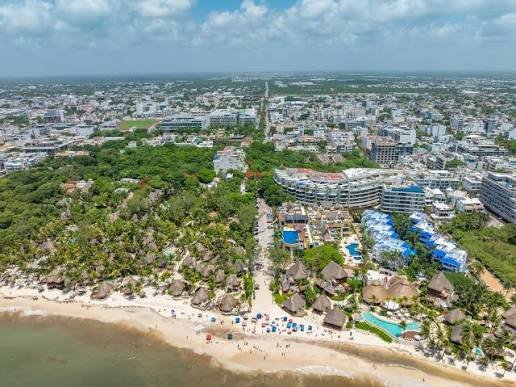
Playa del Carmen, Quintana Roo — After months of coastal erosion that dramatically narrowed the shoreline at several points along Playa del Carmen, the beach at Calle 38 has seen a notable recovery, arriving at the start of the summer vacation season with wide sandy stretches once again attractive to visitors and locals.
Playa 38 was one of the areas hardest hit by strong waves, currents, and weather events over the past year. At times, sand loss was so severe that the sea nearly reached the base of nearby structures, sharply reducing space for bathers and raising concern among tourism service providers and residents.
For months, images showed a narrow beach with little room for loungers, umbrellas, or even walking along the water. Experts warned that the combination of erosion and persistent sargassum seaweed further hindered natural coastal recovery.
Now, however, the scene is completely different. Wide sandbanks have returned, allowing hundreds of people to once again enjoy one of the most iconic beaches in central Playa del Carmen.
The recovery is especially significant because this spot is one of the busiest for domestic and international tourists, and a key attraction for hotels, beach clubs, and local businesses.
While beach behavior is dynamic and erosion is a natural process influenced by currents, winds, and storm seasons, the rebound of Playa 38 offers a respite for the destination during one of its peak tourism periods.
In recent months, several other beaches in the municipality faced similar conditions, particularly near the fiscal pier, Avenida Constituyentes, and El Recodo, where sand loss worried both authorities and tourism entrepreneurs.
At Playa 38, natural sediment accumulation over the past few weeks allowed the sand to extend several meters toward the sea, completely transforming the beach’s appearance from just months ago.
The recovery also coincides with calmer wave conditions and more favorable weather, factors that have helped sand remain on the coast and stabilize gradually.
Tourism service providers say the improvement comes at an opportune time, as summer vacations bring a significant increase in visitors seeking wide beaches and better conditions to enjoy the Mexican Caribbean.
Still, experts caution that a beach’s recovery should not be seen as a permanent solution to coastal erosion. Shoreline dynamics constantly change, and factors such as hurricanes, storms, cold fronts, or alterations to the coastline can again disrupt the natural balance.
For now, Playa 38 presents a very different picture from much of the past year. Where concerns over sand loss once dominated, a broad sandy beach has returned, restoring part of the postcard image that made this spot a favorite for both residents and tourists.
More Environment
- Greenpeace Finds Contamination at 17 Yucatán Wells and Cenotes as Maya Communities Demand Action
- Quintana Roo Tops 152,000 Metric Tons of Sargassum as Playa del Carmen and Cancún Lead
- Profepa Shuts Down Los Rápidos Swimming Spot in Xul-Ha Over Missing Environmental Permit
- Court Gives Profepa 72 Hours to Clarify Tren Maya Closure Order
- National Geographic Names Maya Ka’an Among Top Destinations to Visit in 2027
More Playa del Carmen
- Playa del Carmen Taps HR Directors to Boost Local Hiring
- Two Drivers Hurt in Playa del Carmen Crash at Wet Zazil-Há Intersection
- Influencer Discards 2,500-Peso SpongeBob Cake at Nickelodeon Riviera Maya, Citing Bad Taste
- Playa del Carmen Opens Registration for Audiovisual Workshops
- Playa del Carmen Businesses Seek Later Closing Hours for Bars and Restaurants