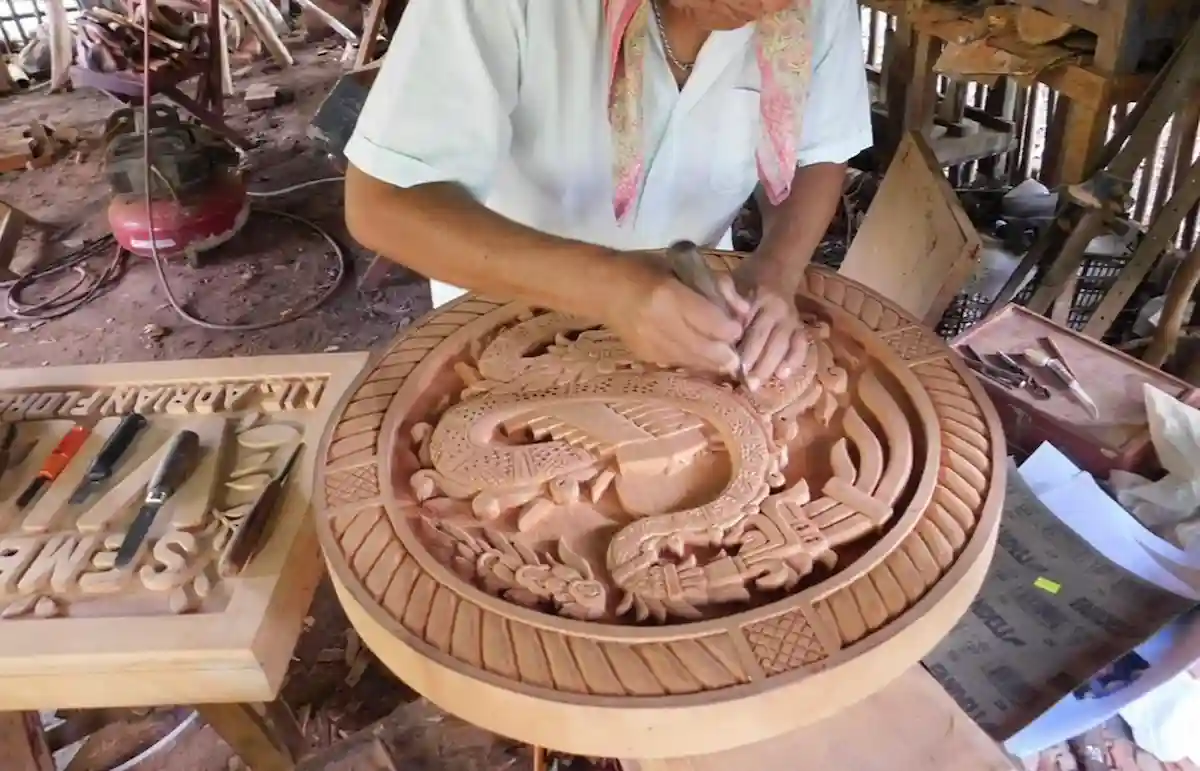
Chetumal, Quintana Roo — The director of the Municipal Institute of Social Economy (IMES) in Othón P. Blanco, Rossana Ayala Ramírez, acknowledged that the city lacks adequate spaces for local artisans to exhibit and sell their works, which largely depict the natural beauty of the municipality and the state.
Because the pieces could easily adorn hotels and restaurants, the institute is promoting them at the municipal palace and arranging displays at locations such as the Tren Maya station and the bus station, so that residents and visitors can appreciate these artistic expressions created through various techniques and carvings in regional woods.
“Every month we hold an event where we recognize the artisan’s work and ask one of them to bring a piece for exhibition. It stays two weeks at the municipal palace, one week at the ADO bus station, and one week at the Tren Maya station. The goal is twofold: to sell the piece and to promote the artisan’s work. More promotion is needed to make known the craftsmanship of Othón P. Blanco — people from Huay-Pix and Calderitas,” Ayala said.
So far, about 13 pieces have been exhibited, and only three have been sold. Ayala explained that woodcrafts are not cheap, with prices starting at over 3,000 pesos. While she noted the pieces are original and worth the price, she admitted that not everyone can afford them.
“We’ve only sold three pieces because it’s not easy. They cost 3,000, 4,000, or 5,000 pesos, but they are well worth it because they are very beautiful. There are about 15 recognized artisans, plus around 30 manualists — who transform raw materials like paper, fabric, and ceramics into utilitarian or decorative items — and embroiderers. We support all of them to promote their work,” she added.
In some communities, selling woodcrafts is an important source of family income. Due to the lack of local spaces, artisans often travel to tourist hubs in the north of the state, where they find more opportunities to sell.
More Business
- Cancún Taxi Union Kicks Off 2027-2029 Leadership Election
- Buen Fin 2026 Set for November 13-17 With Five Days of Deals in Cancún
- Cozumel Officials Review Malecón Remodel Plans at Tourism Development Workshop
- Mexican Caribbean to Lose 435,000 US Airline Seats by End of 2026
- Semarnat Denies Environmental Permit for GL Dreams Subdivision in Puerto Morelos
More Chetumal
- Former Municipal Police Officer Detained in Femicide of Alejandra Michelle in Chetumal
- Power Outage in Chetumal Forces Closure of Quintana Roo Labor Courts
- Playa del Carmen Mayor Joins Quintana Roo’s 52nd Statehood Anniversary in Chetumal
- Chetumal Airport Customs Nears Full Operation Next Year
- Former Quintana Roo Tourist Police Chief Bound Over for Trial in Human Trafficking Case