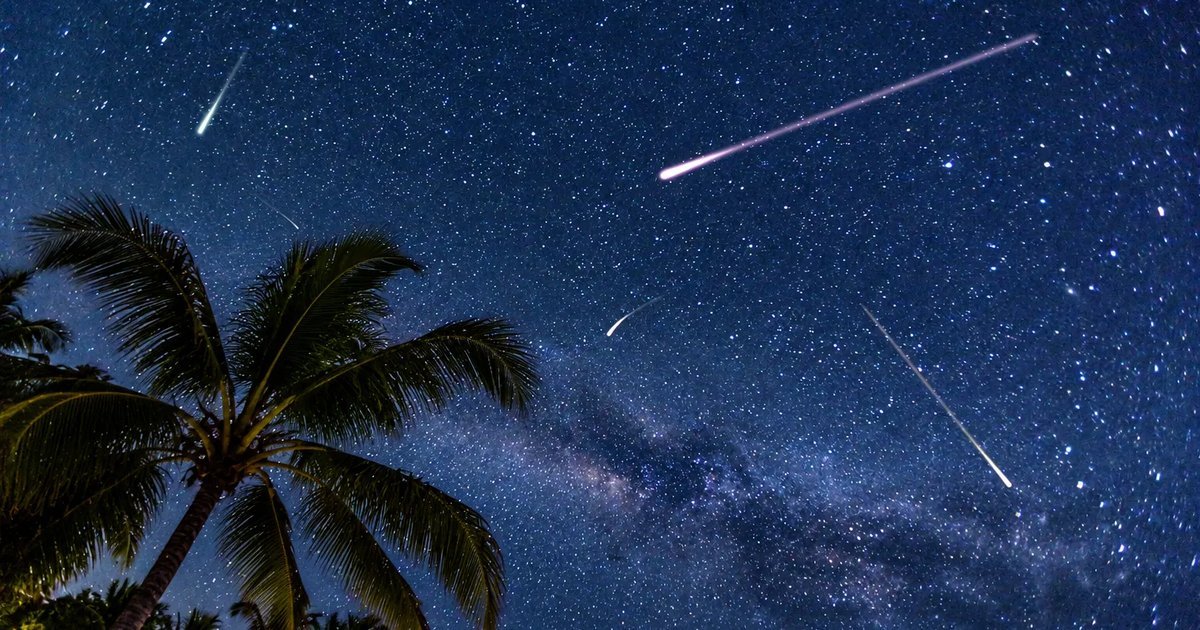
Quintana Roo, Mexico — The Orionid meteor shower will reach peak activity between the night of Wednesday, Oct. 21, and the early hours of Thursday, Oct. 22, 2026, offering skywatchers across Mexico — including Quintana Roo — a chance to catch the annual display, provided weather conditions allow a clear view of the night sky.
According to NASA, the Orionids occur when Earth passes through a region of space filled with dust particles and small fragments shed by Halley’s Comet. As these materials enter Earth’s atmosphere, they disintegrate and produce the bright streaks known as meteors.
The shower remains active from Oct. 2 through Nov. 7, though its most intense period falls around Oct. 21 and 22.
When to watch
The best window for observing the Orionids will be in the hours before dawn on Thursday, Oct. 22.
This year the Moon will be in a waxing gibbous phase, and its light will make fainter meteors harder to distinguish. Once the Moon sets, however, the sky will grow darker and the odds of spotting meteors will improve.
Under ideal conditions, far from light pollution, observers can expect between 10 and 20 meteors per hour. The number actually visible will depend on cloud cover, ambient lighting and other factors.
No telescopes or binoculars are needed to watch the shower.
Leftovers from Halley’s Comet
The Orionids take their name from the constellation Orion, because from Earth the meteors appear to radiate from a region near it. In practice, they can appear in any part of the sky.
One defining trait is their speed. These particles enter the atmosphere at roughly 66 kilometers per second, and some leave glowing trails that remain visible for several seconds.
Halley’s Comet, the source of the material behind the shower, completes an orbit around the Sun about every 76 years. Its last close approach was in 1986, and it is expected to return in 2061.
Viewing from Quintana Roo
The phenomenon can be seen from both hemispheres, so residents of Cancún, Playa del Carmen, Tulum, Cozumel and other communities in Quintana Roo will have a chance to watch it if the sky is clear.
To improve the experience, observers should find a safe spot away from city lights, allow their eyes to adjust to the darkness for about 30 minutes and scan a wide area of the sky.
Although the Orionids appear every year, their intensity and visibility vary with conditions each season.
More Lifestyle
- Cozumel Hosts First Pueblos Mágicos Triathlon as Evelyn Rejón and Flavio Morandini Win
- Stationary Front to Bring Rain Across Yucatán on Tuesday
- Free Theater Production ‘Catsup’ Brings Pandemic Childhood Story to Cancún
- Anyma Brings ÆDEN to Zamna Tulum for 10th Anniversary Show on January 4
- Cancún Businesswomen Organize Charity Walk for Breast Cancer Survivors
More Quintana Roo
- Cancún Prosecutor Arrested Over Sex Trafficking of Two Women
- Quintana Roo to Pitch Sustainability in Reworked International Tourism Push
- Quintana Roo Names Winners of 2026 State Craft and Embroidery Prizes
- Santa Fe Klan Plays Nearly Four Hours at Expofer 2026 in Chetumal
- Quintana Roo Health Secretary Flavio Rosado Resigns to Seek Morena’s Isla Mujeres Candidacy