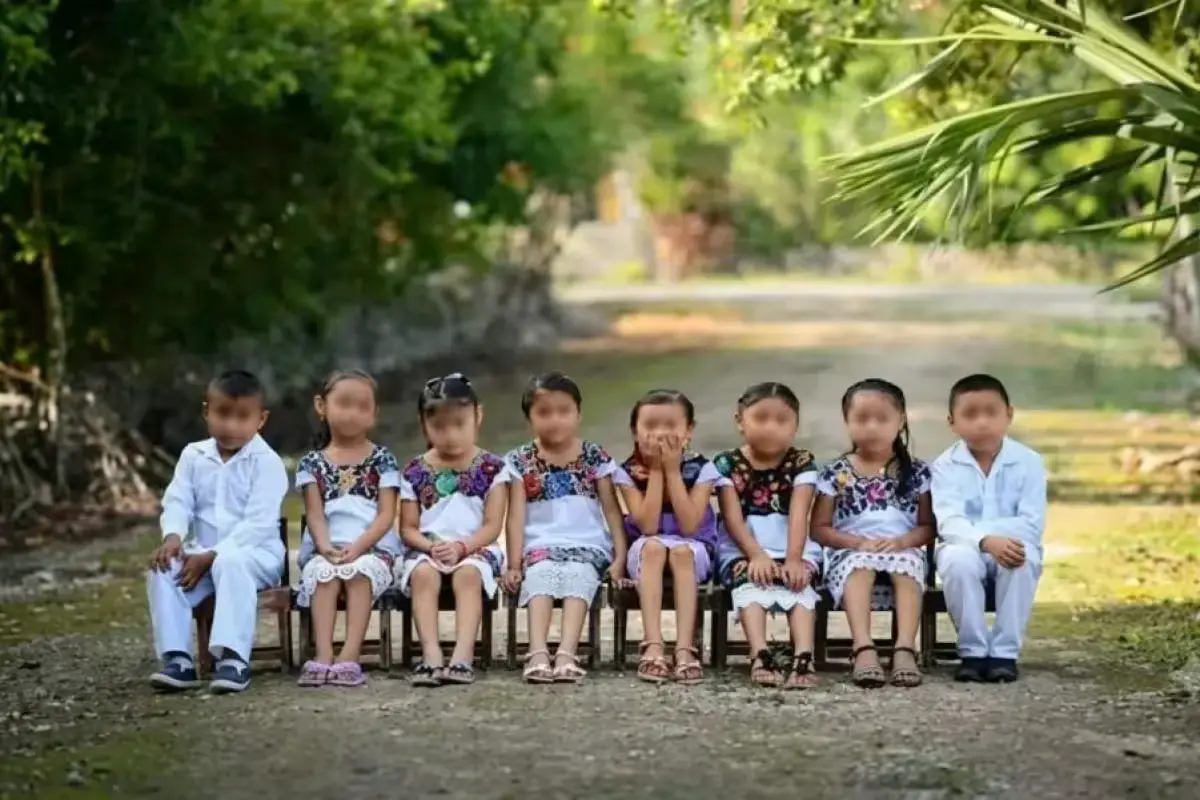
Lázaro Cárdenas, Quintana Roo — The municipal Indigenous Affairs Office in Lázaro Cárdenas will present a proposal to the Quintana Roo Congress encouraging primary school students to wear traditional Maya clothing, part of an effort to strengthen cultural identity from an early age.
The initiative, led by Miguel Poot Kinil, head of the office, would have students arrive on the first day of the 2026-2027 school year in traditional attire and continue wearing it voluntarily on Mondays during civic ceremonies.
“We know it won’t happen right away, but hopefully it can come together; that children go in their white pants and white Maya-style shirt. That would give us a big boost to recover our culture and get girls used to wearing the huipil. It won’t be mandatory, but voluntary,” Poot Kinil said.
The proposal originated in Lázaro Cárdenas and aims to expand gradually to the other 10 municipalities of Quintana Roo. It seeks to revalue traditional garments such as the huipil and terno for women, and guayaberas and manta clothes for men, which have been increasingly displaced by branded clothing.
Preserving identity
Historically, Maya clothing responded to the needs of agricultural work and the region’s climate. Men wore light manta garments with straw hats and espadrilles, while women wore huipiles with fustán and colorful embroidery. Bringing this legacy into classrooms aims to restore its place in daily life and prevent it from being limited to festivities and traditional celebrations.
In addition to promoting traditional dress, the strategy includes strengthening literacy and oral use of the Maya language through teaching resources and materials, such as illustrated lotería games in the native language.
Poot Kinil noted a growing disinterest among younger generations in learning the local Maya variant, as many prefer foreign languages such as English. The project seeks to redirect children’s and adolescents’ attention toward the richness of their own linguistic and cultural heritage.
More Culture
- Cueva Popotitos: New Underwater Cave System Found South of Cozumel
- Tren Maya Archaeological Finds Won’t Be Displayed in Chetumal, INAH Says
- Cumbia, Rock and Pop Headline Plaza de Toros Cancún Concert Series
- Cabaret Show Brings 1920s Glamour to Cancún’s Teatro de la Ciudad
- Cancún Music Festival Opens Second International Classical Guitar Competition
More Quintana Roo
- Quintana Roo Expands Tourist Police Force With Specialized Training Programs
- Quintana Roo Bets on Luxury, Diving and Gastronomy Tourism for 2027
- Cancún’s Ruta Mar Beach Shuttle to Suspend Service Until Mid-December
- Quintana Roo Leads Dengue Cases on the Yucatan Peninsula With 232 Infections
- Low-Pressure System in Central Atlantic Raises Cyclonic Development Odds to 30%