
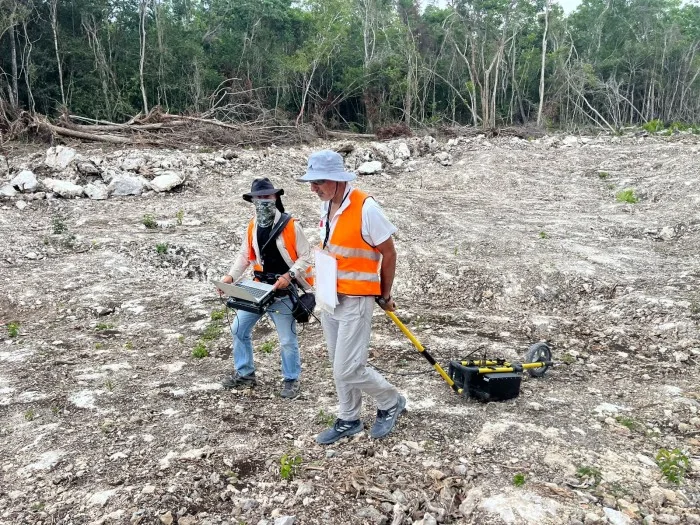
Cancún, Quintana Roo — Municipal civil protection authorities in Cancun have identified up to 15 zones prone to sinkholes using ground-penetrating radar deployed in March, officials said.
Antonio Riveroll Ribbón, director of Civil Protection in Benito Juárez, said the high-risk areas include the Región 237 neighborhood and the Villas Marino residential development.
“In what we’ve covered so far this year, we’ve found about 10 to 15 points,” he said in a brief interview. “We’ve been checking Villa Marino, the 237, many places. We also responded behind a shopping plaza, in parks, in private areas, and in homes where certain situations have arisen.”
The radar scans to a depth of eight meters (26 feet) and helps detect “what is beneath the surface, whether pavement, a structure, or a cavity,” to identify possible underground springs or utility lines, Riveroll explained.
Once a risk is identified, the case is referred to the appropriate municipal agency or private utility company, he said. “If it goes to Public Works, they handle it; if it’s Aguakan, they have the map; if it’s Public Services or underground Telmex cables, we send it to them to address.”
The official reminded that the municipality sits on karstic terrain, characterized by cavernous rock formations that increase the risk of ground collapse.
He added that the device has allowed the city government to save resources and improve planning for public works. “It helps us plan better, save money, pinpoint the problem, and fix that spot instead of digging trenches 15 or 20 meters long to find the failure,” he said.
More Government
- Cancún Orders Removal of Grounded Boats From Nichupté Lagoon
- Cancún Mayor Ana Paty Peralta Says She Will Finish Her Term and Skip ‘Gino’ Segura’s Campaign
- DHS Fentanyl Trafficking Investigations Fall 24% as Focus Shifts to Immigration Enforcement
- Unpaid Municipal Debt Worsens Garbage Crisis on Holbox
- Trump Urges Mexico to Prosecute Officials Who Help Drug Cartels
More Cancun
- Mexico City, Cancún and Puerto Vallarta Top Searches for Independence Day Weekend
- Father of Emma, Girl at Center of Cancún Abduction Case, Denies Being Violent
- Cancún Airport Posts Worst Day in Decades as Tourism Slump Deepens
- Coparmex Cancún Tallies Economic Losses From Rolling Blackouts
- Cancún Urban Development Plan Reaches 50% as Officials Weigh Where City Can Grow