
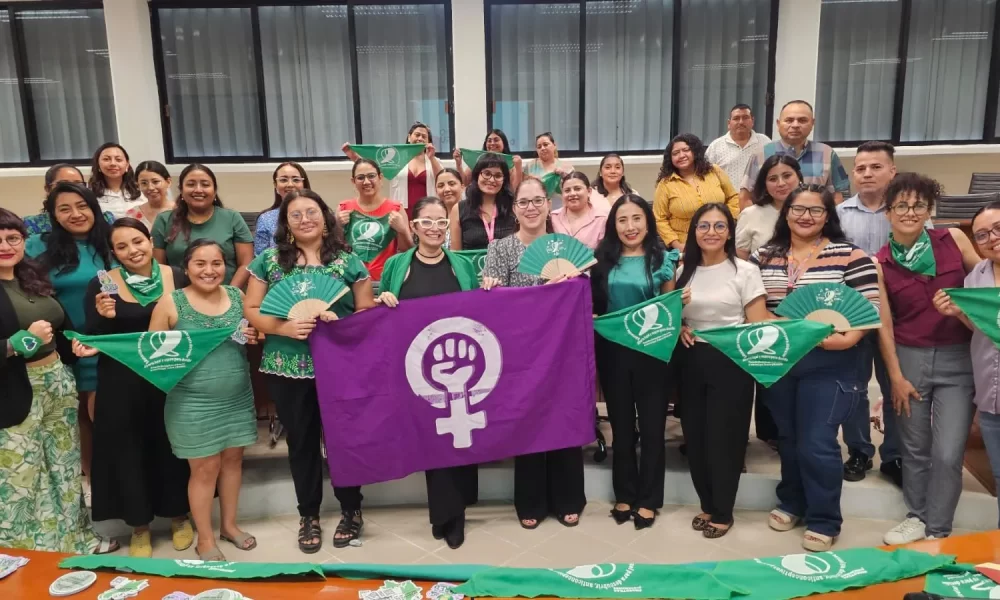
Cancún, Quintana Roo — Feminist collectives, academics, and health sector representatives have launched the Observatory for the Exercise of Safe Abortion in Quintana Roo, an initiative aimed at bridging the gap between the legality of abortion and effective access to the procedure in the state.
Obstacles Persist for Safe Practice
Although abortion is legal in Quintana Roo, specialists and activists warn that multiple obstacles persist, making it difficult to access the procedure under safe, timely, and discrimination-free conditions.
The Observatory was created in response to structural problems that continue to limit access, including misinformation, social stigma, unregulated conscientious objection by medical staff, and deficiencies in infrastructure, budget, and updated public data.
According to a preliminary diagnosis conducted in the state, access to abortion can depend on the municipality or the available medical shift, creating inequality in care.
Key Challenges Identified
Key challenges identified include services that are available but unevenly distributed; a lack of continuous training for health personnel; limited or hard-to-access public information; indirect costs that affect vulnerable people; and persistent stigma within and outside public health institutions.
The project is driven by organizations including Derechos, Autonomías y Sexualidades; Ajal Yaakun; the Network for Sexual and Reproductive Rights in Mexico (Ddeser Quintana Roo); and Gobernanza MX. The initiative coordinates efforts between civil society, public health institutions—including the Health Department, IMSS-BIENESTAR, and ISSSTE—and the academic sector.
The goal is not only to highlight problems but to generate concrete, evidence-based solutions and promote public policies that guarantee real access to safe abortion.
Observatory to Operate Across All 11 Municipalities
The Observatory will operate in all 11 municipalities of the state with actions focused on monitoring, analysis, and advocacy. These include evaluating the quality, availability, and accessibility of services; generating updated data on abortion access; and creating diagnostics with health personnel and users.
It will also seek to promote training and awareness in the health sector; design informative campaigns free of stigma; and finally, create intersectoral support networks.
Additionally, it will feature an open digital platform for public consultation.
The Observatory is positioned as an innovative national model in the context following the decriminalization of abortion, focusing on social oversight, data generation, and institutional coordination as tools to guarantee rights.
More Lifestyle
- Cancún to Hand Out 117,000 Pairs of School Sneakers Starting Monday
- Chetumal Chef Kevin Chávez to Represent Mexico at S.Pellegrino Young Chef Regional Final
- Hepatitis A Outbreak Prompts Class Suspension in Tizimín Village
- Diocese of Cancún-Chetumal Warns of Man Posing as a Priest in Chetumal
- Cancún Cyclists Plan 8.2-Kilometer Ride for World Car-Free Day
More Quintana Roo
- Bamboo Growers From 13 Mexican States Form National Association
- Mothers from Quintana Roo Search for Missing Relatives in Yucatán, Hoping to Find Them Alive
- Quintana Roo Border Dispute Reaches Final Stage at Mexico’s Supreme Court
- Tourist Boat Traffic Plunges 30% in Quintana Roo Ports
- Quintana Roo Tightens Rules for Scuba Divers Arriving With Specialized Gear
