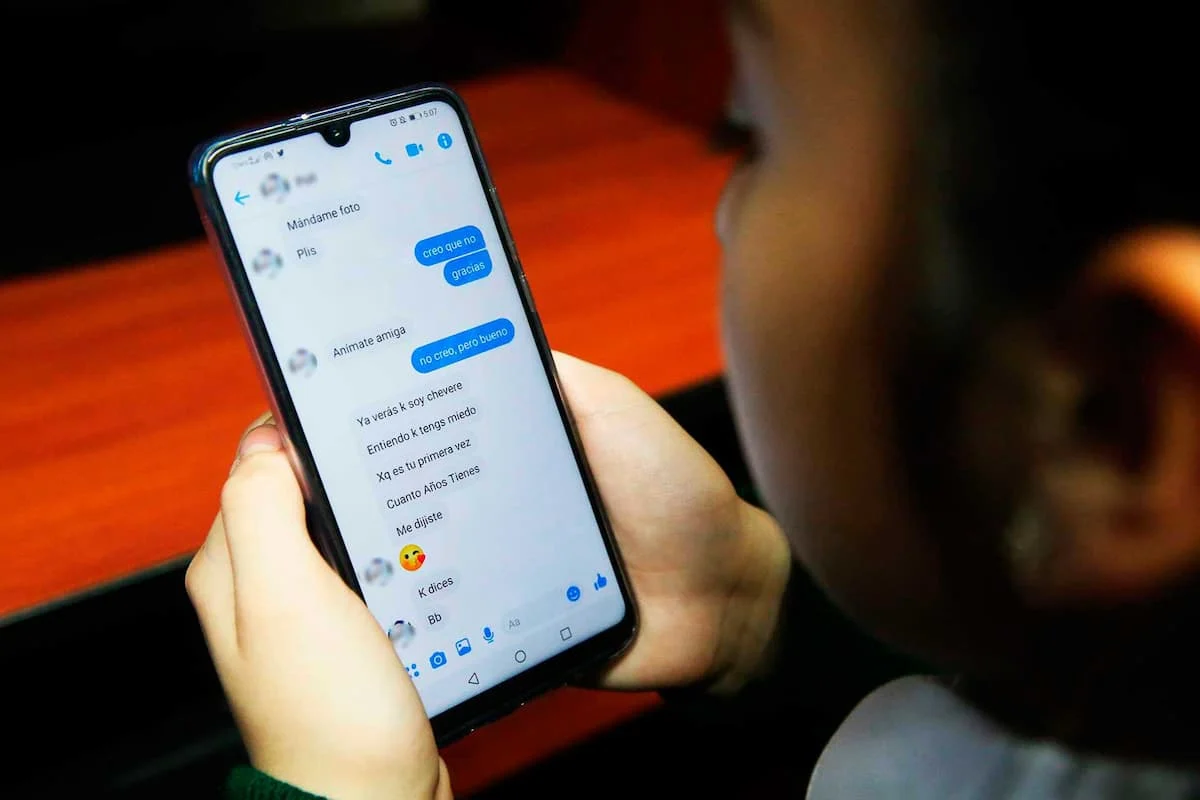
Mexico City — Social media and digital platforms have become the leading channel for recruiting human trafficking victims in Mexico, according to the nonprofit Reinserta, which called for stronger early detection and reporting of suspected cases.
Reinserta issued the warning on World Day Against Trafficking in Persons, observed July 30, citing the fifth annual report from the Mexico City Citizens’ Council for Security and Justice. The report found that 62% of trafficking-related reports originated in digital environments. Facebook accounted for 22% of online recruitment cases, Instagram 18%, and WhatsApp 15%.
Video games also used to reach children
Online video games are another risk channel, the organization said. Platforms such as Free Fire, Roblox, Fortnite, and Minecraft have been identified as spaces where traffickers contact minors, often posing as “virtual friends” before starting manipulation and control.
Family members are the most common recruiters
The digital threat does not operate in isolation. The same report found that 51% of underage victims were recruited by their own relatives, usually through deception or by exploiting vulnerability. Reinserta said trafficking thrives where care and protection systems fail, whether inside the home or online.
Mexico is a source, transit, and destination country
Mexico acts as a country of origin, transit, and destination for trafficking victims, the National Human Rights Commission confirmed in 2025, complicating detection and comprehensive care.
Globally, the United Nations Office on Drugs and Crime reported in 2024 that 60% of detected girl victims worldwide were sexually exploited. In Mexico, child sexual abuse material grew by 86% in the first half of 2025 compared with the same period in 2024, according to the council. Of those cases, 81% originated digitally, and 68% of victims provided intimate content in exchange for not being exposed on social media.
Trafficking takes many forms
Reinserta stressed that trafficking is not limited to sexual exploitation. Under Mexican law, it also includes labor exploitation, forced labor or services, forced begging, production and distribution of child sexual abuse material, and illicit organ removal. Many of these forms are facilitated by digital spaces, both for recruitment and operation.
There is no single profile of a victim or a single way the crime appears, the organization said, calling for greater awareness of warning signs in homes, schools, clinics, and online platforms.
Shared responsibility
Protecting children cannot depend solely on state institutions, Reinserta said. Parents, caregivers, teachers, health professionals, and the public share the responsibility to observe, listen, and act when they identify situations of risk.
“Acting promptly can make the difference in the life of a child or teenager,” the organization said. A timely report can prevent a vulnerable situation from turning into exploitation, including cases that begin with a message on social media.
Recognizing the signs in the digital world is as urgent as doing so on the street or at school, Reinserta added.
Survivor support
Through its care center, Reinserta works daily with children and adolescents who have survived serious crimes, including trafficking. Its intervention model includes individual psychological counseling, family therapy, legal and psycho-legal support, and specialized educational assistance.
The goal is to help restore rights and rebuild life projects for survivors. Each case, the organization said, is a reminder that protection could have come before the harm occurred.
More Crime
- Father of Emma, Girl at Center of Cancún Abduction Case, Denies Being Violent
- DHS Fentanyl Trafficking Investigations Fall 24% as Focus Shifts to Immigration Enforcement
- Trump Urges Mexico to Prosecute Officials Who Help Drug Cartels
- Crypto Mining Farm in Puebla Stole Power From Dam, Officials Say
- Man Detained in Puerto Aventuras After Allegedly Setting Fire to Home During Argument