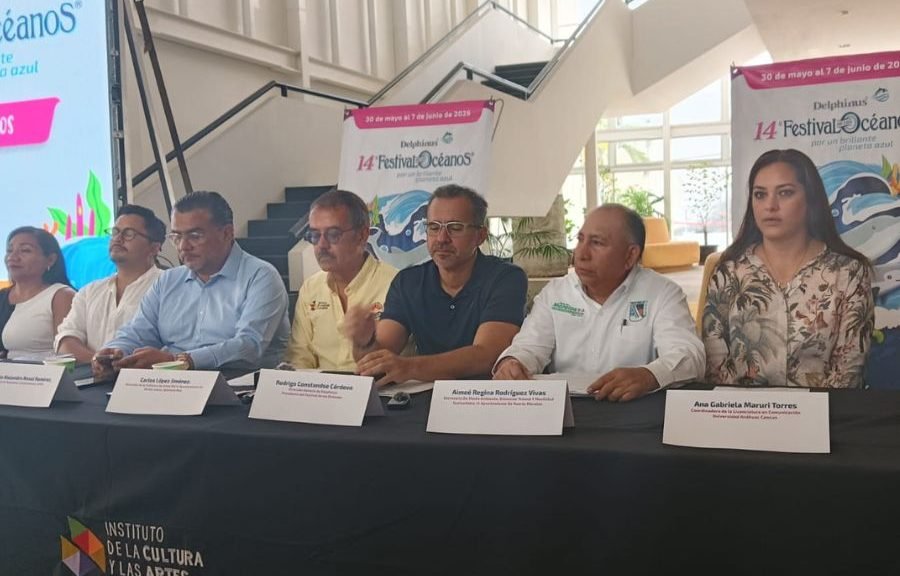
Cancún, Quintana Roo — Nearly a year after the so-called “Mincho Law” took effect, banning the use of marine animals in shows and restricting their reproduction in captivity, dolphinariums in Quintana Roo are operating in a regulatory vacuum that is harming animal welfare, according to Rodrigo Constandse Córdova, director general of Delphinus.
In an interview after announcing the 14th Oceans Festival, scheduled for May 30 to June 7 in Cancún, Puerto Morelos, and Playa del Carmen, Constandse said that while the reform has not caused economic losses, it has forced operational changes that affect the care of the animals.
“The law has not affected tourist flow, as interest in interacting with marine mammals and environmental education programs remains high. However, there are biological consequences due to the relationships between the animals,” he said.
To comply with the law, which took effect in June 2025, dolphinariums have separated males from females and are using restrictive medications to prevent reproduction. But Constandse noted that this creates unstable groups and reduces the animals’ quality of life.
A critical issue is the absence of a regulation that was supposed to be published in November 2025. Without it, the fate of calves from unwanted pregnancies remains uncertain.
In addition to the regulation, the state Congress has yet to pass a General Animal Welfare Law, derived from a constitutional reform against animal abuse. The industry considers this legal framework essential for the species’ survival.
Constandse reported that there are currently 300 dolphins in captivity nationwide, 220 of them in Quintana Roo, and 100 belong to Delphinus.
More Business
- China Expands Drug Precursor Export Curbs Before Trump-Xi Talks
- Cancún Airport ‘Pirate’ Transporters Accused of Intimidating Tourists Over Uber and Didi
- Cozumel Submarine Power Cable to Be Installed Oct. 5 After 40-Year Wait
- Isla Mujeres Fishermen Face Grouper Shortage as Catch Barely Covers Local Demand
- Tulum Adds Artisan Market and Caribbean Culture Festival to Its Tourism Lineup
More Cancun
- Cancún Evicts Homeless From Old General Hospital to Make Way for New Maternal and Child Facility
- Cancún’s Second Government Report Cites 995.9 Million Pesos in Public Works as Residents Question Results
- Activist Searching for Missing Brother Sentenced to 80 Years for Cancún Kidnapping
- Cancún Officials Urge Residents to Protect Pets After Reported Puma Sighting in Cuna Maya
- Fraud Suspect Captured in Miami Returned to Quintana Roo After Two Escapes