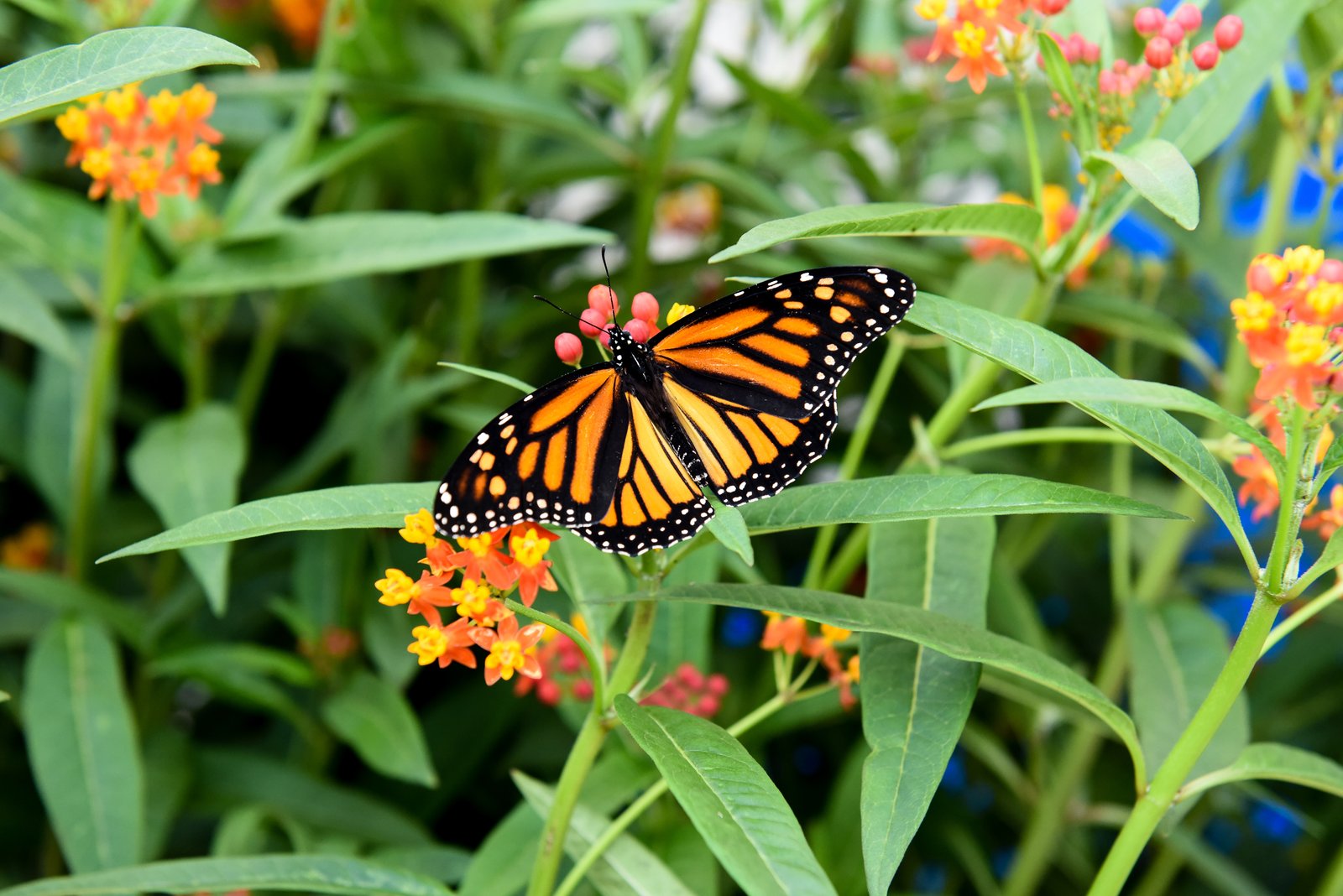
Cancún, Quintana Roo — The monarch butterfly does not limit its travels to the well-known journey toward the mountain forests of Michoacán and the State of Mexico. The Yucatan Peninsula sits on a separate, maritime migration route that researchers have documented for years, and its local dynamics are revealing new details about how the species uses northern Quintana Roo.
Juan Flores, the researcher who leads the environmental education and research project Alas Mayas, said he has spent nine years studying the phenomenon in the state.
In an interview with RCA, Flores explained that unlike the continental route that funnels south through central Mexico from Canada and the United States, a second migratory flow originates along the eastern seaboard of North America. Those butterflies move into Florida, cross the sea to Cuba, spend a short time on the island and then enter the peninsula during the autumn season.
During that fall passage, the insects can be spotted in places such as Cancún, Isla Mujeres and Holbox. Some continue along the Yucatan coast toward Veracruz to join the central Mexican migration, while others drop toward Central America or remain in the region.
One of the most notable findings of recent years concerns the species’ spring behavior. Research has now confirmed that the monarch returns to the northeastern coast of Quintana Roo from various points to begin its reproductive cycle.
In municipalities including Isla Mujeres, Benito Juárez and Cozumel, residents and visitors can witness the complete biological cycle: egg-laying, the development of the caterpillar, the formation of the chrysalis and the emergence of new adults.
On the urban front, Flores said the expansion of cities and the loss of coastal vegetation pose a constant challenge and risk to both resident and migratory wildlife.
Urban growth, however, has also produced a larger pool of citizen observers. Reports and photographs submitted by residents have proven essential to enriching scientific records and tracking the butterflies’ movements.
To help people identify monarchs and avoid confusing them with similar regional species, the Alas Mayas team promotes community participation and the creation of pollinator gardens.
The project works alongside the National Commission of Natural Protected Areas (CONANP), the National Commission for the Knowledge and Use of Biodiversity (Conabio) and municipal authorities to bring workshops and educational materials to schools and the general public.
Those interested in contributing reports or reviewing information can reach the initiative through its official social media channels under the name Proyecto Alas Mayas.
More Environment
- Cancún Mayor Says Federal Permits Covered Playa Delfines Fiber Optic Work
- Maya Octopus Fishery in Quintana Roo Faces Crisis as Catches Fall and Microplastics Spread
- Semarnat Rejects 108-Room Hotel at Punta Venado Over Mangrove Protection
- Semarnat Convenes Working Groups to Protect Mahahual’s Environment
- Xcaret Forum Urges Tourism Industry to Grow Without Harming Nature
More Cancun
- Cancún Finishes Demolishing Old General Hospital as Work Begins on New Maternal-Infant Facility
- Cancún Hotels Offer Free Nights as Industry Faces Worst Year, Vara Says
- Man Jumps From Third-Floor Window in Cancún as Lover’s Husband Arrives
- Nine Arrested in Cancún Over ‘Gota a Gota’ Loan Shark Extortion Ring
- Tourist Police Seize 27 Suspected Cocaine Packages on Cancún Hotel Zone Beach