Tulum, Quintana Roo — Federal environmental authorities have agreed to review whether private events and ceremonies can continue inside Tulum National Park without conflicting with rules that expressly prohibit parties, concerts and raves in some of the protected area’s most heavily developed sections.
The review follows a meeting between Pedro Álvarez Icaza-Longoria, head of the National Commission of Protected Natural Areas, or Conanp, and the Tulum Hotel Association, led by David Ortiz Mena.
Statements following the meeting described the objective as determining the “viability” of events and ceremonies that could increase tourism while remaining consistent with the park’s management program. The association also proposed developing a process to consider possible changes to that program through the park’s advisory council.
The announcement should not yet be interpreted as approval for additional events. No list of properties, ceremonies or proposed activities was released, and authorities did not identify any organizer accused of violating the current rules.
It also was not described as an enforcement operation. Instead, the meeting appears to have opened a discussion over which activities can legally take place, under what conditions and whether the existing rules should eventually be amended.
The current plan places clear limits on events
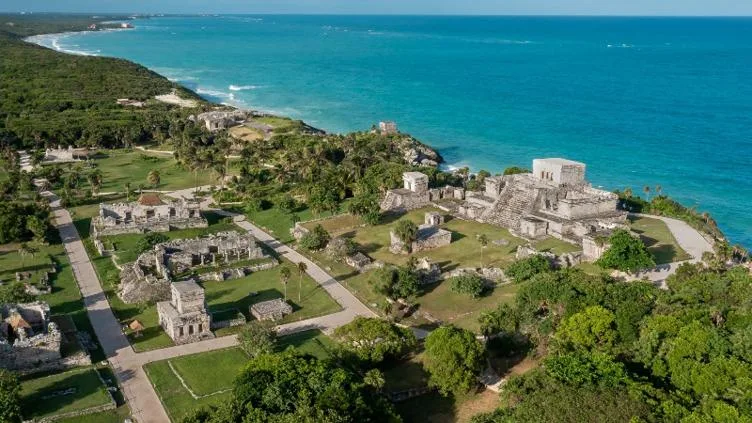
Tulum National Park covers approximately 664 hectares surrounding the Tulum archaeological zone. Created by federal decree in 1981, it protects jungle, mangroves, coastal dunes, beaches, cenotes and underground water systems.
Although the park had existed for more than four decades, its current management program was not formally published until January 2024. That document divides the protected area into zones and specifies what may and may not occur in each one. The section most relevant to hotels is the “Public Use Subzone with Tourism Infrastructure.” It covers approximately 38.3 hectares in 19 separate areas where lodging, restaurants and recreational facilities were already operating when the plan took effect.
Existing accommodations and food services may continue operating there, and existing infrastructure can be maintained as long as it is not expanded. Low-impact tourism is also permitted. However, the same section specifically prohibits “events such as raves, parties and concerts.” It also bans new buildings, expansion of existing structures, additional infrastructure, sand extraction, alteration of dunes and the introduction of pets.
The prohibition is based on more than crowd size. The management program says parties can generate garbage, noise and artificial light, disturb wildlife and contribute to compaction and erosion of beaches and dunes. Those impacts are particularly important on beaches used by nesting green, loggerhead and hawksbill turtles.
The official management program published in the Federal Gazette also contains a park-wide prohibition on large sporting and recreational events that produce vibrations, light or sound capable of disturbing ecosystems.
Not every organized gathering is automatically prohibited
The rules make a distinction between entertainment events and activities with a cultural or environmental purpose. Cultural and environmental-education events may be allowed in appropriate subzones, but organizers must coordinate with park management beforehand. The purpose of that review is to protect ecosystems and visitors.
Tour operators bringing groups into the park for recreational or cultural purposes generally require authorization from Semarnat through Conanp. Visitors, businesses and service providers must also hold any other licenses or concessions required for their activities.
This creates a gray area for small private ceremonies. The management program does not specifically list weddings, vow renewals, meditation sessions or spiritual ceremonies by name. Whether one qualifies as a prohibited party, an allowable cultural gathering or low-impact tourism may depend on its location, size, equipment, sound, lighting and environmental effect.
A quiet ceremony involving a small group is different from a reception with amplified music, generators, temporary structures, lighting and dozens of guests. The federal review is expected to address where that dividing line should be drawn. Neither Conanp nor the hotel association disclosed which types of ceremonies prompted the discussion. They also did not say how many events are currently taking place or whether existing operators hold authorizations.
Existing hotels operate under strict limits
The tourism-infrastructure zone recognizes that hotels and restaurants were operating inside the park before the management program was adopted. It does not give those businesses unlimited freedom to introduce new commercial activities. The plan allows existing lodging and dining services to operate, but prevents new construction and expansion. Maintenance is permitted only when it does not enlarge existing infrastructure.
This distinction matters because an event may require more than the use of an existing terrace or dining area. Temporary stages, dance floors, lighting towers, tents, generators, additional bathrooms and beachfront installations could raise separate questions about infrastructure, noise, waste and disturbance of dunes or nesting areas.
Commercial photography and filming may be allowed in the tourism-infrastructure subzone, but permits and additional coordination may be required. Recreational drone use is generally not allowed. The plan limits drones primarily to scientific research, environmental monitoring and park administration, with additional authorization required near archaeological resources.
Several agencies have different responsibilities
Conanp administers the protected area and issues certain tourism-related authorizations. Profepa is responsible for inspecting activities and enforcing federal environmental rules. Semarnat oversees the broader environmental framework and permits, while Conagua becomes involved when water use, groundwater, discharges or federal water jurisdiction are affected.
The National Institute of Anthropology and History, or INAH, has authority over the archaeological zone and protected monuments. An event near archaeological remains could therefore require a separate review even if it satisfies the environmental rules.
The park’s advisory council provides a place for authorities, tourism businesses and community representatives to discuss management issues. It does not replace the agencies responsible for issuing permits or enforcing the law. Officials agreed to continue coordinating through that council and to consider a route for reviewing the management program. No timetable was announced for completing the event review or proposing changes.
Conservation concerns remain central
Tulum National Park is relatively small, but Conanp describes it as the only terrestrial federal protected area along the Cancún-Tulum corridor. It contains mangroves, wetlands, low jungle, coastal vegetation, beaches and cenotes used by wildlife, including protected species.
The management program says past tourism development has already interrupted water flow between mangroves and the coast, contributed to flooding and erosion and interfered with access to turtle-nesting areas.
That history explains why the question is not simply whether private events attract more visitors or generate income. Authorities must determine whether the activity fits the park’s designated use and whether its cumulative effects are compatible with the conservation purpose for which the land is protected. Ortiz Mena said the hotel association remains committed to dialogue and to tourism that is sustainable, competitive and respectful of local ecosystems.
For hotels and event organizers, the practical outcome will depend on the details still to come: which ceremonies are considered low impact, where they may be held, what equipment will be allowed and which authorizations must be obtained.
Until Conanp completes the review or formally changes the management program, the existing rules remain in force. Parties, raves and concerts are prohibited in the tourism-infrastructure subzone, while any potentially permissible cultural or educational gathering requires prior coordination with park authorities.
More Environment
- Playa del Carmen Residents Blast Six-Year Illegal Dump
- Cozumel to Host 18th Island Bird Festival Oct. 7-11
- MarAlliance Launches Free MARAP App to Track Marine Wildlife in the Mexican Caribbean
- Playa del Carmen Seeks Million-Dollar Investment for Sargassum Processing Plants
- Yucatán Officials Rule Out More Brain-Eating Amoeba Infections at Mérida’s Plaza La Isla
More Tulum
- Bus Carrying Hotel Workers Overturns Near Tulum Airport, Dozens Reported Injured
- Tulum to Host More Than 400 Riders in 2026 Federated Horse Parade
- Tulum Residents and Officials Discuss Security, Traffic and Towing Complaints
- Who Takes Tulum’s First Councilor Seat During Tah Balam’s Leave?
- Cobá Arrest Turns Violent: Officer Injured, Shots Fired