
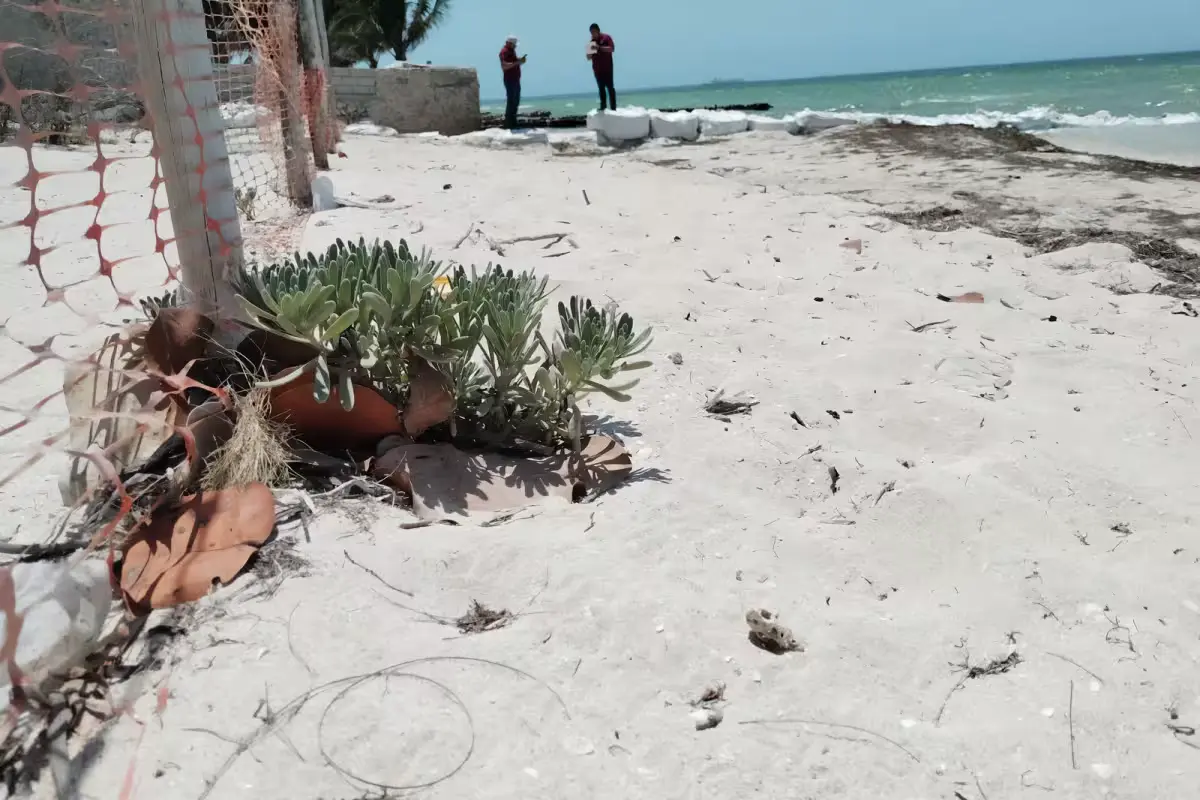
Merida, Yucatan — Federal environmental authorities have temporarily closed five properties in two of Yucatan’s most important biosphere reserves, uncovering widespread damage including mangrove removal, wetland filling, and illegal coastal occupation.
The operation, led by the Federal Attorney’s Office for Environmental Protection (Profepa) and the National Commission of Natural Protected Areas (Conanp), targeted the Ria Celestun and Ria Lagartos Biosphere Reserves. Inspectors documented one hectare of cleared and burned vegetation, 2,578 square meters of removed mangrove, a filled wetland, and 274 square meters of federal coastal zone occupied without a concession.
In total, authorities conducted six inspections across Yucatan: three for illegal land-use change, two for environmental impact violations, and one related to the federal maritime-terrestrial zone. They also found 5,000 square meters of cleared low deciduous forest, 3.53 hectares with land-use change, and another 5,000 square meters affected by burning.
Profepa imposed five total temporary closures and initiated administrative proceedings that will determine penalties.
The operation was part of a larger national sweep covering 33 priority protected areas in 25 states, aimed at halting illegal land-use change and irregular occupation of coastal ecosystems.
In neighboring Campeche, the same June operation detected the removal and burning of 12.5 hectares of secondary vegetation in the Bala’an K’aax Flora and Fauna Protection Area, allegedly linked to Mennonite settlements. That discovery led to a temporary closure and a criminal complaint. In the Los Petenes Biosphere Reserve, authorities dismantled 13 irregular structures on federal coastal land, freeing 380 linear meters of protected space.
The environmental pressure on the Yucatan Peninsula is not new. Between May and August 2025, Profepa reported closing 17 properties with damage across 3,747 hectares of forest in Campeche, Quintana Roo, and Yucatan, along with 13 criminal complaints. In the first half of that year, the agency documented more than 2,600 hectares destroyed by illegal logging and arson, a pattern linked to the expansion of agro-industrial monocultures and the use of glyphosate, which has been associated with health risks and bee die-offs.
On the coast, the problem also stems from real estate and tourism pressure on dunes, mangroves, and wetlands. A similar operation in Chicxulub Puerto, Progreso, and San Crisanto resulted in five closures of real estate projects for land-use change and damage to dunes and coastal scrub, both inside and outside the Ria Celestun Natural Protected Area.
Profepa said these joint operations with Conanp, the National Guard, and the Defense and Navy secretaries will continue permanently in the peninsula as part of a zero-tolerance policy against degradation of mangroves, forests, and federal zones.
More Environment
- Judge Halts Trump Border Barrier in Big Bend National Park
- US Coast Guard Seizes Cargo Ship Accused of Smuggling Fuel to Cuba
- Playa del Carmen to Renew Eight Blue Flag Beach Certifications, Eyes Two More
- Cancún Sets October Dates for Free Dog and Cat Sterilization Clinics
- Sargassum Influx Triggers Two Types of Wildlife Die-Offs in Quintana Roo
