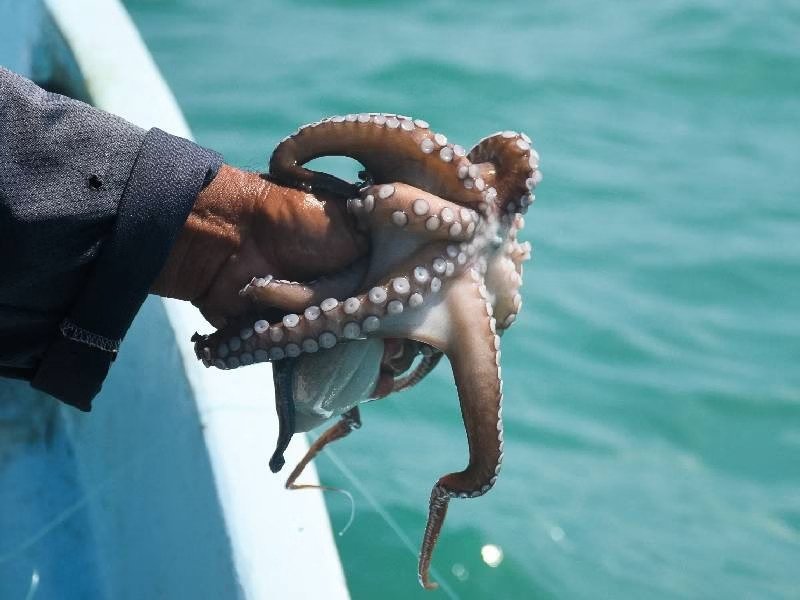
Mérida, Yucatán — Yucatán’s Sustainable Fisheries and Aquaculture Department (Sepasy) is urging fishermen to use only authorized gear for octopus fishing and to stop diving for the species, a banned practice that officials say endangers both the octopus population and the divers themselves.
Lila Frías Castillo, head of Sepasy, said the agency has received complaints from fishermen about people diving for octopus along the Yucatán coast. She said the state government is coordinating with the Mexican Navy, Profepa (Mexico’s environmental enforcement agency), and Conapesca (the national aquaculture and fisheries commission) to identify the locations where the practice is occurring.
Frías Castillo warned that diving for octopus is not only illegal but can lead to serious accidents, including death from decompression sickness. She said one person has already died during the first 18 days of the current octopus season.
She also noted that the lobster season is currently open and allows the use of certain diving equipment, and urged fishermen not to confuse the authorized gear for each species.
According to Frías Castillo, fishing activity increases every year at the start of octopus season, and some fishermen from other states resort to diving to catch the mollusk. She said stronger surveillance is needed to prevent overexploitation.
She added that diving can damage the octopus population because divers often catch undersized specimens and may damage the dens where the species reproduces.
More Environment
- Cancun’s Tourism Reset: Regenerative Travel Takes Center Stage
- Quintana Roo Moves to Power Public Buildings With Clean Energy
- Hurricane Season 2026: What Quintana Roo Faces Before It Ends Nov. 30
- Mexican Navy Prepares 2027 Sargassum Strategy With 17 New Vessels
- New MARAP App Opens Anonymous Environmental Reporting in Playa del Carmen