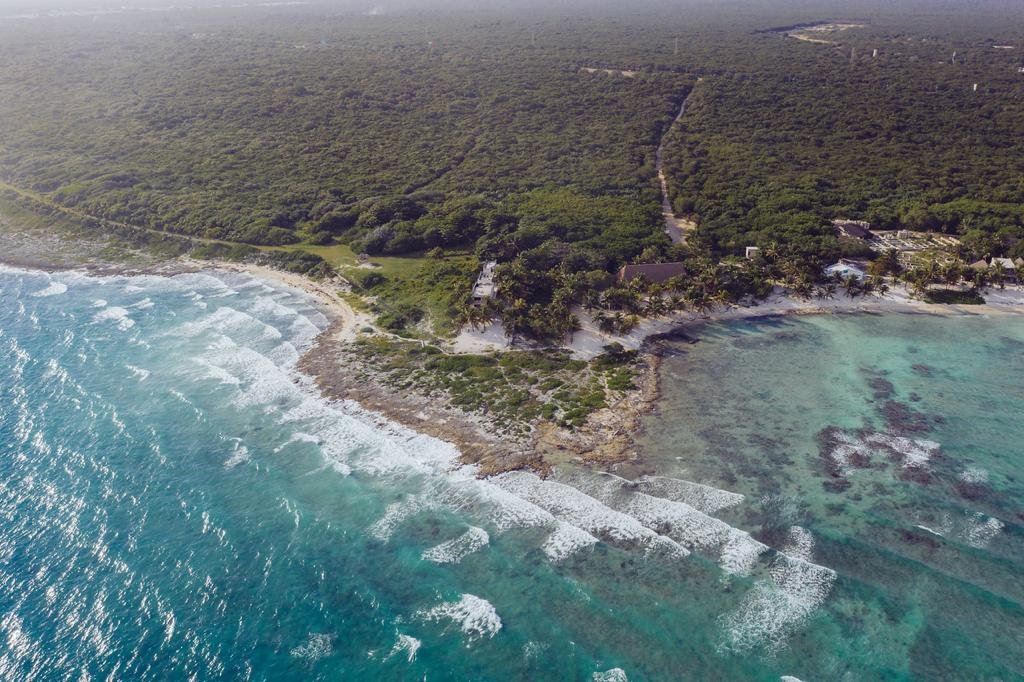
Playa del Carmen, Quintana Roo — Mexico’s Secretariat of Environment and Natural Resources has authorized the construction and operation of Proyecto Venado, a new tourism and real estate development planned for the Punta Venado-Paamul corridor south of Playa del Carmen.
The project, promoted by Residencial Punta Venado, will be built on a property of more than 111 hectares in one of the Riviera Maya’s most environmentally sensitive coastal areas. The site is located between two major protected areas: the Mexican Caribbean Biosphere Reserve and the Felipe Carrillo Puerto Flora and Fauna Protection Area.
According to the environmental authorization issued by Semarnat, Proyecto Venado includes 108 hotel rooms, 50 special suites, and 33 private residences. The plan also calls for internal roads, artificial lagoons, a wastewater treatment plant, and a reverse osmosis plant to support the operation of the development.
The authorization follows the review of the Environmental Impact Statement, or MIA, submitted by Residencial Punta Venado in September 2024. Semarnat granted a construction period of two years and six months, followed by an operational term of 50 years.
The developer states that the project’s built footprint will occupy 16.8 hectares, representing approximately 15% of the total property. The remaining area, according to the company’s proposal, will retain its native vegetation cover.
Even with that reduced footprint, the project has renewed concern over the pace of development in the Riviera Maya’s coastal corridor. The Punta Venado-Paamul zone sits near important conservation areas and forms part of a stretch of coastline where tourism, real estate, and environmental protection are increasingly coming into conflict.
Proyecto Venado is not the only large development moving forward in the area. The property is adjacent to Punta Inna, where Semarnat recently authorized another major project, the Complejo Ecoturístico Riviera Maya. That project includes two hotels with a combined 572 rooms, adding to the growing concentration of planned tourism infrastructure in the same corridor.
Developers argue that new investment is needed to meet the region’s continued tourism demand. In its justification, Residencial Punta Venado cited the growth of sun-and-beach tourism, nature tourism, business travel, adventure tourism, events, and conventions as reasons for expanding lodging and services in the Riviera Maya.
The company also argued that the Riviera Maya’s position as an international destination continues to attract new visitor segments that require updated infrastructure, specialized services, and additional accommodation options. Supporters of projects like Proyecto Venado point to private investment, job creation, and regional economic growth as key benefits.
Environmental advocates and local observers see a more complicated picture. The concern is not only one project, but the cumulative impact of several large developments being authorized near sensitive ecosystems. Artificial lagoons, roads, hotel operations, residences, water treatment, desalination infrastructure, and increased traffic all add pressure to coastal land that is already under stress from rapid growth.
The authorization also raises a familiar question in Quintana Roo: how much more development can the Riviera Maya absorb without damaging the natural systems that made it valuable in the first place?
The region’s tourism model has long depended on beaches, jungle, reefs, cenotes, wildlife, and protected landscapes. As more projects are approved between Playa del Carmen, Paamul, and Punta Venado, the balance between economic development and environmental protection is becoming harder to ignore.
For now, Semarnat’s decision gives Proyecto Venado a clear path forward, at least from the federal environmental standpoint. The next stage will be whether the developer can meet the conditions of the authorization during construction and operation.
What remains unresolved is the broader question of long-term planning along this part of the Riviera Maya coast. Proyecto Venado is now one more approved project in a corridor already drawing attention for its speed of growth, environmental sensitivity, and increasing development pressure.
More Development
- Mexican Army Nears Completion of 16-Kilometer Jungle Road Over Tulum’s Sac Actún Cave System
- Cancún Installs More Than 100 Traffic Signs Across the City
- Mérida Opens First Green Corridor to Fight Climate Change
- Business Leaders Urge Playa del Carmen to Diversify Economy as Tourism Slumps
- Playa del Carmen Inaugurates Plaza Punto Sur Under Public-Private Alliance
More Playa del Carmen
- Mayakoba Resorts Accused of Illegally Withholding Up to 35% of Worker Tips
- Cenotes in Playa del Carmen Face Contamination Risk From Poor Sanitary Infrastructure
- GPS Leads Police to Rental Car Reported Stolen in Cancún; Two Arrested in Playa del Carmen
- Two Men Bound Over for Trial in Playa del Carmen Extortion Case
- State Prosecutors Raid Clandestine Motorcycle Workshop in Playa del Carmen