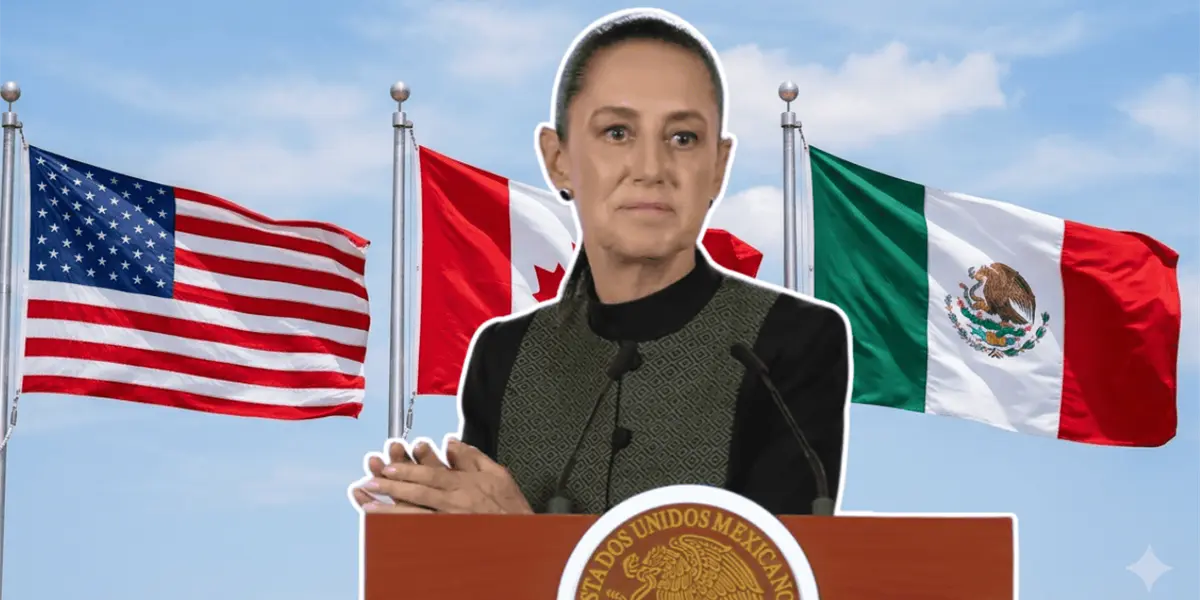
Mexico City — Mexico and Canada have formally requested a 16-year extension of the United States-Mexico-Canada Agreement (USMCA) and are now awaiting a decision from the United States, President Claudia Sheinbaum said Tuesday.
Speaking at her morning press conference, Sheinbaum said Mexico and Canada have both signed the corresponding letters. The US has until Wednesday, July 1, to define its position, with a virtual meeting of representatives from all three countries expected to reveal the outcome.
If the US does not agree to the 16-year extension, the trade pact includes a formal review process that could lead to adjustments and a subsequent 10-year term, Sheinbaum explained. She clarified that this would not mean an immediate termination of the agreement but rather the start of a procedure outlined in the treaty itself.
“It’s not that it will be reviewed every year, but a formal review process begins, and in that process, we’ll see if any adjustments need to be made,” she said.
Any major changes would require approval from the legislatures of all three countries, though Sheinbaum said that scenario currently seems unlikely.
The virtual meeting on Wednesday will include Mexico’s Economy Secretary Marcelo Ebrard, Canadian Minister Dominic LeBlanc, and US Ambassador Jamieson Greer. A joint statement may follow, or each country could report separately. Ebrard is expected to brief the media on Thursday.
Sheinbaum also noted that an in-person review meeting is tentatively scheduled for July 16-20, with dates still to be confirmed.
The president emphasized that the US decision is the key factor for the agreement’s future, noting that the Trump administration has pursued tariff increases and protectionist measures. “Everyone knows President Trump’s position is to raise tariffs on everyone — it’s no secret, it’s essentially what we’ve been experiencing since he took office,” she said.
Sheinbaum highlighted the benefits of maintaining the USMCA, pointing to the interconnected production chains in sectors such as automotive, steel, and aluminum. “The biggest defenders of the treaty are the businesspeople who have investments in Mexico, Canada, and the US, and who produce goods in linked supply chains across the three countries,” she said.
More Politics
- López Obrador Reappears With Video Message as Sheinbaum Marks Two Years
- Quintana Roo Congress Approves Single-Nationality Rule for Top Elected Offices
- Mexico’s Senate Approves ‘Anti-Meme’ Law With Five-Year Prison Terms
- Morena Polls Confirm Gino Segura’s Lead in Quintana Roo as Marín Trails Ana Paty
- Quintana Roo Anti-Corruption Agency Reports 82 Sanctions, Mostly Temporary Disqualifications