
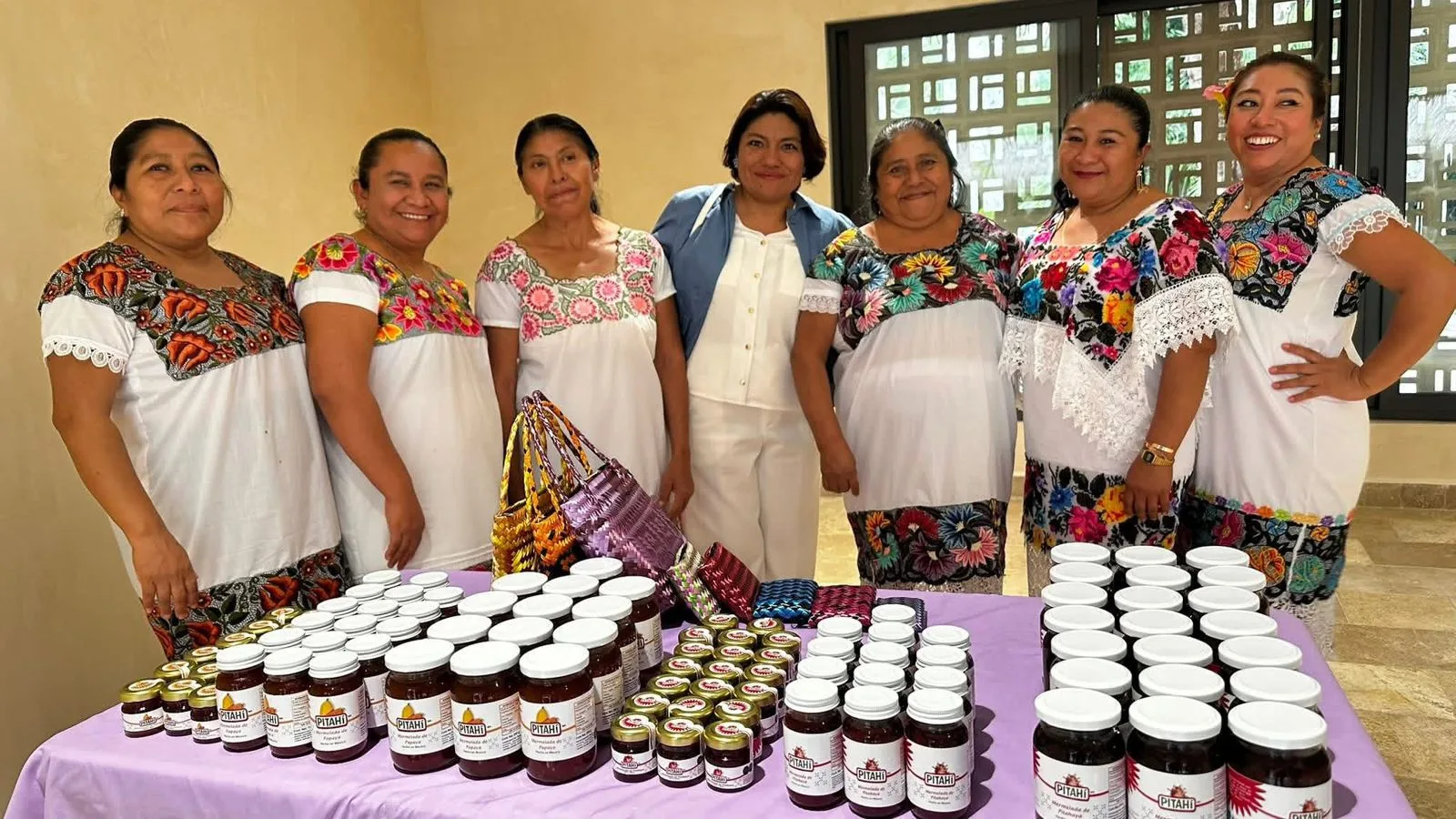
Chumpón, Quintana Roo — A group of Maya women in the community of Chumpón have revived their pitahaya production and processing project, breathing new life into a small-scale initiative rooted in tradition, resilience, and local agriculture.
The collective, known as “Pitahí”, is made up of eight women who originally launched the project to take advantage of the region’s seasonal pitahaya harvest—transforming the fruit into artisanal jams sold directly to hotels across the Riviera Maya. At its peak, the project provided a steady source of income for participating families, while also creating a direct link between rural producers and the tourism economy.
Pitahaya—often referred to as dragon fruit—is native to Mexico and has deep cultural roots in Maya communities. In the Yucatán Peninsula, it grows wild or semi-cultivated on cacti, harvested during a short seasonal window that typically runs from late spring into summer. Because the fruit is highly perishable, processing it into preserves like jams and jellies has long been a practical way to extend its value and shelf life.
A Project Interrupted
The project came to a halt following a series of setbacks that reflect broader challenges faced by rural producers.
Severe flooding in 2018—part of a year marked by unusually heavy rains across the region—damaged crops and disrupted harvesting cycles. In communities like Chumpón, where agriculture is closely tied to seasonal patterns and access roads can be limited, extreme weather events can have lasting impacts.
Then came the COVID-19 pandemic.
“Hotels closed and stopped buying our products, so everything had to stop,” recalled María Caamal Aban, the group’s president.
With tourism—their primary market—effectively shut down, demand disappeared almost overnight. Like many small producers across Quintana Roo, the group lacked the financial cushion or institutional support needed to sustain operations through prolonged closures.
Starting Again, From Scratch
After several years of inactivity, the women made the decision to restart the project about eight months ago, funding the revival themselves.
“We’re knocking on doors to get people to buy our jams. We don’t have government support; we reinvest from what we sell,” Caamal Aban explained.
Their approach reflects a common reality in rural Mexico, where small cooperatives often operate without consistent access to credit, subsidies, or formal distribution channels.
To adapt, the group has expanded beyond pitahaya, producing jams from papaya, pineapple, and nopal—cactus fruit and pads that are widely available in the region. Diversification helps reduce dependence on a single seasonal crop and provides more consistent income throughout the year.
The Challenge of Market Access
One of the biggest obstacles facing producers like Pitahí is not production—but access to markets.
In many parts of Mexico, small farmers must compete with intermediaries known as coyotes, who buy products at low prices and resell them at a markup. Without direct access to buyers, producers often have little bargaining power.
By selling directly to hotels in the past, the Pitahí collective had managed to bypass this system. Rebuilding those relationships, however, has proven difficult in a post-pandemic landscape where supply chains and purchasing habits have shifted.
Their recent success in securing a sales point at the Muyil Archaeological Site represents an important step forward. There, they sell their jams alongside other community-made products, including honey, embroidery, handicrafts, and plant-fiber goods—creating a small but meaningful ecosystem of local commerce.
More Than Just a Business
The project goes beyond income generation.
For the women involved, it represents a way to preserve traditional knowledge—both agricultural and culinary—while creating opportunities within their own community. In regions where younger generations often leave in search of work, initiatives like this offer an alternative path rooted in local resources.
Cooperatives led by women have become increasingly important across the Yucatán Peninsula, particularly in Maya communities where collective work and shared income models align with long-standing social structures.
Looking Ahead
The Pitahí members continue working to reestablish their project, relying on experience, collaboration, and persistence to rebuild what was lost.
Their story reflects a broader pattern across rural Quintana Roo: small-scale producers navigating environmental shocks, economic disruptions, and structural barriers—while still finding ways to adapt and move forward.
In a region where tourism dominates the economy, efforts like this serve as a reminder that some of the most meaningful connections to place and culture start far from the resort zone.
More Business
- Starbucks Exits Tulum: Why the Hotel Zone Is Losing Its Buzz
- Canada Drives Mexican Caribbean Demand for Final Quarter of 2026
- Funeral Services in Cancún Can Top 100,000 Pesos, Workers Say
- Riviera Maya Forum Pushes Caribbean Mexico Toward Regenerative Tourism
- Xcaret Says It Will Abide by Any Supreme Court Ruling on Use of Maya Culture
More Zona Maya
- Quintana Roo Opens 2026 Poetry Contest for Indigenous and Afro-Mexican Girls
- Drought Damages Farmland in Felipe Carrillo Puerto as Quintana Roo Assesses Losses
- Aluxes Endure in the Beliefs of Maya Communities in Quintana Roo
- Search Operation for Missing People Deployed in Felipe Carrillo Puerto
- Mothers of Missing Children Ask Quintana Roo to Display Their Faces on Public Transport
