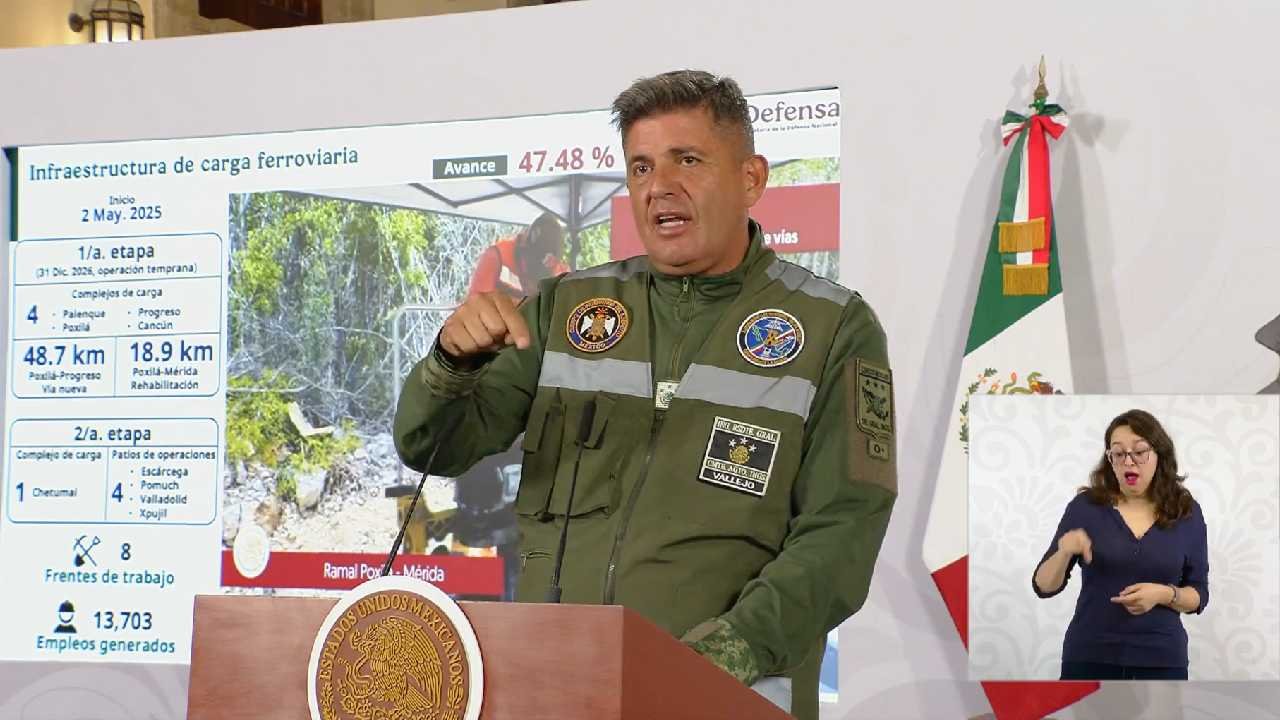
Cancun, Quintana Roo — The Mexican Defense Department (Sedena) reported that the Maya Train freight terminal in Cancun is 47.48% complete, while construction of the Chetumal terminal will begin in 2027.
General Ricardo Vallejo, commander of the Felipe Angeles engineering unit, said nearly 800 kilometers of basic engineering have been completed for the first four sections of the freight train project, a flagship initiative of President Claudia Sheinbaum’s administration.
Construction of the Maya Train freight line began on May 2, 2025, with the first phase scheduled for completion by December 31, 2026, followed by early operations, Vallejo said during a project presentation.
Freight complexes are currently under development in Palenque, Poxila, Progreso, and Cancun, along with strategic work on operational yards and logistics zones to boost cargo transport in Mexico’s southeastern region.
Vallejo announced that construction of the Chetumal freight complex, along with four operational yards, will begin next year.
The railway project currently generates more than 13,000 direct jobs across eight active work fronts in various parts of the Mexican southeast, he added.
More Cancun
- Cancún Restaurant Sector Welcomes Extended Hours in Hotel Zone
- Man Who Posed as Inspector to Extort Cancún Merchant Ordered Held Two Years
- Cancún Shuts Down Two Gated Developments for Selling Lots Without Permits
- 272 OXXO Stores in Cancún Join ‘Purple Points’ Safety Network
- Hotels in Cancún and Puerto Morelos Restore Coastal Dunes With Native Plants
More Chetumal
- Chetumal Airport Customs Nears Full Operation Next Year
- Former Quintana Roo Tourist Police Chief Bound Over for Trial in Human Trafficking Case
- Pre-Hispanic Frog Pendants From Tren Maya Route Shed Light on Ancient Maya Trade
- Quintana Roo Crews Clear 70,000 Liters of Water in Bacalar and Chetumal After Heavy Rains
- Nacional Monte de Piedad to Reopen Chetumal Branches on October 7