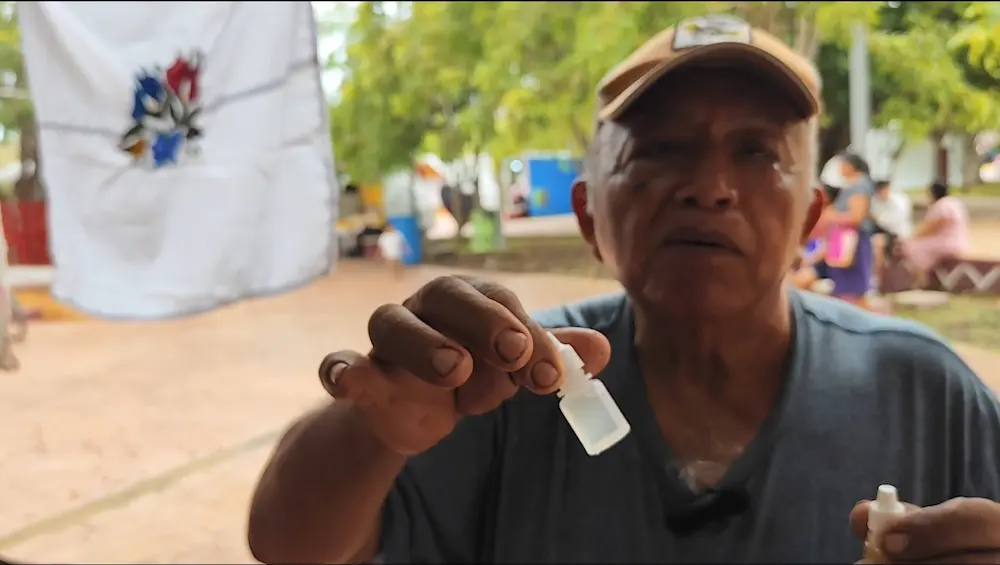
Jose Maria Morelos, Quintana Roo — A white honey with a distinct flavor is drawing attention in the municipality of Jose Maria Morelos, where local beekeepers say the conservation of plants and palms around their apiaries directly influences the quality and characteristics of the product.
Beekeeper Celestino May Martin, with more than 30 years of experience, said this is the first time he has harvested such a clear, almost transparent honey. He attributes the result to the flowering of palms and other species planted near his meliponary and apiary.
May Martin explained that each plant contributes different properties to the nectar, altering the color, taste, and consistency of the honey. Varieties from citrus, avocado, or specific trees produce distinct characteristics, while a mix of flowers yields multifloral honey.
The producer said he has been promoting the planting of native and uncommon plant species for years to strengthen the natural diet of bees and help conserve the local forest. He noted that climate change can either help or hinder production depending on rainfall and available flowering each season.
May Martin also warned that deforestation and lack of environmental awareness have reduced the flora and fauna that once thrived in the area. He urged the preservation of fruit trees and other species that sustain ecosystems and ensure continued beekeeping production.
Traditionally, this white honey is recommended for soothing sore throats, healing wounds, and treating other ailments. May Martin added that regular consumption of natural honey is part of his personal health routine.
More Environment
- Playa del Carmen Residents Blast Six-Year Illegal Dump
- Cozumel to Host 18th Island Bird Festival Oct. 7-11
- MarAlliance Launches Free MARAP App to Track Marine Wildlife in the Mexican Caribbean
- Playa del Carmen Seeks Million-Dollar Investment for Sargassum Processing Plants
- Yucatán Officials Rule Out More Brain-Eating Amoeba Infections at Mérida’s Plaza La Isla
More Zona Maya
- Quintana Roo Opens 2026 Poetry Contest for Indigenous and Afro-Mexican Girls
- Drought Damages Farmland in Felipe Carrillo Puerto as Quintana Roo Assesses Losses
- Aluxes Endure in the Beliefs of Maya Communities in Quintana Roo
- Search Operation for Missing People Deployed in Felipe Carrillo Puerto
- Mothers of Missing Children Ask Quintana Roo to Display Their Faces on Public Transport