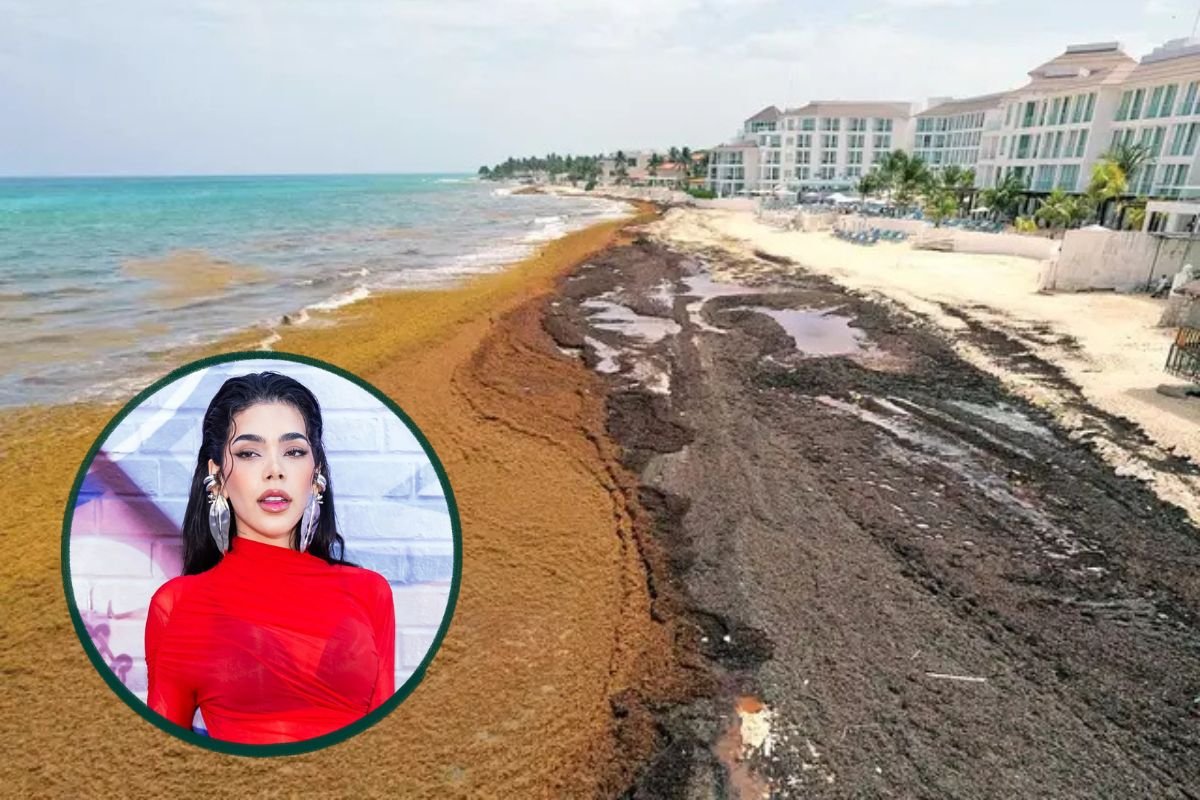
Playa del Carmen, Quintana Roo – The announcement of a free Kenia Os concert marking Playa del Carmen’s 33rd anniversary has sparked a debate over municipal spending as the city confronts heavy sargassum, eroding beaches and a difficult summer tourism season.
The Mexican pop singer is scheduled to perform at 8 p.m. on July 28 at the Recinto Ferial. Mayor Estefanía Mercado promoted the appearance as one of the principal events celebrating the anniversary of the municipality, formarly known as Solidaridad.
“Prepare your flights and start booking your hotels,” Mercado said while announcing the concert, describing Playa del Carmen as a destination capable of hosting one of the country’s most anticipated tours. Admission will be free. The concert is part of the municipality’s anniversary celebrations.
The announcement has been welcomed by fans, but it has also drawn criticism from residents and commentators who question whether large public events should be a priority while the destination’s beaches are under increasing pressure.
One widely shared editorial asked how much the Kenia Os performance would cost and compared the concert spending with the money being directed toward beach maintenance, security and coastal restoration. The post accused the municipal government of favoring short-lived publicity over the problems affecting Playa del Carmen’s tourism economy.
Reports circulating locally have placed the overall investment in the 2026 Feria del Carmen at 50 million pesos. That figure reportedly covers the broader celebration rather than the Kenia Os appearance alone. The fair’s program includes several concerts and cultural activities extending through the municipal anniversary period.
No itemized contract or official cost for the Kenia Os performance has been publicly released. Without that documentation, claims that the singer herself is receiving “millions” from the municipality remain unconfirmed.
That missing figure matters because the debate is taking place during an unusually severe sargassum season.
Playa del Carmen allocated 86 million pesos to its 2026 sargassum response, according to municipal information reported in March. The funding is intended to cover collection equipment, barriers, beach crews, transportation and disposal. The amount is higher than the 60 million to 80 million pesos that officials expect to collect this year through the environmental sanitation tax charged primarily to hotels and other tourism businesses. The municipality says it has secured 86 million pesos for the 2026 response.
The problem is larger than any single municipal budget.
Authorities and monitoring groups forecast that between 100,000 and 130,000 tons of sargassum could reach Quintana Roo during 2026, potentially exceeding the amount recorded last year. The algae began arriving earlier than usual, and Playa del Carmen has been among the hardest-hit areas. Hotels have reported devoting as much as 15 percent of their annual maintenance budgets to removing it from their beachfronts. Regional forecasts warned that the 2026 accumulation could surpass 2025 levels.
Sargassum is only part of the coastal problem. Erosion has reduced the width of several central beaches, particularly around El Recodo. In February 2025, Mercado’s administration announced a diagnostic study and an integrated coastal-recovery strategy after touring affected areas with hotel representatives, business leaders and environmental officials. At the time, the mayor called the beaches Playa del Carmen’s principal tourism asset. The municipal recovery proposal included studying erosion, coastal risks and long-term vulnerability.
Visible progress on a permanent restoration program has been limited, however, while the loss of sand continues to affect sections of the shoreline.
Tourism businesses are feeling the strain. Playa del Carmen’s small hotels reported average occupancy of about 32 percent in July, roughly 15 percentage points below the same period in 2025, according to the local small-hotels association. Its president, Offner Arjona, attributed the decline to a combination of sargassum, excess lodging supply and weaker demand. The association described the summer occupancy level as critical for smaller properties.
Those figures do not prove that money spent on public entertainment caused the tourism decline. A free concert may attract regional visitors, generate spending for local businesses and give residents access to an event they might otherwise be unable to afford. Cultural programming is a legitimate municipal expense.
But the concert announcement has exposed a basic transparency problem. Residents know when and where Kenia Os will perform. They have not been told what her appearance will cost, which budget will pay for it or how the municipality expects to measure its economic return.
The show lasts one night. The bills for clearing sargassum and rebuilding Playa del Carmen’s disappearing beaches will be arriving for years.
More Economy
- Playa del Carmen Taps HR Directors to Boost Local Hiring
- Mexico Hoteliers Warn of 1.1 Million Air Tourist Loss as U.S. Arrivals Slump
- Cancún’s Route 17 Leona Vicario Draws More Than 16,000 Riders on First Free Day
- FIRA Issues Mexico’s First Biodiversity Bond Worth Over 1.6 Billion Pesos
- Aeromexico Eyes New U.S. Routes After Mexico City Limits End
More Playa del Carmen
- Two Drivers Hurt in Playa del Carmen Crash at Wet Zazil-Há Intersection
- Influencer Discards 2,500-Peso SpongeBob Cake at Nickelodeon Riviera Maya, Citing Bad Taste
- Quintana Roo Tops 152,000 Metric Tons of Sargassum as Playa del Carmen and Cancún Lead
- Playa del Carmen Opens Registration for Audiovisual Workshops
- Playa del Carmen Businesses Seek Later Closing Hours for Bars and Restaurants