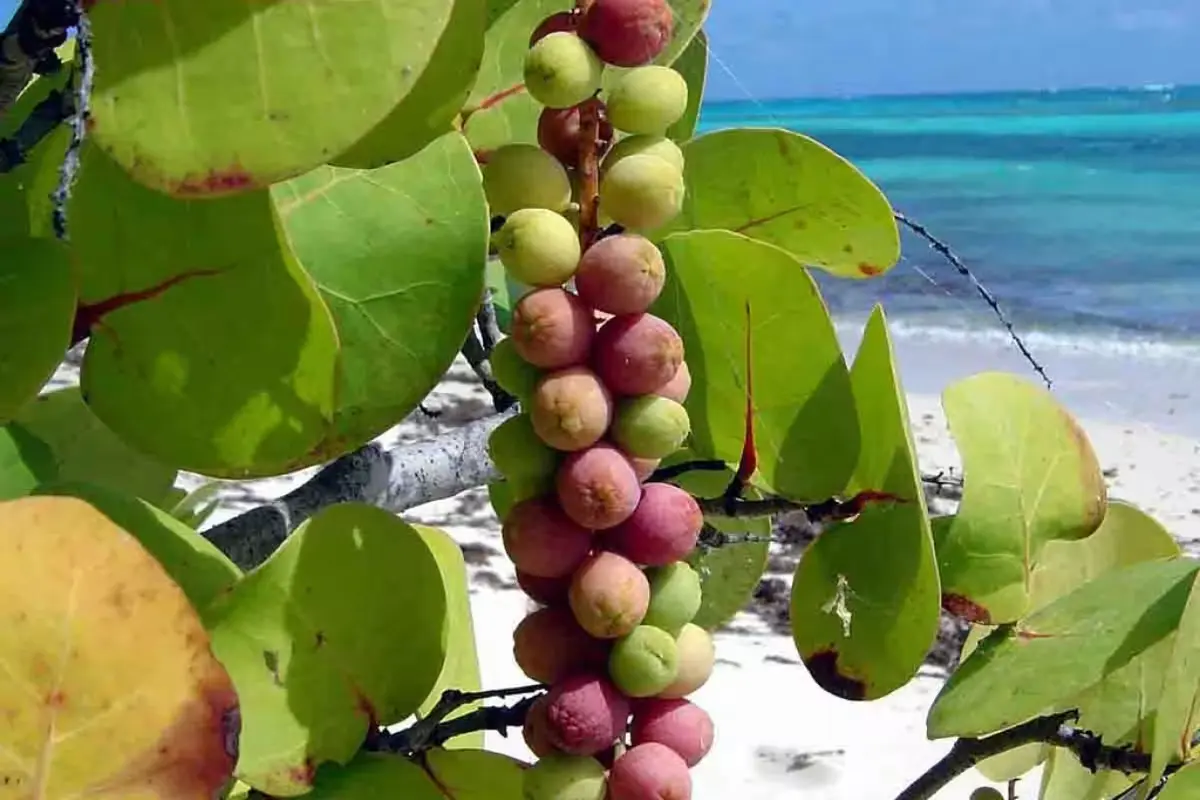
Isla Mujeres, Quintana Roo — Residents and local authorities are pushing to restore sea grape plants along Isla Blanca to combat coastal erosion, as the species’ natural habitat has been largely destroyed by tourism development.
Sea grapes (Coccoloba uvifera) once flourished along the perimeter road of Isla Mujeres, where families would gather the sweet fruit. But the expansion of hotels in the Costa Mujeres area has wiped out much of the vegetation, leaving the shoreline vulnerable to storms and rising seas.
“We used to pick sea grapes at several spots on Isla Blanca, but after the hotels came, we no longer enjoy this fruit every summer like before,” said Luis Pérez, a member of a fishing family. “I hope they replant them on the beaches within the federal zone, in the eroded areas, to stop the sea from advancing.”
Residents note that some sea grape plants still survive near the old airport. During the season, people arrive early to collect the scarce fruit, sometimes selling it for over 100 pesos per kilogram. Rosaura Vélez, who moved to the island 15 years ago, said she developed a taste for the fruit and now gathers it regularly.
Jacobo Toledo, stepson of a fisherman, recalled that the area near the College of Baccalaureates used to be abundant with sea grapes. “Now older folks only have the memory,” he said.
According to studies by Mexico’s Secretariat of Environment and Natural Resources, sea grape trees can grow up to six meters tall in the transition zone between sand and coastal vegetation on the Yucatan Peninsula. They can spread up to four meters in diameter and grow about 50 centimeters per year with sufficient moisture or irrigation.
The species acts as a natural barrier against the impact of hydrometeorological events on beaches. Researchers say that to contain erosion, up to four rows of sea grapes should be planted along Isla Blanca’s beach, from the end of the Costa Mujeres hotels to the northern tip of the destination — a stretch of about 10 kilometers — with plans to extend coverage to Cabo Catoche.
Initiatives are underway to promote large-scale cultivation to accelerate growth and harvest within about five years, given high demand for the fruit in coastal communities. Research indicates that Coccoloba uvifera requires abundant watering one to two times per week during spring and summer, with reduced watering in winter.
More Environment
- Yucatán Peninsula Lost 285,580 Hectares of Jungle in 4 Years
- Quintana Roo Crews Clear 70,000 Liters of Water in Bacalar and Chetumal After Heavy Rains
- Yucatan Drafts Rules for Artificial Lakes After Worker Dies of Amoeba Infection
- Quintana Roo Wins SEMARNAT Approval to Restore 33.5 Km of Beaches
- Yucatán Monitors Low-Pressure System in Gulf of Mexico for Possible Cyclone
More Cancun
- Tropical Wave 36 Floods Northern Quintana Roo, Hits Tourism
- Cancún Residents Call Protest Against Aguakan Over Unsafe Roadworks on Avenida Colegios
- Cancún Real Estate Fraud Suspect to Face Trial at Liberty After Judge Rejects Pretrial Detention
- Park Hyatt to Open in Riviera Maya on December 3 With 148 Rooms
- Woman Killed by Gunshot to the Head in Cancún