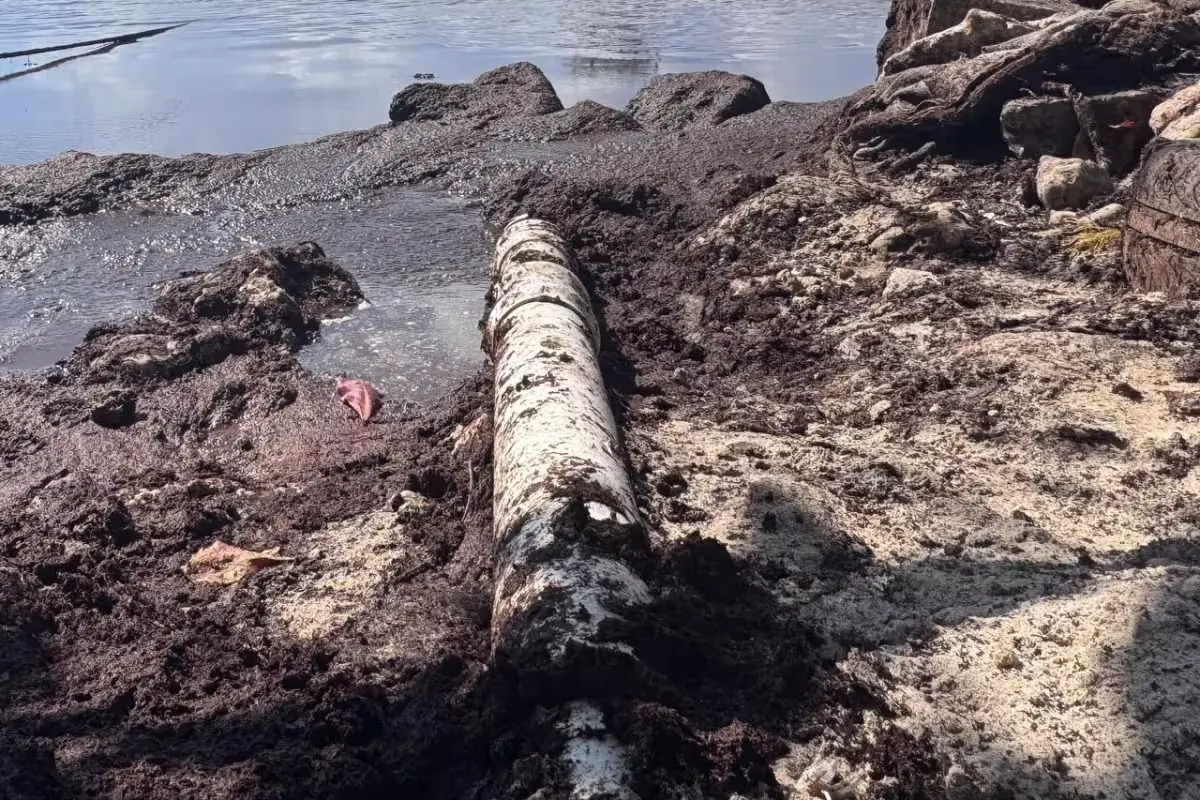
Playa del Carmen, Quintana Roo — An illegal discharge of raw sewage directly into the sea is causing severe environmental contamination, fueling algae growth that suffocates coral reefs and posing a public health risk, according to local tour operators and environmentalists who are calling on federal authorities to investigate.
Diver José García Lara said the discharge had remained hidden under thick layers of sargasso and mud covering the pipe. As the volume of seaweed decreased during cleanup efforts, the infrastructure became visible.
According to workers from the Federal Maritime Land Zone (Zofemat), who conduct daily beach cleaning, the pipe is located near 14th Street along the coastline. They noted that it was previously concealed by sargasso accumulation. As the macroalgae was removed, the pipe emerged, though the discharge is not obvious and the characteristic odors are masked by the strong smell of decomposing seaweed.
An activist warned that accidental ingestion of contaminated water could cause diarrhea, vomiting, and fever in swimmers, damaging the destination’s reputation.
Resident Santiago Villanueva Albornoz said the sewage discharge poses a serious threat to reefs and public health, urging authorities at all three levels of government to conduct ongoing monitoring and impose sanctions on those responsible.
Environmental activist Carlos Jiménez Arredondo noted that untreated wastewater releases bacteria and pathogens into the sea, increasing risks of gastrointestinal and respiratory illnesses and infections. He added that it suffocates coral reefs and disrupts coastal ecosystems. Direct contact or accidental ingestion of seawater contaminated with bacteria such as enterococci can cause diarrhea, vomiting, fever, and viral diseases, he said. Jiménez called on the Federal Attorney’s Office for Environmental Protection (Profepa) to launch an investigation, arguing the discharge undermines conservation efforts.
Boat operator José Lara Montes warned that if the wastewater reaches fishing areas, toxins, heavy metals, and other pollutants could bioaccumulate in fish and shellfish, posing long-term risks to consumers. Although no such impacts have been reported yet, he stressed the need for stronger inspections and constant surveillance along the Playa del Carmen coastline to protect the environment.
More Environment
- Yucatán Peninsula Lost 285,580 Hectares of Jungle in 4 Years
- Quintana Roo Crews Clear 70,000 Liters of Water in Bacalar and Chetumal After Heavy Rains
- Yucatan Drafts Rules for Artificial Lakes After Worker Dies of Amoeba Infection
- Quintana Roo Wins SEMARNAT Approval to Restore 33.5 Km of Beaches
- Yucatán Monitors Low-Pressure System in Gulf of Mexico for Possible Cyclone
More Playa del Carmen
- Tropical Wave 36 Floods Northern Quintana Roo, Hits Tourism
- Police Rescue Mother and Son From Playa del Carmen House Fire
- Technical Study Advances for Quintana Roo’s Grand Subterranean Rivers Reserve
- Playa del Carmen to Spend 66 Million Pesos on Fifth Avenue and Road Repaving
- Business Leaders Propose Autonomous Committee to Run Quinta Avenida Trust