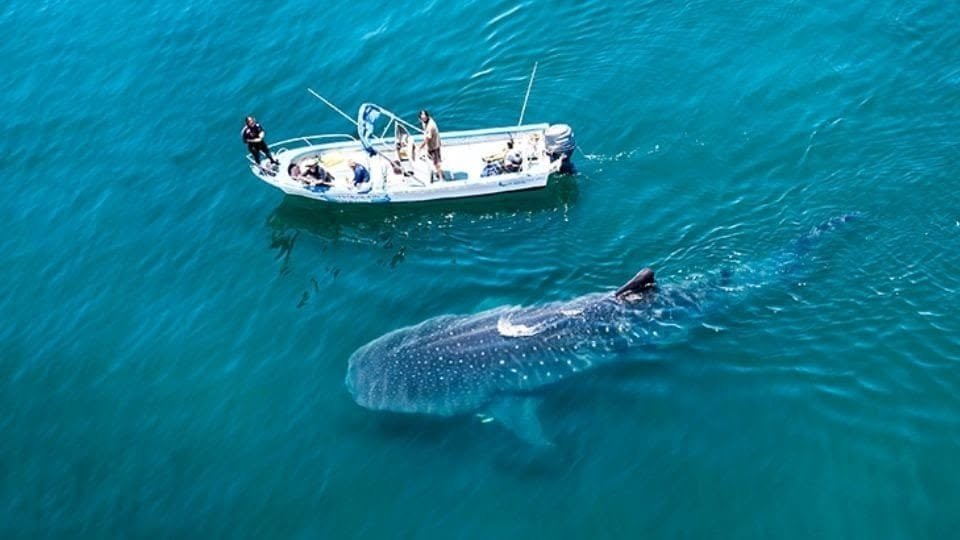
Isla Mujeres, Quintana Roo — Nautical service providers on Isla Mujeres are facing a severe downturn, with demand hovering between 30% and 50% of capacity due to a combination of factors, primarily low tourist arrivals.
Despite favorable weather conditions for boating, demand for snorkeling trips, diving tours, sport fishing, excursions to Isla Contoy, and whale shark watching has failed to recover. Cooperatives, marinas, and whale shark permit holders have been forced to slash prices to attract customers, often earning barely enough to cover operating costs.
“By this time in 2024, we were already at 70% to 80% capacity, with expectations of reaching 100% by mid-July and early August,” one nautical operator said. “Last year we started seeing a drop, and we couldn’t understand how the government was reporting occupancy rates above 90%. This summer is heading the same way.”
Another operator blamed insecurity in other parts of Mexico and Quintana Roo for changing tourists’ plans. “There’s no tourism like in other years. Every year it gets worse, and this year is much worse than the last.”
A cooperative director, speaking on condition of anonymity, said that while some attribute the slump to the World Cup, social media exposes abuses suffered by tourists in shops, restaurants, with taxi drivers, at the airport, and even during transfers to hotels. He noted that police checkpoints frequently stop tourist transport, and visitors who learn that ride-hailing apps like Uber and Didi are not allowed at the airport often walk to the airport perimeter to request rides at fairer prices.
“Unfortunately, those who pay the price are the honest operators who are struggling more and more,” he said. “Many are idle, waiting for customers, with demand between 25% and 35% for diving, sport fishing, Contoy trips, and whale shark tours.”
A permit holder added: “Prices are stagnant or even dropping because of the lack of tourism and the need to put food on the table. Foreign visitors feel besieged by the many taxes charged for setting foot in the country, for staying in a hotel, for practically any activity Quintana Roo offers.”
He described the commission structure as exploitative: “The commission agent wants to earn more than the operator. Large agencies and tour operators do the same. Agencies sell at one price, give another to the tour operator, and we operators end up with about 35% of the real cost. The agency keeps 50%, and the other 50% is split between the tour operator and us. From that 35%, we have to deduct operating costs and crew pay.”
More Business
- China Expands Drug Precursor Export Curbs Before Trump-Xi Talks
- Cancún Airport ‘Pirate’ Transporters Accused of Intimidating Tourists Over Uber and Didi
- Cozumel Submarine Power Cable to Be Installed Oct. 5 After 40-Year Wait
- Isla Mujeres Fishermen Face Grouper Shortage as Catch Barely Covers Local Demand
- Tulum Adds Artisan Market and Caribbean Culture Festival to Its Tourism Lineup