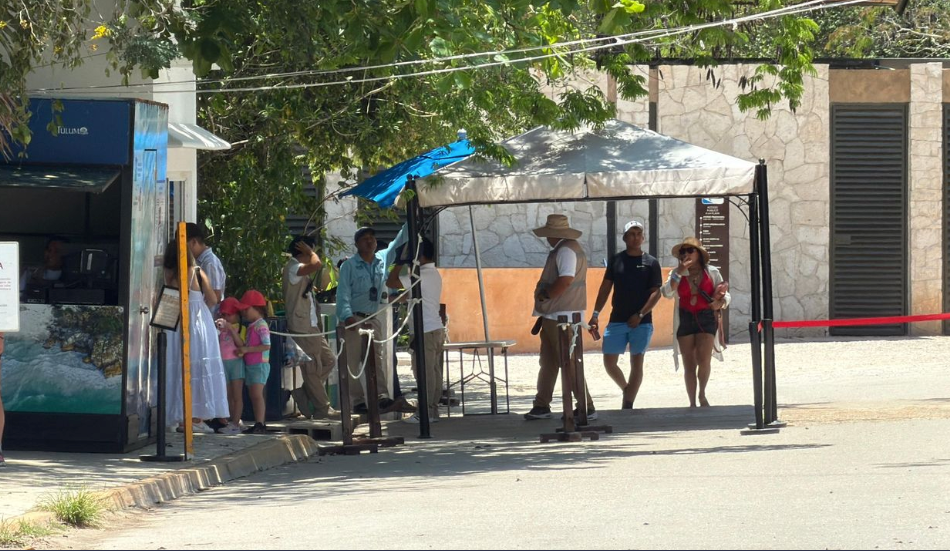
Tulum, Quintana Roo — The National Institute of Anthropology and History (INAH) is considering changes to the operating model of the Tulum archaeological zone, including its access and fee system, following a meeting between the agency’s director general and union leaders.
INAH Director General Joel Omar Vázquez Herrera met with the National Executive Committee of the National Union of Workers of the Ministry of Culture. Union Secretary General José Enrique Vidal Dzul Tuyub said the talks helped move forward on various staff concerns, including a review of agreements that have caused unrest within the institute.
Representatives of INAH’s National Coordination of Legal Affairs also attended. The union reiterated its opposition to an agreement signed by INAH Quintana Roo director Margarito Molina Rendón with Grupo Mundo Maya. Vidal said the accord grants powers that legally belong exclusively to INAH.
A central topic was the access and payment system at the archaeological site. Vidal said the current model has negatively affected visitor numbers and, in turn, the livelihoods of guides, drivers, merchants, and other service providers who depend on archaeological tourism.
As a result of the talks, Vidal said INAH is analyzing adjustments to the current system, including the possibility of creating a unified payment mechanism administered directly by the institute to strengthen management of the site and correct the problems identified.
The union also announced it will convene a forum in the coming weeks with tourism service providers, specialists, and representatives from various sectors to develop proposals that support tourism in Quintana Roo while ensuring the preservation of cultural heritage.
Vidal emphasized that archaeological zones belong to all Mexicans and said INAH should retain exclusive responsibility for their research, conservation, administration, and promotion. He added that the union will continue to follow the working groups to ensure the proposed changes become concrete actions.
More Government
- Playa del Carmen Launches ‘Parquemanía’ to Revive Public Parks
- Playa del Carmen Council Approves New Unit for Older Adults
- Quintana Roo Expands Tourist Police Force With Specialized Training Programs
- CURP Digital vs CURP Biométrica: What Mexico’s New ID Means for Online Bank Accounts
- Playa del Carmen Mayor ‘Very Upset’ With Parking Meter Operator Playaparq
More Tulum
- Tulum Airport Receives US Deportation Flights Every Friday
- Tulum Delivers Free Medicines to Health Houses in Vulnerable Communities
- Mexican Army Nears Completion of 16-Kilometer Jungle Road Over Tulum’s Sac Actún Cave System
- Five to Face Trial in Tulum Funeral Home Equipment Theft
- Advocates Urge Quintana Roo Governor to Expand Xcacel-Xcacelito Turtle Sanctuary