Mexico City — Mexico proposed strengthening North American supply chains by boosting domestic industry, diversifying markets and bringing more micro, small and medium-sized enterprises into the value chain, with the US-Mexico-Canada Agreement (T-MEC) as a key tool for regional economic resilience.
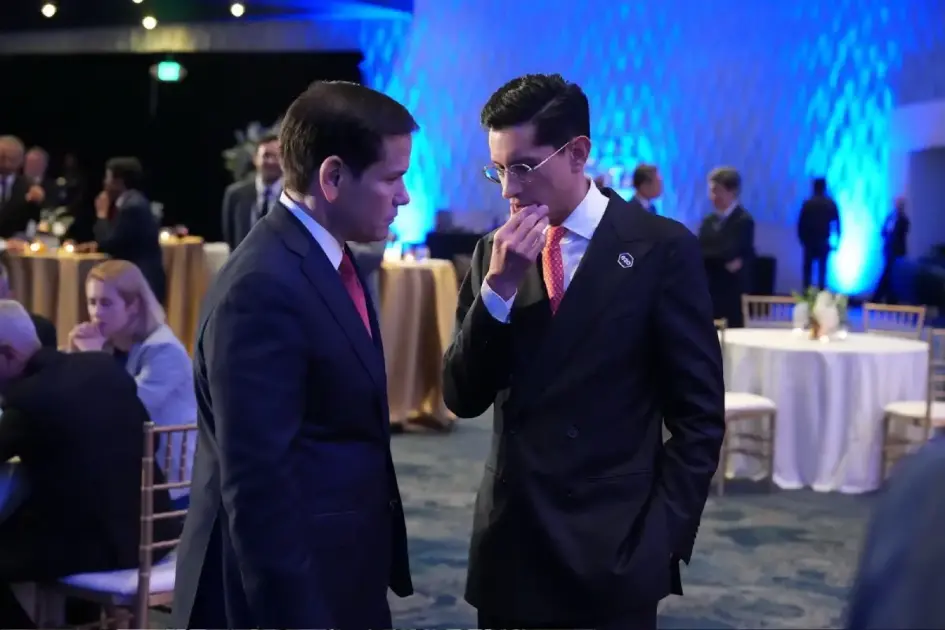
The Foreign Ministry said in a statement that Foreign Secretary Roberto Velasco Álvarez presented the plan during the final session of the G20 foreign ministers’ meeting, held Oct. 30-31 in Atlanta, Georgia, and chaired by US Secretary of State Marco Rubio.
Velasco said economic integration must deliver concrete benefits to people — particularly stable jobs and fair incomes — rather than being limited to trade between countries.
He highlighted the importance of strengthening Mexico’s industrial base and integrating micro, small and medium-sized businesses into value chains to drive inclusive growth and shared prosperity, in line with President Claudia Sheinbaum’s Plan México.
The foreign secretary warned of the need to build up domestic productive capacity and diversify markets after recent economic disruptions, including the pandemic, exposed the vulnerability of supply chains to international events.
T-MEC as a resilience tool
Velasco stressed that T-MEC is an instrument for strengthening the resilience of the Mexican, US and Canadian economies and for opening opportunities for producers and workers in all three countries.
He argued that economic security requires cooperation among nations and closer coordination between governments and the private sector to tackle the challenges affecting international trade and production.
He called for shared commitments to be turned into concrete action through closer ties between governments and companies, the exchange of best practices and the channeling of investment into strategic sectors and critical infrastructure.
Mexico’s participation in the meeting wrapped up Saturday after Velasco held bilateral talks with foreign ministers and representatives of Germany, Argentina, Australia, Canada, China, South Korea, France, India, Indonesia, Turkey, the African Union and Poland. He also spoke with Rubio on the sidelines of the G20 ministerial.
Warning on geopolitical tensions
On Friday, Velasco asked G20 ministers to ensure geopolitical tensions do not harm those with the fewest resources.
“We call on all members to place dialogue, diplomacy and unwavering respect for international law and international humanitarian law at the center of our work,” he said.
Speaking during the working session on geopolitical tensions, he said those conflicts extend beyond “the arenas where they are generated,” because they “disrupt trade, raise the cost of living and affect those with the fewest resources.”
More Economy
- Tulum’s ‘Renace’ Push Launches Shore Fishing Tournament With 30,000-Peso Purse
- Isla Mujeres’ Luz y Vida Festival Draws Day of the Dead Crowds and Boosts Local Business
- Rosa Cruz and Emiliano Tlacalel Win 9K Races at Cancún’s Cumbres Run for Firefighters
- CROC Intervenes in Salary Deduction Dispute at Cozumel’s Secrets Aura Hotel
- Cozumel Ferry Passenger Traffic Falls in Eight of First Nine Months of 2026