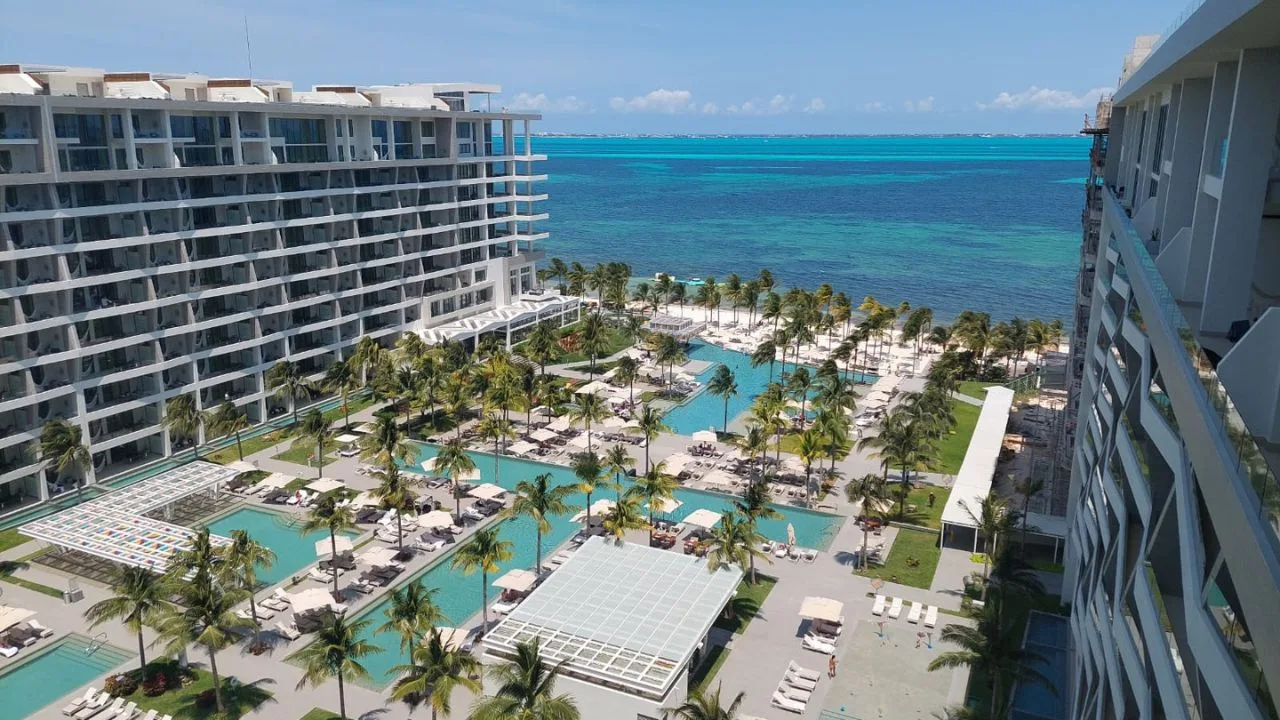
Cancún, Quintana Roo — Hoteliers and business leaders in Quintana Roo are warning that a 35.8 percent increase to Mexico’s non-resident fee will make the country less competitive against other Caribbean destinations and put thousands of tourism-dependent jobs at risk.
The measure would raise the fee from 983 pesos to 1,334.80 pesos per visitor. The Caribbean Mexican Hotel Council, which represents hotel associations across the destination, said the hike would make travel to Mexico significantly more expensive.
“The proposal to raise the fee from 983 to 1,334.80 pesos per visitor, an increase of 35.8 percent, would significantly raise the cost of arriving in Mexico, strip competitiveness from our destinations compared with other Caribbean options and put at risk the creation and sustaining of thousands of jobs that depend on tourism in Quintana Roo and across the country,” the council said.
The group urged the federal government and Congress to reconsider the adjustment and to channel the revenue back into tourism promotion.
Rodrigo de la Peña, president of the Cancún, Puerto Morelos & Isla Mujeres Hotel Association, noted that the non-resident fee was originally earmarked for the Mexico Tourism Promotion Council. Those funds have since been redirected to infrastructure projects such as the Maya Train. While he did not question the viability of those projects, he said active institutional promotion is urgently needed.
“It is a delicate issue… an additional increase to the non-resident fee undoubtedly makes us less competitive, it means loading more tax burdens onto tourists and travelers, who compare what they spend with other countries,” he said. “We keep increasing this, hitting the tourist, but what matters most is how this fee is distributed.”
He said the industry’s priority is to ensure the charge returns to its original purpose and is spent transparently on positioning Mexican destinations in international markets.
Compounding Increases
The council noted that the new hike follows a 14.2 percent increase applied in 2026, amounting to a rise of nearly 55 percent over two years, up from 861 pesos in 2025.
The proposal comes during a period of lower visitor traffic. Hotel occupancy stood at 45.8 percent at the start of September 2026, down from 56.1 percent during the same week a year earlier.
COPARMEX Quintana Roo, the state branch of the Mexican Employers’ Confederation, called for an assessment of how the fee affects international demand.
“The international visitor does not analyze a fee, an airport tariff, the cost of connectivity or each of the charges tied to a trip in isolation. The tourist compares the total cost of choosing Mexico against other destinations, and that decision has consequences for an entire economic chain. When visitor arrivals fall, the impact is not limited to hotels,” said Jovita Portillo, the organization’s president.
Both groups agreed that a higher fee does not guarantee better immigration services, and they called for it to be justified by transparent costs in order to protect employment and development in the region.
More Tourism
- Three Arrested in Tulum After Taxi Driver Beaten and Robbed for Refusing Extra Passengers
- Tulum Hotels Stay Open Through Renovations Ahead of High Season, Union Says
- Quintana Roo Records 29,413 Sea Turtle Nests at Season’s Midpoint
- Workers Question Official Vehicles Parked in Restricted Zones at Cancún Airport
- Semarnat Approves Floating Marina in Cancún’s Nichupté Lagoon
More Cancun
- White Sea Turtle Rescued in Cancún’s Hotel Zone
- Tren Maya Archaeological Finds Won’t Be Displayed in Chetumal, INAH Says
- Mara Lezama Opens Spine Surgery Congress in Cancún With Specialists From 13 Countries
- Cancún’s Benito Juárez Recycling Drive Recovers 6.8 Tons of Waste
- Only 1% of Mexicans in Quintana Roo Leave a Will, Leaving 99% of Families in Inheritance Court