
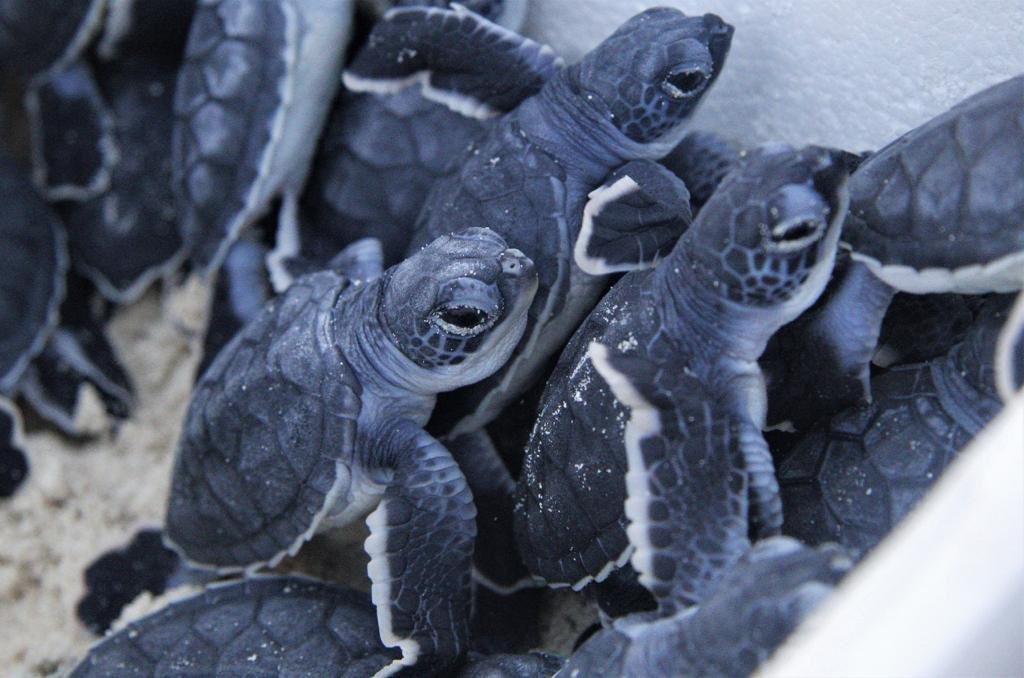
Tulum, Quintana Roo — Quintana Roo’s 2026 sea turtle nesting season is shaping up as one of the strongest in years, with the state’s turtle camps reporting 29,413 nests so far.
The preliminary count represents roughly half of the nesting season, meaning the total could still climb in the coming months as turtles continue to arrive and monitoring, protection and record-keeping work carries on along the state’s beaches.
Green Turtles Dominate the Count
According to data shared by the State Committee for the Protection, Conservation, Research and Management of Sea Turtles of Quintana Roo (CETMQROO), 25,685 of the nests counted through the July cutoff belonged to green sea turtles (Chelonia mydas), the species that accounts for most of the records.
Camps also logged 2,771 loggerhead nests (Caretta caretta), 956 hawksbill nests (Eretmochelys imbricata) and one leatherback nest (Dermochelys coriacea).
The scale of the count is significant because it was taken while the season was still underway. Data through late July point to a particularly strong year for nesting in Quintana Roo and reinforce the importance of the state’s beaches as breeding grounds for several sea turtle species. Officials and participating organizations remain cautious, however, because definitive results are not yet available.
CETMQROO gathers and analyzes information supplied by the turtle camps through its conservation, research and environmental education commissions. The arrangement lets members share data, assess how the season is developing and strengthen protection strategies.
The committee’s work goes beyond counting nests. During its sessions, members review the problems and needs that turtle camps report from the field, aiming to reach agreements and joint actions. They also exchange experiences and flag situations that could threaten turtles, their nests or the condition of nesting beaches. Public institutions — including the Federal Attorney’s Office for Environmental Protection (PROFEPA) — take part alongside academic institutions, organizations and other groups involved in conservation.
The 29,413 nests should be treated as a preliminary figure only. The season is ongoing and the numbers may change as new records come in. CETMQROO meets three times a year and continually updates the information provided by the camps. It will review the season’s results — including the final nest count and key conservation indicators — in November 2026.
While the available data point to an exceptionally strong season, its precise scope, and how it compares with historical records, can be determined only once the season closes and the figures are analyzed. The season’s progress also underscores the need for sustained coordination among turtle camps, authorities, institutions, organizations and communities to meet conservation challenges and protect the sea turtles that return to Quintana Roo’s coast each year to complete their reproductive cycle.
More Environment
- Quintana Roo Reports 1,200 Screwworm Cases as Officials Await Sterile Fly Release
- Semarnat Approves Floating Marina in Cancún’s Nichupté Lagoon
- Cancún’s Benito Juárez Recycling Drive Recovers 6.8 Tons of Waste
- US Releases 1 Billion Sterile Flies to Stop Screwworm’s Return
- Delphinus Blue Planet Pulls Out of Deal to Buy The Dolphin Company, Leaving 101 Marine Animals in Limbo
More Quintana Roo
- Sheinbaum Touts Billions in Quintana Roo Infrastructure Ahead of Cancún Accountability Event
- No Long Weekend for Quintana Roo Students: Classes Held Sept. 14-15, Suspended Only Sept. 16
- Quintana Roo Bill Would Jail Pet Owners Who Abandon or Neglect Animals
- Quintana Roo Real Estate Market Matures Behind $1 Billion in Investment
- Illegal Trafficking Threatens Mexico’s Green Macaw, Expert Warns