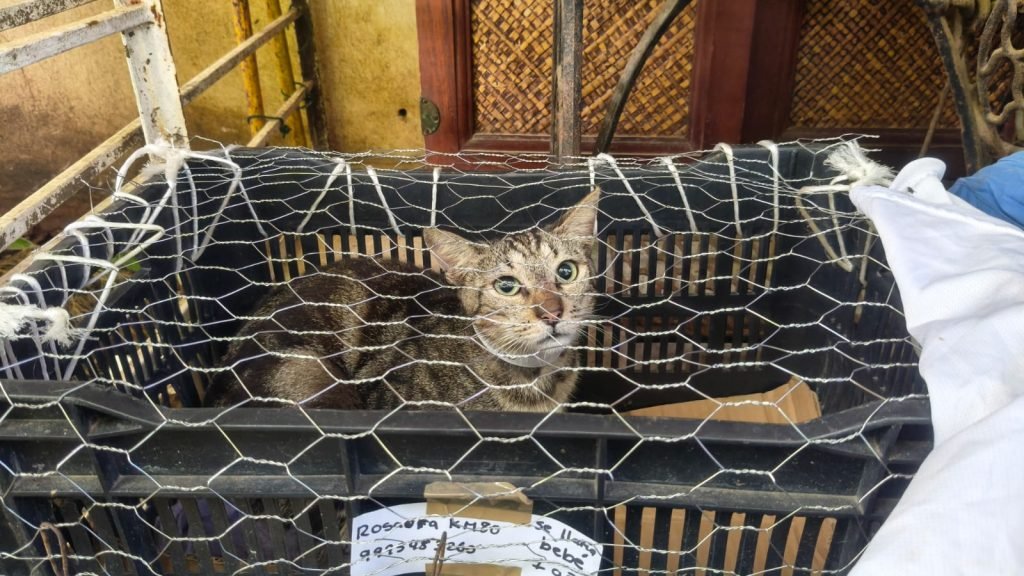
Holbox, Quintana Roo — The Holbox Animal Shelter has wrapped up a sterilization campaign that treated nearly 350 cats, an effort designed to curb the island’s feline overpopulation and safeguard local wildlife, shelter director Morelia Montes Barahona said.
Montes Barahona said crews visited neighborhoods and communities across the island to safely capture the animals, many of them feral, using special traps when necessary. Some cats posed a greater challenge because of their wild condition.
Beyond sterilization, the cats received basic veterinary care, including deworming and health checkups, to improve their well-being and limit the spread of disease among the island’s cat population.
The overgrowth of cats not only affects the animals themselves but also threatens native species, as free-roaming cats prey on wildlife and disrupt the island’s ecological balance, Montes Barahona said. She added that responsible population control helps prevent disease transmission and promotes healthier coexistence between pets and residents.
The shelter director thanked the Ammega Foundation, which funded the campaign, as well as ferry companies, veterinarians, and dozens of volunteers who helped with capture, treatment, and recovery efforts.
More Environment
- Cancún Orders Removal of Grounded Boats From Nichupté Lagoon
- Profepa Shuts Down Work Damaging Coastal Dune in Yucatán
- Yacht Grounded on Mahahual Reef Caused No Coral Damage, Conservationists Say
- Playa del Carmen Awaits Federal Approval to Return 20,000 Tons of Sand Recovered from Sargassum
- Playa del Carmen Councilor Questions Semarnat’s Indigenous Consultation Requirements