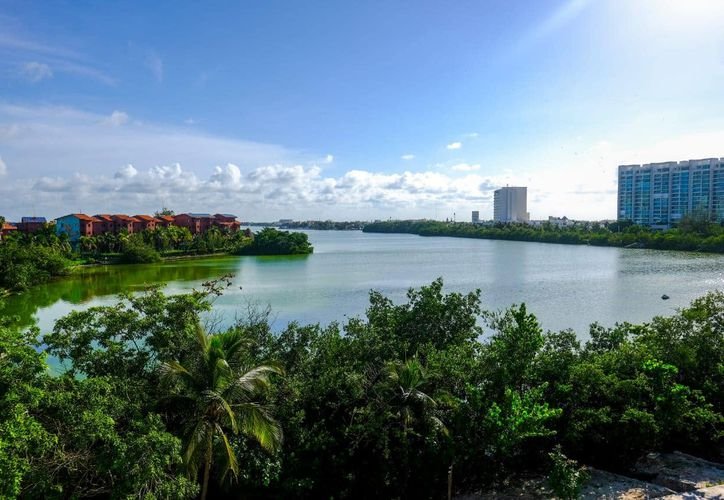
Cancún, Quintana Roo — Urban growth has pushed the Bojórquez Lagoon to a critical level of environmental decline, with altered water flow not only crippling the waterway’s ability to recover on its own but also creating stagnant conditions ideal for the spread of pathogens that pose a latent threat to human health.
According to analyses by Jorge Alfredo Herrera Silveira, a specialist in coastal zone ecology and mangrove restoration and a researcher and professor at the Center for Research and Advanced Studies of the National Polytechnic Institute (Cinvestav) Mérida Unit, the reduced water circulation — caused by infrastructure works with insufficient water passages — prevents a constant exchange with the open lagoon system.
That lack of current causes decomposing organic matter to accumulate continuously, drastically altering the biological quality of the water.
Herrera Silveira said that as a direct result of this hydraulic confinement, the water conditions encourage the growth of bacteria capable of triggering severe cases of gastroenteritis, as well as skin, ear and eye conditions in people who come into contact with the stagnant flow.
Unlike marine environments where tides renew the surroundings, the low mobility of the Bojórquez Lagoon fosters an environment of constant decomposition and high bacterial concentration.
“The Bojórquez Lagoon is in a very, very severe state of deterioration. Restoring that lagoon is very costly, very long-term, and who knows if it can even be achieved,” Herrera Silveira warned while assessing the accumulated damage at the site.
The researcher, who has led scientific studies in the area for more than 20 years, stressed that the problem does not call for more diagnostic research but for effective remediation decisions to prevent health emergencies that could eventually damage the destination’s image and threaten the safety of the local community and visitors.
“The studies are already there. I have done studies there for 20 years and I know things are bad. So no more studies — actions need to be taken,” the academic concluded.
More Environment
- Cozumel Bird Festival Records 70 Species Across Island Sites
- Monarch Butterfly’s Caribbean Migration Route Revealed in Quintana Roo
- Cancún Mayor Says Federal Permits Covered Playa Delfines Fiber Optic Work
- Maya Octopus Fishery in Quintana Roo Faces Crisis as Catches Fall and Microplastics Spread
- Semarnat Rejects 108-Room Hotel at Punta Venado Over Mangrove Protection
More Cancun
- Cancún Finishes Demolishing Old General Hospital as Work Begins on New Maternal-Infant Facility
- Cancún Hotels Offer Free Nights as Industry Faces Worst Year, Vara Says
- Man Jumps From Third-Floor Window in Cancún as Lover’s Husband Arrives
- Nine Arrested in Cancún Over ‘Gota a Gota’ Loan Shark Extortion Ring
- Tourist Police Seize 27 Suspected Cocaine Packages on Cancún Hotel Zone Beach