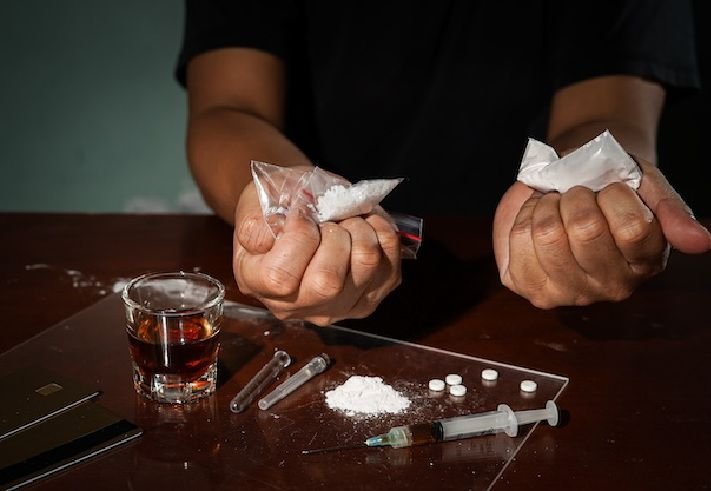
Chetumal, Quintana Roo — The rise of drug dealing in Quintana Roo is not only a public safety challenge but is also reshaping the profile of the state’s prison population, with drug offenses overtaking property crimes like theft.
Data from the 2025 National Census of Federal and State Prison Systems, compiled by INEGI (the national statistics agency) with 2024 figures, reveals the growing weight of drug-related crimes in the state’s prisons.
While theft remains a top crime nationwide for prison admissions, in Quintana Roo drug dealing has gained particular prominence, with significant differences between men and women.
The trend is notable in a state where authorities have ramped up operations, raids, and arrests related to drug possession and retail sales in recent years.
Cancun, Playa del Carmen, and Tulum concentrate much of the problem due to their population density, tourism, and nightlife, though the phenomenon also appears in Chetumal and other municipalities.
The shift demands a look beyond arrest numbers. The increase in people prosecuted for drug dealing could reflect both greater enforcement and a local drug market capable of recruiting new sellers and distributors. A rise in arrests does not necessarily mean a proportional reduction in drug availability on the streets.
From Property Crimes to Drugs
For years, theft and other property crimes dominated prison statistics. The advance of drug offenses changes that composition and poses new challenges for the state system.
A person charged with drug sales or possession may be the last link in a much larger criminal chain. Arresting a street dealer does not necessarily dismantle the organization that supplies the drugs, controls the territory, or collects the profits. This distinction is key to interpreting the statistics: prisons may receive more people accused of drug dealing while the supply structures continue operating outside.
Women: An Indicator Worth Watching
One aspect requiring deeper analysis is women’s involvement in drug crimes. The weight of these offenses among female inmates demands investigation into the conditions under which they enter distribution networks — from voluntary participation to economic dependence, personal relationships, or recruitment by criminal groups. Not all cases follow the same pattern.
Prison figures must be complemented with data on sentences, recidivism, addiction, and socioeconomic conditions of those incarcerated.
More Prisoners Does Not Necessarily Mean Less Drugs
This is perhaps the main question the data raises. If the number of people arrested for drug dealing increases each year but the market continues to generate new sellers, the strategy risks merely replacing the lowest links of criminal organizations.
For Quintana Roo, the challenge is not only to arrest those carrying small amounts of drugs. The real test is determining who supplies, who finances, who controls the sales points, and where the money ends up.
The phenomenon also poses challenges inside prisons, where prevention and addiction treatment programs, job training, and social reintegration must be strengthened to prevent incarceration from reproducing the same criminal networks it aims to combat.
The prison statistics reveal something deeper than a change in the predominant crime. They show a transformation of Quintana Roo’s criminal market. Theft is losing ground while drug dealing advances. And behind that shift lies a question that statistics alone cannot answer: Is the drug business actually weakening, or are authorities simply incarcerating more people from the lower levels of the chain?
More Crime
- Two Drivers Hurt in Playa del Carmen Crash at Wet Zazil-Há Intersection
- Trump Escalates Pressure on Mexico, Demands Action Against Cartel-Allied Officials
- Alleged Owner of Cancún Home Rented by Puerto Morelos Mayor Linked to Ultramar Fraud Case
- Chetumal Traffic Officer Shoots Two Dead, Then Kills Himself
- Canine Unit Finds 10 Kilos of Cocaine Hidden in Suitcase at Cancún Airport
More Quintana Roo
- Quintana Roo Tops 152,000 Metric Tons of Sargassum as Playa del Carmen and Cancún Lead
- Court Gives Profepa 72 Hours to Clarify Tren Maya Closure Order
- Quintana Roo Beaches Lose Up to 14 Meters of Sand a Year as Restoration Plan Advances
- Quintana Roo Youth Sailors Join Mexico’s Team for Optimist Championship in Uruguay
- Mara Lezama Hands Out 100 Sewing Machines in Chetumal to Boost Women’s Self-Employment