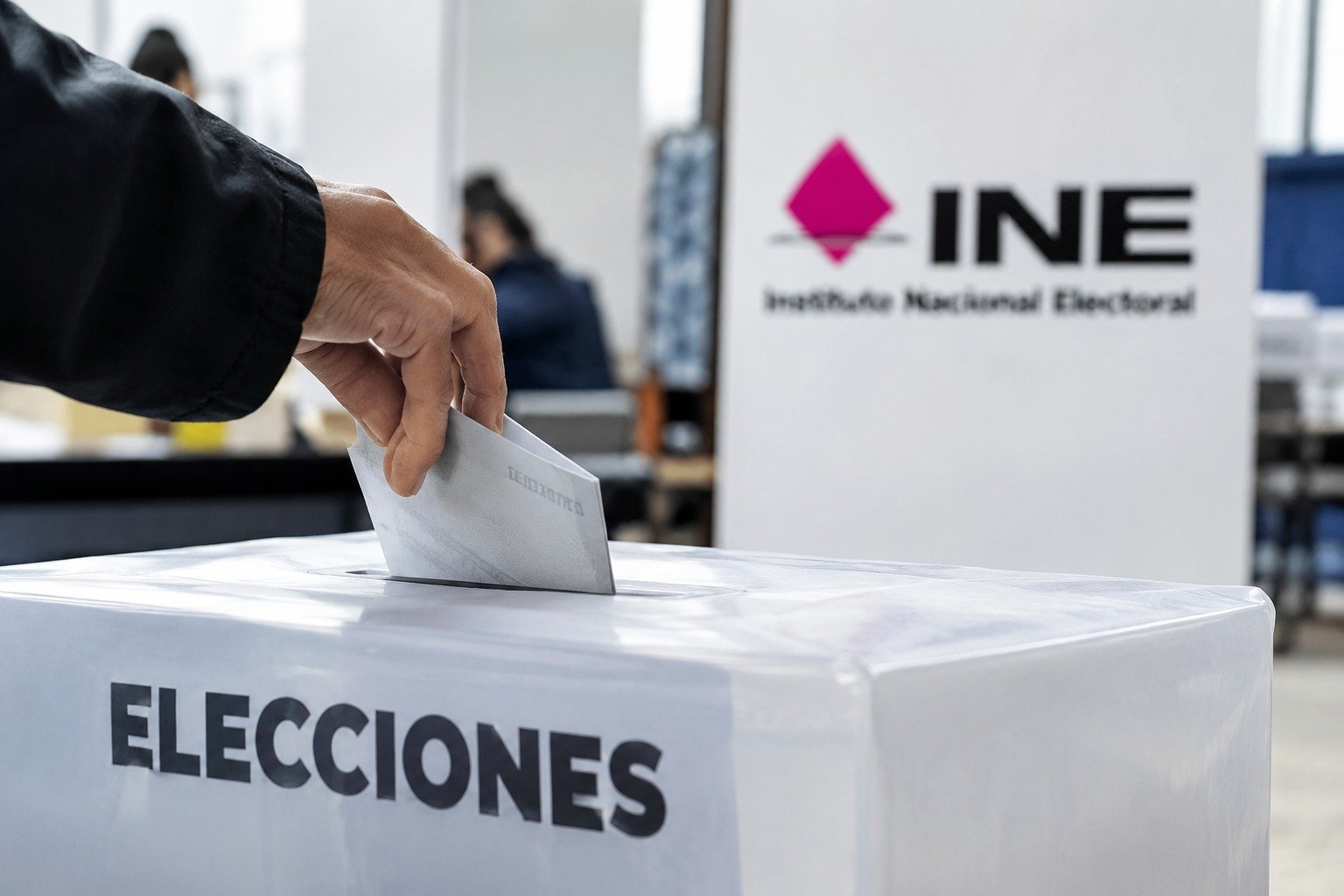
Mexico City — The Mexican Employers’ Confederation (Coparmex) has called on the National Electoral Institute (INE) and other electoral authorities to strengthen verification, oversight and review mechanisms ahead of the 2026-2027 federal electoral process, warning that credible elections depend on effective institutional controls and citizen participation.
The INE formally launched the electoral process on September 10. Voters will renew all 500 seats in the Chamber of Deputies, while the concurrent process includes local elections in all 32 states and more than 19,000 elected offices. Election day is scheduled for June 6, 2027.
Concerns Over Verification Tools
Coparmex said two recent INE decisions are cause for concern because, in its view, they reduce the tools available to verify compliance with electoral rules.
One of them keeps in place the restriction barring public servants who run federal social programs from serving as electoral observers, but removes the mechanism for verifying who might fall into that category.
The business group also questioned changes to the criteria for reviewing so-called “pressed ballots” — ballots found inside the ballot boxes without any folds — even though the dimensions of the ballot and the box slot mean ballots must be folded to be deposited.
Coparmex said both decisions share a common effect: a reduction in the tools meant to verify compliance with the rules and to detect in time any situations that could raise doubts about the reliability of the vote.
Electoral certainty, the group argued, must rest on principles including legality, independence, impartiality, objectivity and maximum publicity, along with mechanisms that can identify possible irregularities and address them through clear procedures.
It also called for continued scrutiny of early pre-campaign and campaign activity that could violate electoral law or create an unfair advantage during the race.
Concern Over Tribunal Vacancies
Coparmex voiced worry about the institutional situation at the Electoral Tribunal of the Federal Judiciary (TEPJF), noting that two seats on the panel remain vacant pending appointment by the Senate. It also pointed to the recent resignation of the INE’s executive secretary.
The organization said public trust is strengthened by institutions capable of preventing, detecting and promptly addressing any irregularity, and by mechanisms open to public scrutiny.
Citizen Participation at the Center
Coparmex described electoral observation as one of the most concrete expressions of citizen participation, arguing that democracy goes beyond simply casting a ballot.
It announced it will encourage participation by citizens, civil organizations, academia, specialists and media outlets during the various stages of the electoral process, through observation, monitoring and documentation of possible incidents via the appropriate institutional channels.
Through its business centers and its citizen participation network, the confederation said it will work to ensure more people know their rights and follow the different phases of the process.
Coparmex described itself as a “highly political but entirely nonpartisan” organization, saying its involvement in public life stems from defending democracy, freedoms, institutions and the rule of law, without endorsing or opposing any candidate or party.
It urged the INE and other electoral authorities to preserve and strengthen the oversight and review mechanisms that allow any situation casting doubt on the integrity of the election to be addressed promptly.
More Politics
- Lee Heads to UN for Trump Talks, Then Mexico Summit
- Quintana Roo Border Dispute Reaches Final Stage at Mexico’s Supreme Court
- Hunucmá Public Security Alderman Resigns After Woman Alleges Assault
- Texas’ Big Bend Becomes Border Wall Battleground
- Mexico Disables Four Drones Used to Monitor Migrant Smuggling at US Border