
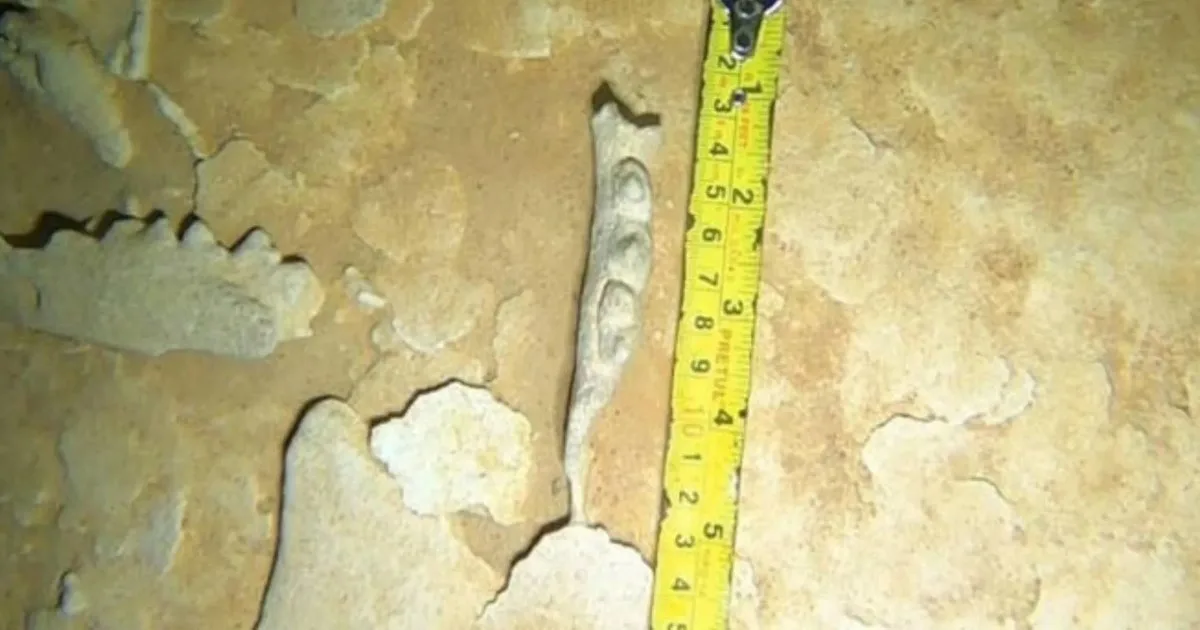
Abalá, Yucatán — Cave divers have found the skeletal remains of a mammal deep inside a cave in this municipality in western Yucatán, roughly 47 to 50 meters below the surface.
Explorers Cristian Selún and Axel Hechler came across the bones while traversing the cavern system, according to a preliminary record of the discovery. The find drew attention because of the conditions in which the remains were preserved and because so much about their origin remains unknown.
An initial review of the images suggests the bones may have belonged to a feline, but that possibility has not been confirmed through scientific study.
What Divers Found in the Cave
Researchers have not determined the species, the age of the bones, or whether the pieces came from a single animal. The discovery is currently catalogued as an osteological record that requires further investigation.
The divers documented the remains underwater using photographs and a tape measure to establish a reference for the size and location of each piece within the cavity. The preliminary registry lists 10 elements or bone fragments, labeled H01 through H10. Images show long bones and other fragments distributed across different areas of the cave.
So far, there is no evidence the bones belong to an unknown species or to a prehistoric animal. Specialized studies will be needed to determine their origin, age and characteristics.
A Region Known for Cave Discoveries
The find carries additional weight because one of the divers involved had taken part in an earlier discovery of fauna in a flooded Yucatán cave. Selún, working with fellow cave diver Arnaldo Marruco, helped locate remains attributed to a giant sloth in the Dzombakal cenote in the municipality of Umán.
That earlier discovery illustrates the potential of Yucatán’s caves and cenotes to preserve the remains of animals that lived in the region across different periods. Each find, however, requires its own analysis to establish its age and identification.
The Abalá discovery remains under investigation and could shed light on the fauna that once inhabited the peninsula, provided future studies can determine precisely which animal left its remains in the depths of the cave.
More Environment
- Pre-Hispanic Bee House Unearthed in Tulum Sheds Light on Ancient Maya Homesteads
- Cozumel Crocodile Sightings Rise With Rains and Habitat Changes, Biologist Says
- Quintana Roo Whale Shark Season Closes With Up to 400 Sightings
- Mara Lezama Unveils Quintana Roo Sustainable Tourism Master Plan Through 2050
- Semarnat Denies Permit for Secrets Moxché Coastal Project in Playa del Carmen