
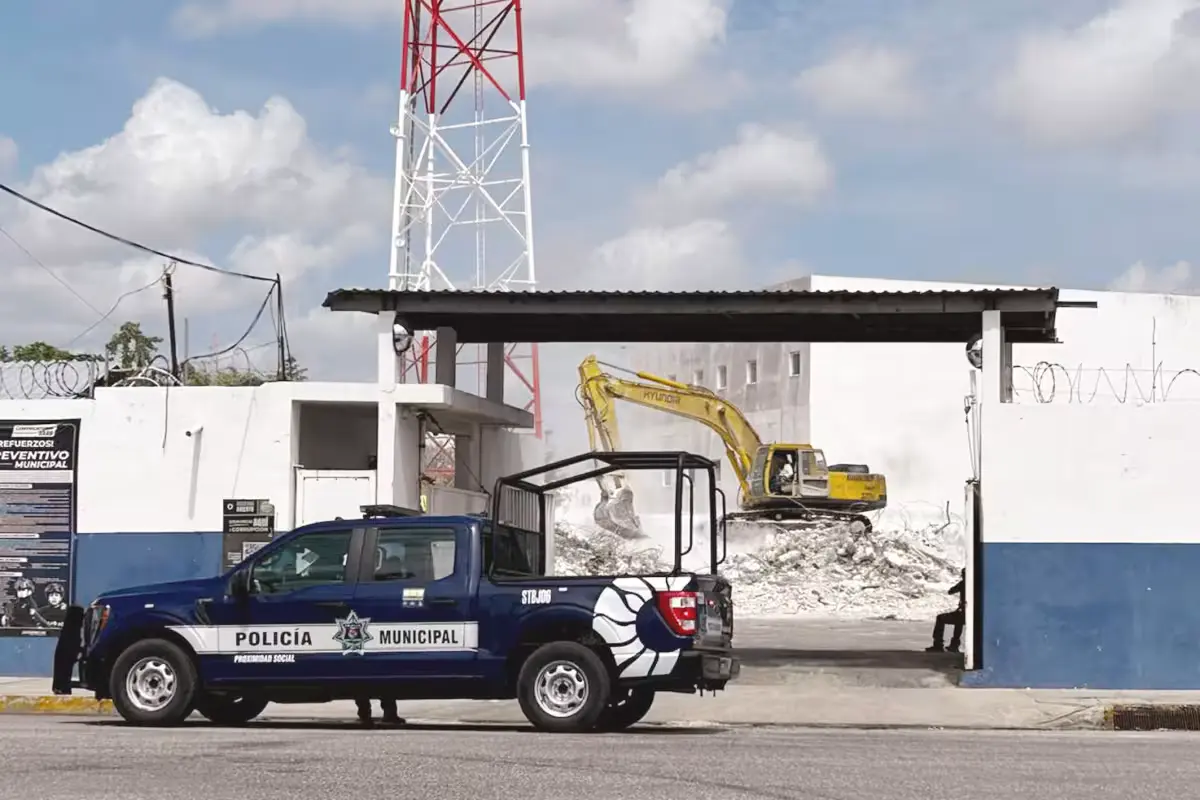
Cancún, Quintana Roo — The city of Cancún is moving forward with a 128 million peso ($6.7 million) plan to overhaul its police infrastructure, including demolishing the 22-year-old police headquarters on Xcaret Avenue and building a new command center, according to municipal officials.
The project, dubbed “Titán,” is part of the second phase of the Benito Juárez city government’s public security strengthening program. The Trust Committee for the Environmental Sanitation “Right of Occupancy” has approved an initial 5 million pesos for the executive project design.
The plan includes demolishing the existing Secretaría Municipal de Seguridad Ciudadana y Tránsito (SSCyT) building, which has been in operation for 22 years but is now undersized for the growing city. In its place, the city will construct a new SSCyT headquarters. The project also calls for remodeling the Tourist Police base in the hotel zone and building three new police precincts, one of them in the Prado Norte area.
“The executive project is currently being developed to define the characteristics of the new complex and the improvements in infrastructure and operation,” said Samuel Mollinedo Portilla, a city councilor who heads the Urban Development and Mobility Commission.
Former mayor Ana Patricia Peralta had previously highlighted the modernization as part of a broader strategy to bolster security in Benito Juárez.
Residents of Cancún expressed mixed reactions to the investment. Some welcomed the move as necessary given the city’s growth and rising crime rates.
“If we want a better-equipped municipal police force, they also need dignified facilities. Security is also a priority,” said Abel Carrasco, a resident of Supermanzana 22.
Others questioned the spending when basic services remain neglected in many neighborhoods.
“We’re not against a new station, but they should first fix the potholes, improve lighting, and repair the streets. Some avenues look abandoned,” said Alma, a passerby.
Another resident, shopkeeper Leonardo Rodríguez, argued that investment must be matched by results. “New buildings aren’t enough; people want to see fewer robberies, less violence, and more police presence in the neighborhoods. I haven’t seen that,” he said.
College students Berenice and Julián agreed that investing in security is important, “but only if it comes with results. We’ve heard about more patrols and body cameras, but we also see videos of cops caught extorting. Better to train them well first.”
The project is one of the largest security infrastructure investments by the current municipal administration, but it has reignited debate over how public funds should be prioritized in a city facing multiple urban service deficiencies.
More Government
- New Oral Civil Court Begins Operations in Playa del Carmen
- Mexico’s INE Creates Commission to Vet Candidates for Drug Cartel Ties
- Playa del Carmen Launches Digital Registry for 16,000 Vacation Rentals
- Family Alleges Possible Medical Negligence at Cancun IMSS After Year of Hospitalizations
- MOBI Buses in Chetumal Go Cashless as Fares Take Effect Tuesday
More Cancun
- Three Sentenced to 37 Years in Prison for Femicide in Cancún
- Sedetus Addresses Foreign Complaints Over Undelivered Properties in Quintana Roo
- Cancún Restaurants Brace for Tough Low Season as Tourism Slips, Canirac Says
- Profepa Shuts Down Two Puerto Juárez Projects for Environmental Violations
- Cancun’s Ventura Park Dolphins in Delicate Health; 2027 Retirement Plan Set