
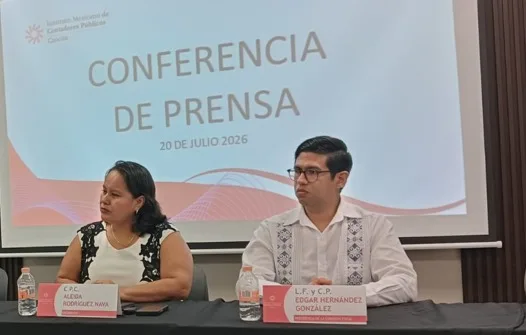
Cancún, Quintana Roo — Tax experts in Cancún are warning businesses and individuals that using fake invoices can lead to hefty fines and even prison time, as Mexico’s tax authority ramps up enforcement against fraudulent invoicing schemes.
Edgar Hernández González, president of the Fiscal Commission of the Mexican Institute of Public Accountants in Cancún, said that the Tax Administration Service (SAT) has published a blacklist of companies that failed to prove the legitimacy of their digital tax receipts (CFDI). Under Article 49 Bis of the Federal Fiscal Code, the tax authority determined that transactions backed by those receipts have no fiscal effect and acted according to the law.
Hernández warned that administrative and criminal proceedings have been initiated, as the use of false invoices constitutes a crime punishable by two to five years in prison.
Starting with the 2026 tax reform, the SAT has implemented “express audits” under Article 49 Bis to combat fraudulent billing. These audits require taxpayers to prove the materiality of transactions through contracts, logs, and financial traceability.
If fake invoices are detected, fines range from 55% to 100% of the invoiced amount, and criminal charges may be filed. Taxpayers must keep all documentation in order to prove legality. When irregularities are found, the SAT grants 30 calendar days to demonstrate that the transaction actually occurred.
The publication of the blacklist aims to alert individuals and companies that may have used these receipts to deduct taxes or claim VAT credits. Those affected are urged to come forward to the tax authority to correct their fiscal situation.
More Economy
- Playa del Carmen Taps HR Directors to Boost Local Hiring
- Mexico Hoteliers Warn of 1.1 Million Air Tourist Loss as U.S. Arrivals Slump
- Cancún’s Route 17 Leona Vicario Draws More Than 16,000 Riders on First Free Day
- FIRA Issues Mexico’s First Biodiversity Bond Worth Over 1.6 Billion Pesos
- Aeromexico Eyes New U.S. Routes After Mexico City Limits End
More Cancun
- Moderna COVID-19 Vaccine to Be Offered to Children in Cancún
- Paraguayan Tourists Challenge Asur Over $30 Exit Fee at Cancún Airport
- Caribbean Poker Tour Closes 2026 Season in Sint Maarten With $125,000 Main Event
- Canine Unit Finds 10 Kilos of Cocaine Hidden in Suitcase at Cancún Airport
- Hanal Pixán 2026 in Puerto Juárez: Four Days of Maya Day of the Dead Traditions