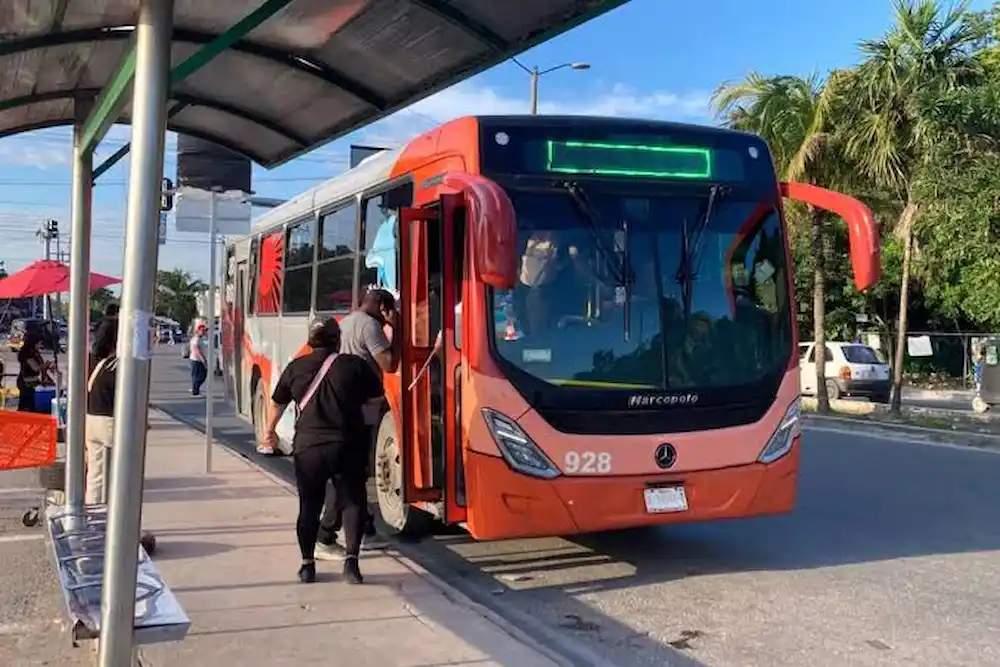
Cancún, Quintana Roo — Authorities in Benito Juárez have announced a gradual reorganization of public transport routes under the MOBI mobility project, aiming to improve coverage, reduce duplication, and make commutes more efficient for thousands of users.
Héctor Sánchez Tirado, director of the Municipal Institute of Planning (IMPLAN), said the strategy will begin on the busiest corridors, primarily along avenues such as José López Portillo, Kabah, Kukulcán, Luis Donaldo Colosio, Nichupté, and Chac Mool.
Currently, 87 active routes operate in the municipality, but many suffer from overcrowding, overlapping itineraries, or insufficient coverage in recently developed areas, Sánchez Tirado explained.
The MOBI project involves a reengineering of the transport system to reorganize routes and improve integration between buses and vans serving the city.
Priority areas include Polígono Sur, Huayacán, and Bonampak, where residential growth has increased demand for public transport and highlighted the need for better connectivity.
Sánchez Tirado noted that the reorganization will be carried out gradually due to the system’s operational complexity and the need to coordinate changes with concession holders and operators, aiming to avoid disruptions for users during the transition.
The project seeks to adapt public transport to Cancún’s rapid urban expansion, which has altered mobility patterns and created new challenges for daily commutes.
More Cancun
- Cancún Evicts Homeless From Old General Hospital to Make Way for New Maternal and Child Facility
- Cancún Airport ‘Pirate’ Transporters Accused of Intimidating Tourists Over Uber and Didi
- Cancún’s Second Government Report Cites 995.9 Million Pesos in Public Works as Residents Question Results
- Activist Searching for Missing Brother Sentenced to 80 Years for Cancún Kidnapping
- Cancún Officials Urge Residents to Protect Pets After Reported Puma Sighting in Cuna Maya