Bacalar, Quintana Roo — Archaeologists have reported the discovery of a prehistoric Clovis spear point near the Laguna de Bacalar, adding a new piece to the puzzle of how the first human groups arrived in southeastern Mexico.
The find was detailed in an article in Arqueología Mexicana by researchers Víctor Rogelio Oseguera Barragán and Aurelio López Corral, titled “Clovis Lithic Technology in the Mexican Caribbean: Discovery of a Fluted Point in Bacalar, Quintana Roo.”
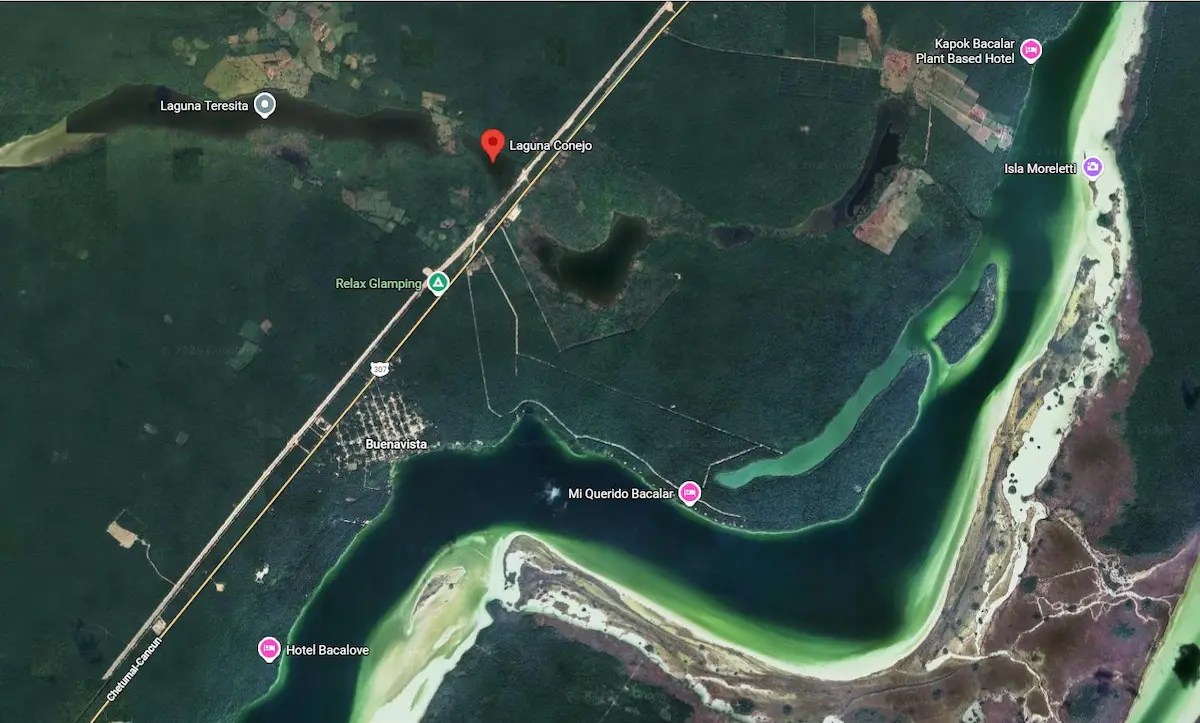
The projectile point was recovered in 2023 during the Maya Train Archaeological Salvage Project, in an excavation near the community of Buenavista, between the Conejos and Bacalar lagoons.
Specialists identified it as a point with bifacial thinning and double basal fluting on both faces, a distinctive feature of Clovis technology developed by hunter-gatherer groups between 13,300 and 12,800 years ago.
These characteristics clearly distinguish it from the lithic traditions of later Maya occupations in the region. According to the authors, such stone tools were used as projectile points for hunting Pleistocene megafauna, including mammoths, mastodons, horses, and giant ground sloths. Remains of these animals have been found in the flooded caves of the Sac Actún cenote system in the municipality of Tulum.
Although Clovis artifacts are relatively common in North America, their presence in the tropical regions of southern Mesoamerica is very scarce, making the discovery exceptional. The find expands the known geographic range of Clovis technology in Mesoamerica and strengthens the hypothesis that Paleoindian populations — the earliest recognized human inhabitants of the Americas — also occupied and used the tropical ecosystems of the Yucatán Peninsula before the rise of agricultural societies.
The researchers say the analysis of the piece will help deepen understanding of the early peopling of the Mexican Caribbean and the mobility of Paleoindian populations across the continent.
Clovis technology is famous in archaeology because it demonstrated that human groups coexisted with now-extinct fauna, including large mammals whose hunting formed part of the context in which the technology developed and was used.
The researchers note that evidence of this technology exists from Canada to southern regions such as Venezuela, although its greatest concentration is in the United States. In Mexico, several specimens have been found in the northern region, particularly in the state of Sonora, with more limited examples in the west, center, and southeast. Fluted points have also been reported in Guatemala and Belize, some from areas geographically close to the Bacalar region.
Human occupation associated with the Clovis fluted-point tradition dates to the Pleistocene, the final millennia of the Ice Age, when climatic conditions were colder than today. Based on paleoclimatic studies carried out in Loltún Cave, Yucatán, the researchers concluded that the average ambient temperature on the peninsula at that time was slightly lower than today, with a more temperate and dry climate — conditions that would have prevailed in the Bacalar region as well.
More Culture
- Bacalar Aims to Show the World Its Appeal Goes Beyond the Lagoon
- Valladolid Hosts Second Edition of La Vid y la Ceiba Wine Festival
- Community Tourism Brings Income to Sacalaca With Small Groups and Cenote Protection
- Tulum Adds Artisan Market and Caribbean Culture Festival to Its Tourism Lineup
- Culture Ministry to Inspect Ceremonial Pole Ahead of Voladores de Papantla Return to Tulum