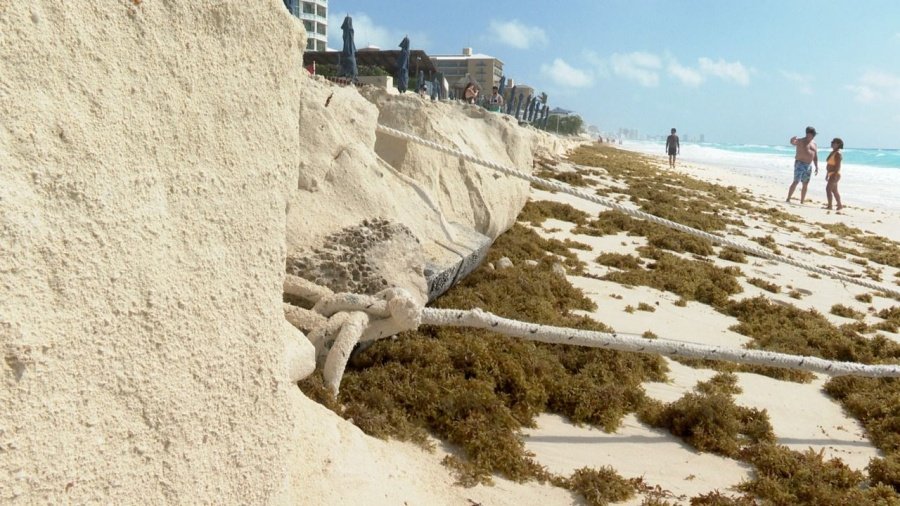
Cancún, Quintana Roo — The municipality of Benito Juárez is moving forward with a comprehensive coastal restoration program covering 32 kilometers of shoreline, beginning with a study designed to recover not just beaches but the entire coastal ecosystem.
The study, to be carried out by GPPA (Consultores en Gestión, Política y Planificación Ambiental), will examine coastal dunes, wetlands, mangroves, beaches and other ecosystems. Its findings will serve as the basis for an environmental impact statement that the municipality will submit as part of its push toward sustainability, officials said.
The project is separate from the state’s beach recovery trust fund and is unrelated to the environmental impact statement that the Secretariat of Ecology and Environment (SEMA) has prepared for its own beach recovery initiative.
At a press conference with the hotel sector, Antonio Ortiz, president of the Sustainability Committee, said the study has already received approved funding of 26 million pesos from the Sanitation Rights Committee. He added that the project has been in development for more than a year and will cover the municipality’s entire 32-kilometer coastline.
Ortiz said the project grew out of the first Quintana Roo Sustainability Forum and reflects a broad approach to coastal recovery that goes beyond the state trust fund, addressing all ecosystems in the area.
The comprehensive program will include studies of bathymetry, reef structure, seagrass meadows, wetlands, current beach conditions and coastal dunes. The final report will be used to prepare an environmental impact statement to be submitted to Semarnat (Secretariat of Environment and Natural Resources).
Hotel industry leaders say comprehensive studies and solutions are needed to make progress on sustainability. The study, which is expected to last just over eight months, will help Cancún move toward an integrated management model for its entire coastline — going beyond dune restoration to address the wider ecosystem, they said.
More Environment
More Cancun
- Two Missing Children Found Walking Alone in Cancún After 18-Hour Search
- Man, 27, Has Lived in Cancún Airport Terminal for Three Weeks
- Quintana Roo Authorities Search for Mother and 2-Year-Old Son Missing After Trip to Isla Mujeres
- Cancún Shelter Offers Medical Care and Detox for Homeless Residents
- IMSS Workers in Cancún March to Demand Higher Pay, Supplies and Staffing