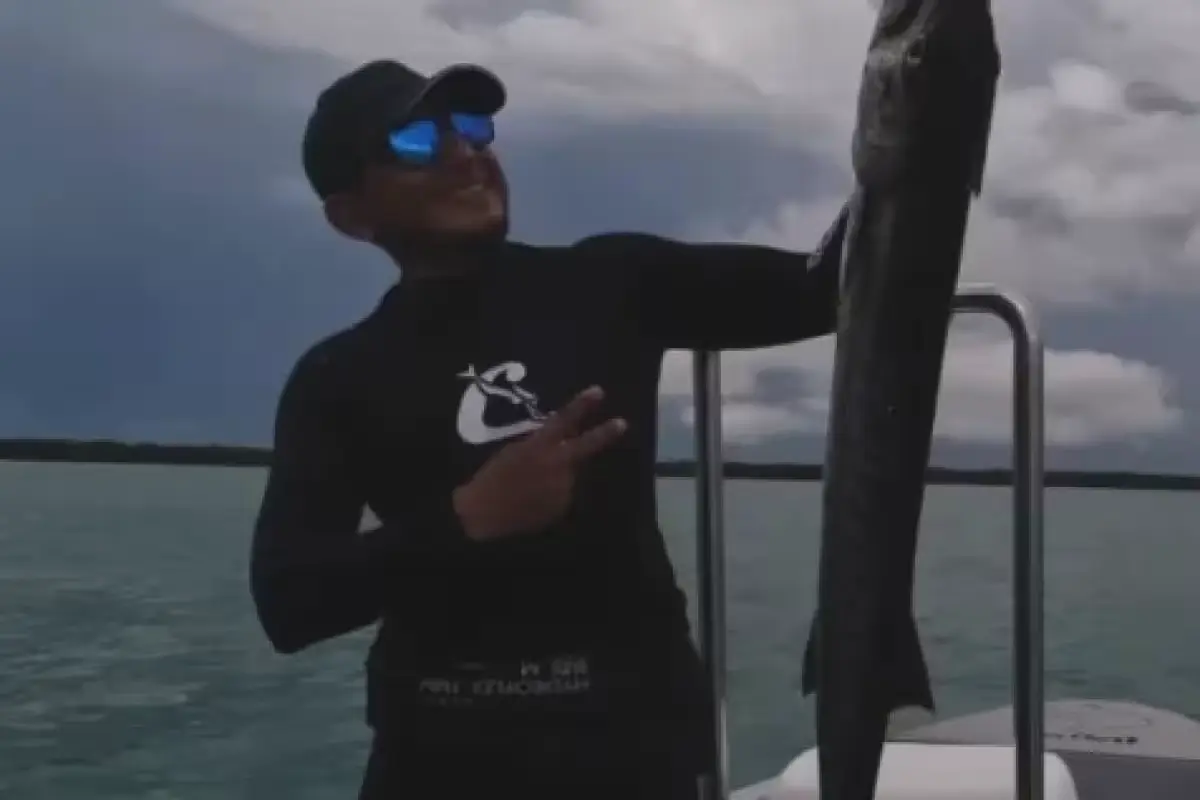
Isla Mujeres, Quintana Roo — Authorities have issued preventive alerts in Isla Mujeres over the sale of barracuda, a fish that can carry the toxin responsible for ciguatera poisoning, especially during hot weather. Officials from the Federal Commission for the Protection against Sanitary Risks (Cofepris) warned that businesses offering the species could face closure.
Service providers who sell fish dishes on the beach, such as Juan Robles, said selling barracuda meat is banned to avoid health risks and potential shutdowns. “We don’t want to risk earning a few pesos and then lose everything, as has happened before at this destination,” he said.
Although no new poisoning cases have been reported in recent years — except for outbreaks 15 and 20 years ago that hospitalized dozens of visitors — a Cofepris source recalled that the most recent incident led to the closure of an establishment in Playa Norte, where the last mass outbreak occurred.
In 2025, the state’s Directorate of Sanitary Risk Protection did not release official figures on the number of people poisoned by ciguatera in Quintana Roo. However, barracuda remains the primary carrier of the toxin, prompting federal authorities to maintain preventive alerts against its sale.
Ciguatera is a foodborne illness that causes nausea, vomiting, diarrhea, and neurological symptoms such as temperature reversal — where cold feels hot and vice versa. It primarily affects large reef fish and is endemic to tropical waters.
Although Isla Mujeres and Cozumel have historically reported a significant number of cases, incidence varies each year. The highest risk periods typically occur during the hottest months. To prevent illness when consuming seafood in the region, service provider José Cabrera recommended asking what species is being offered and, if it is barracuda, avoiding it.
In April 2023, two families were hospitalized in Cozumel after eating barracuda. Of the 15 people poisoned, two remained under medical observation for several hours.
Some local fishermen eat barracuda and say they can detect risk by observing the fish’s behavior. They explained that if a barracuda appears weak and is easily caught without its usual resistance, they prefer to avoid it.
There is no antidote or definitive cure for ciguatera, said Héctor Pozos, a member of the first aid area at a hospital. He said treatment focuses on relieving symptoms, preventing dehydration, and, in severe cases, administering intravenous mannitol to reduce neurological effects — a medication most effective when given within the first 48 to 72 hours.
More Environment
- Yucatán Peninsula Lost 285,580 Hectares of Jungle in 4 Years
- Quintana Roo Crews Clear 70,000 Liters of Water in Bacalar and Chetumal After Heavy Rains
- Yucatan Drafts Rules for Artificial Lakes After Worker Dies of Amoeba Infection
- Quintana Roo Wins SEMARNAT Approval to Restore 33.5 Km of Beaches
- Yucatán Monitors Low-Pressure System in Gulf of Mexico for Possible Cyclone