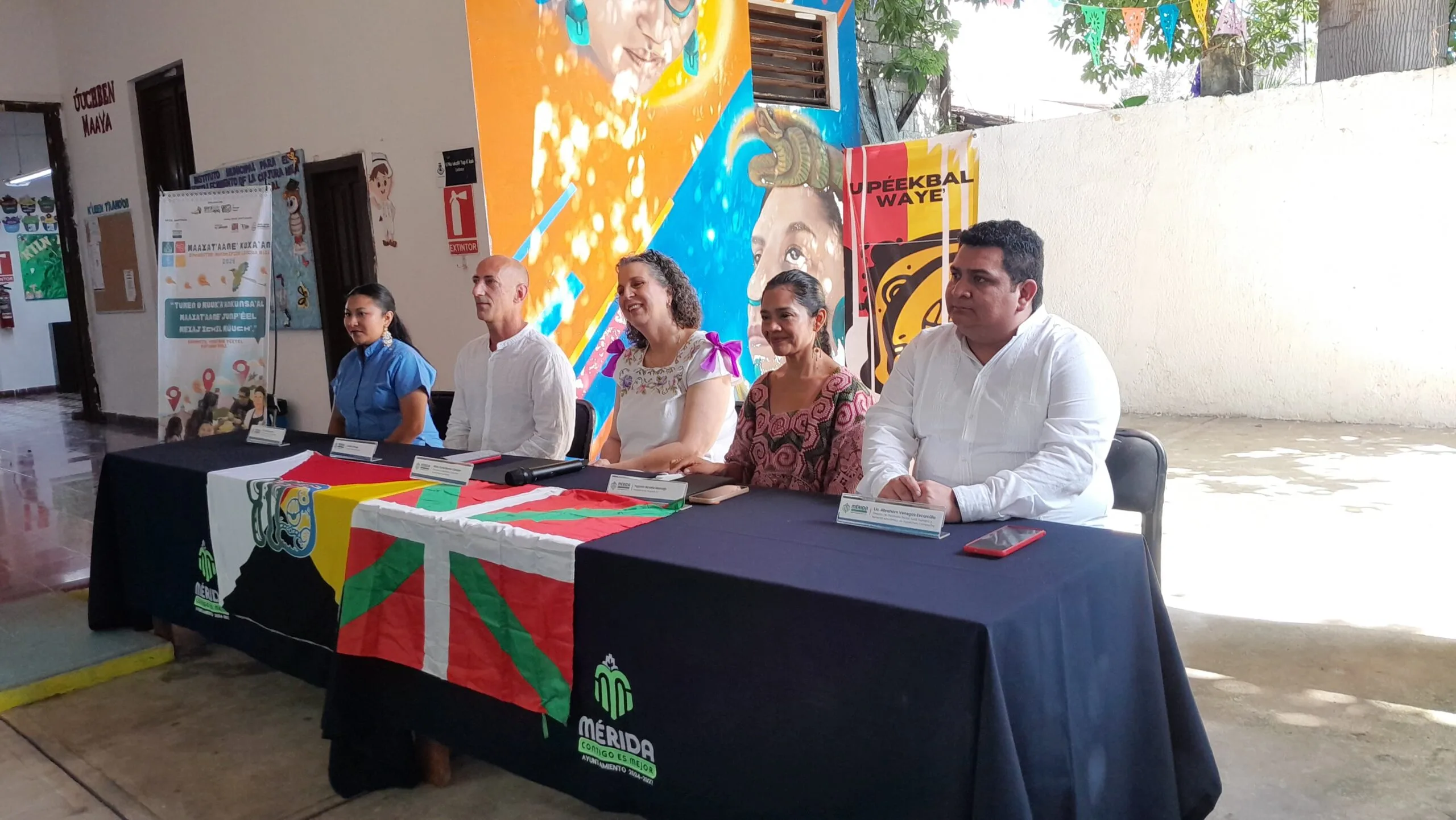
Mérida, Yucatán — Municipalities across the Yucatan Peninsula are joining forces to revitalize the Maya language, with Mérida set to host the First Peninsular Meeting of Municipalities for the Maya Language on August 8.
The gathering, to be held at the Centro Cultural Olimpo, aims to establish a joint agenda to promote the use of Maya from municipal governments. It is organized by the Movimiento Peninsular U Péekbal Waye’, Yúuyum A.C. and the Basque language revitalization organization Garabide, in coordination with Mérida’s Identity and Culture Department.
Representatives from municipalities in Yucatán, Campeche and Quintana Roo are expected to attend, along with specialists from Garabide. During the event, officials plan to sign a sisterhood agreement among the municipalities of Mérida, Tixcacalcupul and Cuncunul in Yucatán; Hopelchén in Campeche; and José María Morelos in Quintana Roo.
“We will take a firm step toward the future of our Maya language with the signing of a letter of intent in which we commit to creating working groups with real goals, so that Maya is not only remembered but spoken on the streets and in offices,” said Karla Berrón, director of Mérida’s Identity and Culture Department.
Yazmín Novelo, president of Yúuyum A.C., said one of the main challenges is not simply increasing the number of speakers but changing how Maya is perceived. “The symbolic plane is our greatest challenge,” she said, noting that discrimination and racism still prevent the language from being seen as useful for work, commerce and daily life.
Novelo said the organization works along three lines: social activation to strengthen linguistic pride, coordination with public institutions, and long-term strategies that address the root causes of language loss. She added that about 100 people have registered so far, though the venue can hold around 250.
The meeting will also address digital tools for Maya speakers. Socorro Cauich, project coordination director at U Péekbal Waye’, said an upcoming Expo Mayatek will showcase technology developed in Maya and help identify what digital resources the community needs. “The language does not have to stay in the past; it is a language of the future,” she said.
Arkaitz Zárraga of Garabide shared lessons from the revitalization of Basque, which was banned for decades and recovered through community organizing, education and collaboration between society and institutions. He warned that around half of the world’s roughly 7,000 languages could disappear within 50 years. “The first step has already been taken: deciding to recover your language,” he said of the municipal initiative.
The event is open to municipal commissioners, cultural promoters, students, organizations and the general public. Registration is available online.
More Culture
- Cozumel Marks Halloween With Inclusive Festival and Community Candy Swap
- Latin Grammy 2026: When, Where to Watch in Mexico as Edgar Barrera Leads Mexican Nominees
- Isla Mujeres’ Luz y Vida Festival Draws Day of the Dead Crowds and Boosts Local Business
- Cancún’s María Desatadora de Nudos Sanctuary Expects 25,000 Visitors for Day of the Dead
- Playa del Carmen Mayor Estefanía Mercado Leads Janal Pixán ‘Paseo de los Pixanes’ Parade
More Zona Maya
- Free Taste of Quintana Roo’s Ancestral Cooking in Tulum
- Mara Lezama Hands 27 Instruments to Traditional Music Groups to Preserve Cultural Heritage
- How 40 Artisans Are Keeping Quintana Roo’s Traditions Alive
- 487 Maya Dignitaries Demand Removal of INMAYA Director in Quintana Roo
- Maya Chicle Still Lacks International Registration Two Years After Geographic Indication