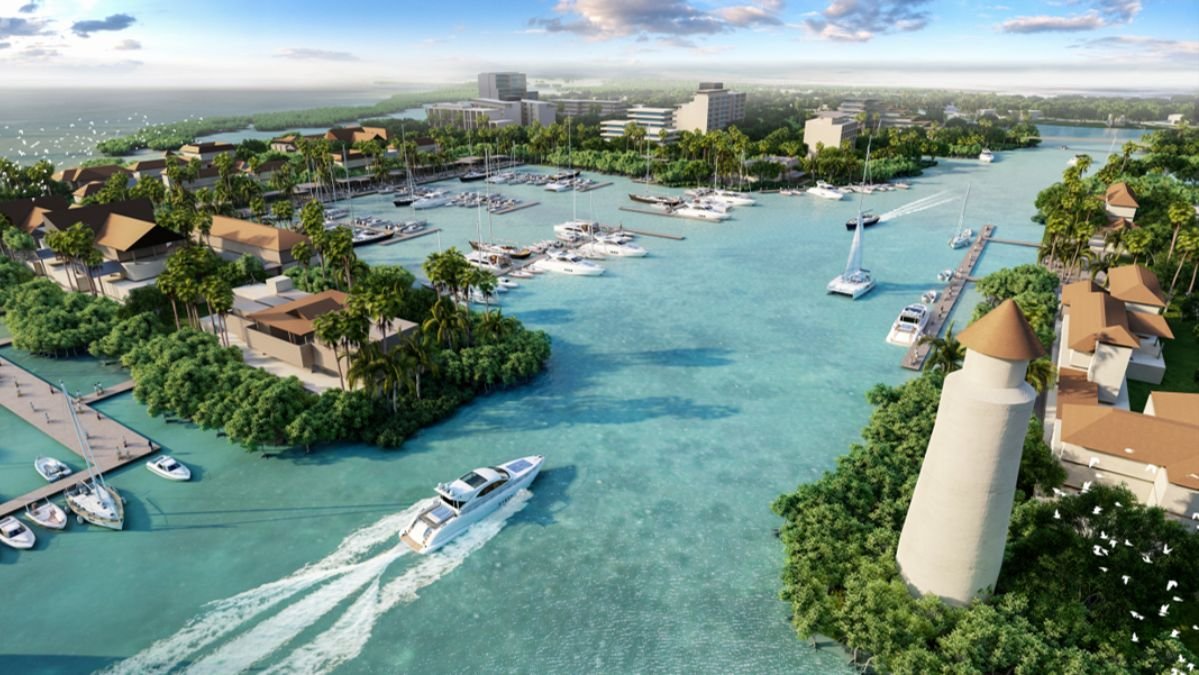
Progreso, Yucatán — Plans for a new large-scale marina development in Yucalpetén are putting Progreso at the center of a broader conversation about port expansion, luxury real estate, maritime tourism and environmental management along the Yucatán coast.
The project, called Yucatán Marina Club, has been presented by Grupo R4 and Mazza Capital as a 55-hectare mixed-use nautical community that would combine a marina, waterfront housing, shops, a hotel, restaurants, cultural spaces and public areas. Developers describe it as Mexico’s first “nautical city,” a community designed around boats, docks, canals and maritime services rather than a traditional beachfront subdivision. The estimated investment is 8 billion pesos, according to recent reporting and project presentations.
The development is planned for Yucalpetén, inside the municipality of Progreso, about 40 kilometers from Mérida and within the port shelter area that has long been associated with fishing, marinas and industrial use. Earlier environmental filings reported by Diario de Yucatán identify the site as part of an artificial fill created before 1985 within the Chelem lagoon system, in an area described as the industrial corridor of Yucalpetén. The project entrance would be through Avenida 18 in Nueva Yucalpetén, via the bridge that connects to the western side of the harbor.
Fernando Martínez Zurita, director of Mazza Capital and Yucatán Marina Club, said during the project’s presentation that the development is not “just another development,” but an effort to mark “a before and after” for Progreso and Yucatán. In an interview with El Economista, he said the project would generate about 2,000 jobs during construction and 4,000 permanent jobs in maritime operations, tourism, commerce and services, including sailors, captains and workers serving the businesses inside the complex.
The main business model is the sale of residential properties with direct boat access. The hotel would be the only component intended for nightly rentals, according to Martínez Zurita. Plans call for 209 residential lots with nautical access, internal and external marinas and capacity for more than 250 boats in the water and another 300 on land. The development would also include a nautical hotel, four restaurants, a clubhouse with pools and terraces, a shopping center, a captains’ bar, an event hall and a marina village.
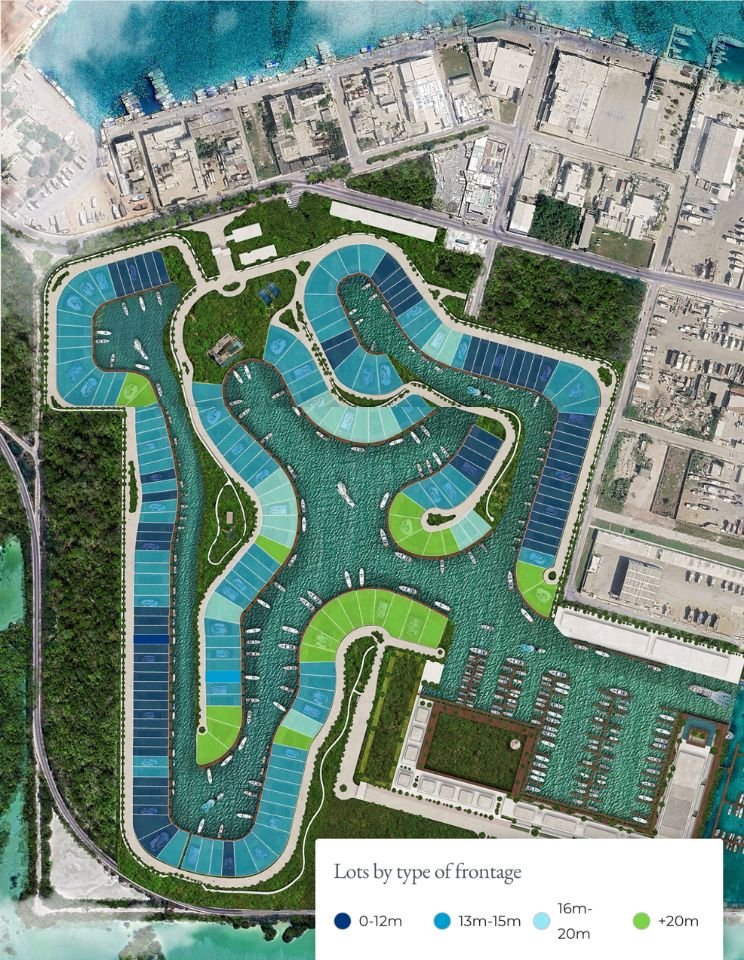
Public-facing components are also part of the proposal. Developers have described a central park, a pedestrian boardwalk and a lighthouse museum dedicated to the history of the port of Yucalpetén. Project materials and media reports also refer to cultural spaces and public areas intended to connect the private development with Progreso’s maritime identity.
Earlier details from the project’s Environmental Impact Statement described a much larger residential footprint, including three artificial lakes, dredged canals, towers of up to eight stories and a total of 710 homes. Based on an estimate of four occupants per home, Diario de Yucatán calculated a potential population of about 2,480 residents, equivalent to more than half of Chelem’s 2020 census population.
The timing is significant. Progreso is already undergoing a major transformation tied to port expansion, cruise tourism and cargo growth. Federal and state plans for the port’s remote terminal aim to accommodate larger cruise ships and commercial vessels, positioning Progreso as a larger maritime gateway for the peninsula. Yucatán Marina Club would add another layer to that strategy by targeting recreational boating, luxury real estate and high-value nautical tourism.
Developers argue that the site is well suited for redevelopment because it is already heavily impacted. Martínez Zurita described the property as an industrial zone that was never fully developed and is now used as an informal dumping area, with deteriorated streets and little productive use. He said the goal is to promote fishing, tourism and the economy while respecting mangroves and the surrounding ecosystem. According to developers, the project already has authorization from the Ministry of Environment and Natural Resources, Semarnat. Local reporting in 2025 said the project’s environmental authorization covered a long operating period in the Yucalpetén industrial corridor.
The environmental question remains the central challenge. Coastal Yucatán is a sensitive landscape of lagoons, mangroves, wetlands, beaches and shallow marine ecosystems. Even when a project is built on previously altered land, dredging, canals, boat traffic, wastewater, stormwater and real estate pressure can affect surrounding systems if not tightly managed. The project’s own scale makes those questions unavoidable.
Luis Chacón Ramos, regional director of the French firm Poralu Marine, which will support the marina’s design and operation, said finding a balance between economic growth and environmental protection is one of the biggest challenges for marina projects. He noted that some maritime developments are proposed in areas of high environmental importance and “will definitely never be environmentally viable.” Poralu Marine says it has more than 40 years of experience, more than 120,000 berths built worldwide and more than 20,000 projects, participating in conceptualization, feasibility, permitting, design, construction and operation.
That expertise may be important, but it will not resolve all concerns. Studies of marina development in other coastal regions, including the Mediterranean, have found that marinas can become economic and tourism drivers when well managed, but can also accelerate real estate pressure, landscape change and ecosystem degradation without strict environmental controls, long-term monitoring and coordination between authorities, developers and local communities.
For Progreso, the stakes are high. Yucatán Marina Club could bring investment, jobs and international attention to the port at a time when the state is trying to expand its maritime economy. It could also deepen the pressure on a fragile coastal zone already shaped by port infrastructure, fishing, tourism, vacation homes and rapid real estate growth.
The question now is not only whether Yucatán can build a luxury marina community. It is whether it can do so in a way that strengthens Progreso’s economy without repeating the environmental mistakes that have marked other coastal developments.
More Development
- Quintana Roo Plans Two Wastewater Plants and Two Aqueducts for Cancún and Playa del Carmen
- Tren Maya Freight Project Targets 4.7 Million Tons by 2030
- Cancún Advances Yaxchilán Revitalization With Pedestrian Corridor to Avenida Nader
- Mexico’s 911 Centers Explore AI to Speed Up Emergency Response
- Punta Allen Road Rehabilitation Reaches 80 Percent Completion