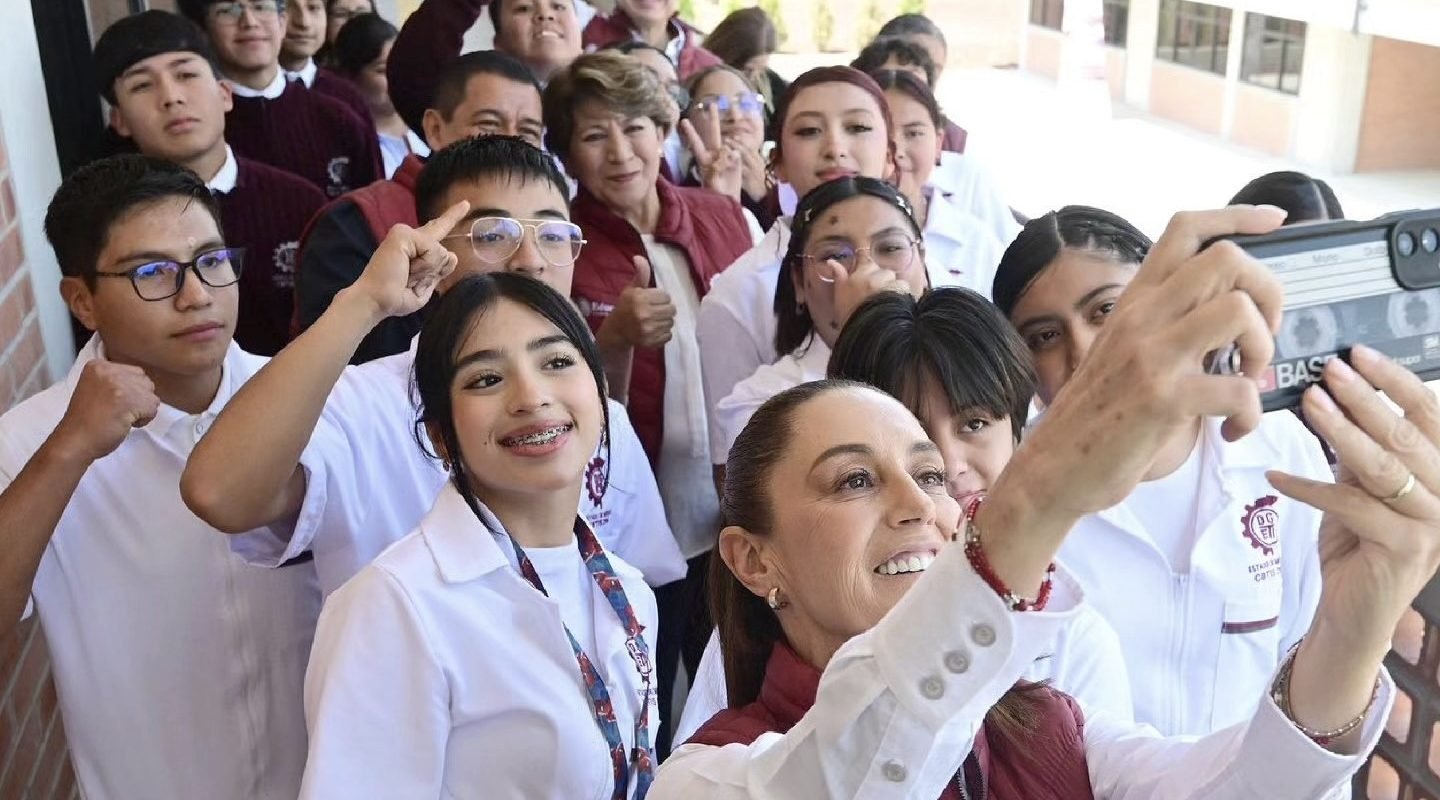
Playa del Carmen, Quintana Roo — For thousands of teenagers across Quintana Roo, the publication of this year’s high school placement results was about much more than finding a name on a list.
It marked the first year of a new statewide admissions process called Mi Derecho, Mi Lugar Quintana Roo, or My Right, My Place, which eliminated the traditional entrance exam for public upper-secondary schools and replaced it with a centralized assignment system intended to guarantee every applicant an opportunity to continue studying.
The 2026 process was free and open to students seeking admission to public high schools across the state. Registration ran from April 27 through June 12, and education officials made clear from the outset that there would be no admission exam. Instead, applicants selected preferred schools and programs, and the state assigned places based on availability and demand.
According to figures released with the placement results, 23,922 students registered, and 20,914, or 87.5 percent, received a place in one of their selected options. The remaining 3,008 applicants, concentrated mainly in Cancún and Playa del Carmen, did not receive one of their preferred choices in the first round.
That does not mean they will be left without a place to study. State education authorities have said the new system is designed to ensure that all applicants have access to an upper-secondary education option, with reassignment procedures available for those who were not placed initially.
The numbers also reveal a larger issue facing Quintana Roo: demand is growing faster than capacity in some of the state’s most rapidly expanding cities.
Cancún and Playa del Carmen continue to absorb large numbers of new residents, and that population growth is putting pressure on schools as well as housing, health care, transportation and other public services. The concentration of unplaced students in those two cities offers a clear indication of where additional classrooms and campuses are needed most.
The most sought-after schools included established institutions such as CBTIS 111 and CBTIS 272 in Cancún, CECyTE in Playa del Carmen, Colegio de Bachilleres campuses and Conalep schools. These campuses are attractive not only because of their reputations, but also because many offer technical programs that can prepare students both for university and for direct entry into the workforce.
That is where one of the most interesting parts of the story emerges.
The educational choices available to young people in Quintana Roo are changing. Alongside more traditional areas such as administration and accounting, newer technical programs now include fields such as Artificial Intelligence, Business Intelligence, International Trade and Customs, and Tourism Management and Innovation.
Those are not hypothetical future offerings. The state government has announced that new technical high schools being developed in Cancún and Playa del Carmen will offer precisely those areas of study. The new CBTIS 301 in Cancún is expected to serve up to 900 students across two shifts, while the planned CBTIS 309 in Playa del Carmen is also intended to expand capacity in one of the state’s fastest-growing urban areas. Construction plans announced in May included laboratories, workshops, computer facilities and sports areas.
For the new CBTIS campuses, announced programs include Tourism Management and Innovation, International Trade and Customs, Artificial Intelligence, and Business Intelligence. In a state where the economy has traditionally been dominated by tourism, hospitality and service-sector jobs, that shift toward technology and global commerce is significant.
It also says something about the ambitions of the students themselves.
A teenager choosing Artificial Intelligence or Business Intelligence at a public high school is not simply choosing where to spend the next three years. That student may be imagining a future in software, data analysis, automation, logistics or digital entrepreneurship, sectors that were barely part of the public conversation in Quintana Roo a generation ago.
The new admissions system also represents a broader change in educational policy. Under the previous model, an entrance exam could determine whether a student reached a preferred school. The 2026 process removes that barrier, but in doing so it exposes a different challenge: the state must create enough capacity in the places and programs students actually want.
That is why the 3,008 students who did not initially receive one of their preferred options matter beyond the individual cases. Their applications provide a map of demand. They show which cities are under the greatest pressure, which schools are oversubscribed and which educational programs are attracting the most interest.
Governor Mara Lezama has said the state will use that demand to press for greater educational capacity from the federal government. The new CBTIS campuses in Cancún and Playa del Carmen are already part of that expansion effort.
For families, however, the issue is much more immediate. High school can be the bridge to a university degree, a technical qualification, a first job or greater economic mobility. For many young people, securing a place in the right program can influence the direction of their adult lives.
The release of the Mi Derecho, Mi Lugar results may look, at first glance, like a routine administrative announcement involving lists, percentages and assigned campuses.
But behind those numbers is a generation making choices about the kind of future it wants.
And increasingly, those choices include technology, innovation, international commerce and careers designed for an economy that is changing very quickly.
More Community
- Hundreds of Riders Expected for Tulum’s Fourth Federated Horseback Ride
- Quintana Roo Riders Resume ‘Vest Law’ Talks, No Protests
- Cancún Residents Demand Governor’s Intervention Over Alleged Land Fraudster
- Playa del Carmen Ranks Second in HIV Cases in Quintana Roo, Official Says
- Cancún Taco Festival Aims to Revive Local Economy in Low Season
More Cancun
- Cancún Advances Yaxchilán Revitalization With Pedestrian Corridor to Avenida Nader
- Mexico’s 911 Centers Explore AI to Speed Up Emergency Response
- Quintana Roo Education Official Reported Missing in Cancún, Found Hours Later
- Cancún Business Council Launches Push to Diversify Quintana Roo’s Economy Beyond Tourism
- Power Outage in Chetumal Forces Closure of Quintana Roo Labor Courts