
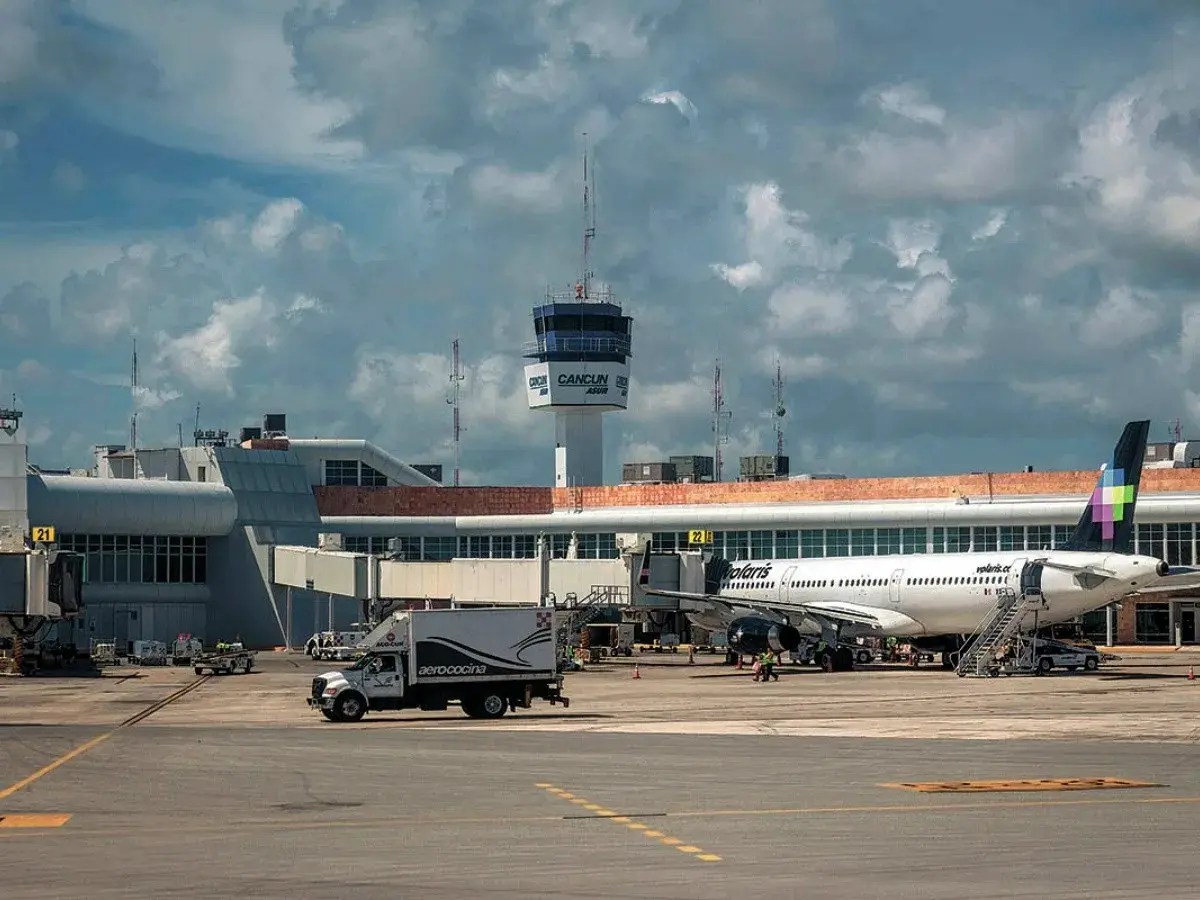
Cancún, Quintana Roo — The Mexican Caribbean is heading into a difficult summer season as flight capacity from the United States, its main source market, shrinks significantly, according to a new report from the Center for Advanced Research in Sustainable Tourism (Starc) at Anáhuac Cancún University.
The first Travel Sentiment Index (TSI) report warns that between July and August, the region will receive 561,000 fewer seats and nearly 3,000 fewer flights to Cancún, Cozumel and Tulum compared to the same period in 2025. That represents a 22% drop in seat capacity and a 21% decline in flight operations, driving up fares and eliminating many last-minute budget options.
The TSI measures four factors before a tourist books: online searches, air supply, economic environment and digital conversation. Results are on a scale of 0 to 100: above 90 is excellent, 80-89 resilient, 70-79 reflects price friction, and below 70 signals contraction territory.
The decline in air connectivity is the most worrying data point. American Airlines cut nearly 15% of its seats, United Airlines reduced by 17%, and Spirit Airlines has completely disappeared from these routes. Only Southwest remains stable.
With fewer flights available, especially low-cost ones, travelers have fewer options to reach the region at affordable prices. This increases sensitivity to total trip cost and forces hotels and tour operators to compete more intensely for each booking.
The study also warns that sargassum seaweed continues to influence digital conversation and could deter travel decisions if public perception is not managed well.
More Local News
- Hundreds of Riders Expected for Tulum’s Fourth Federated Horseback Ride
- Quintana Roo Riders Resume ‘Vest Law’ Talks, No Protests
- Cancún Residents Demand Governor’s Intervention Over Alleged Land Fraudster
- Quintana Roo Plans Two Wastewater Plants and Two Aqueducts for Cancún and Playa del Carmen
- Playa del Carmen Ranks Second in HIV Cases in Quintana Roo, Official Says
