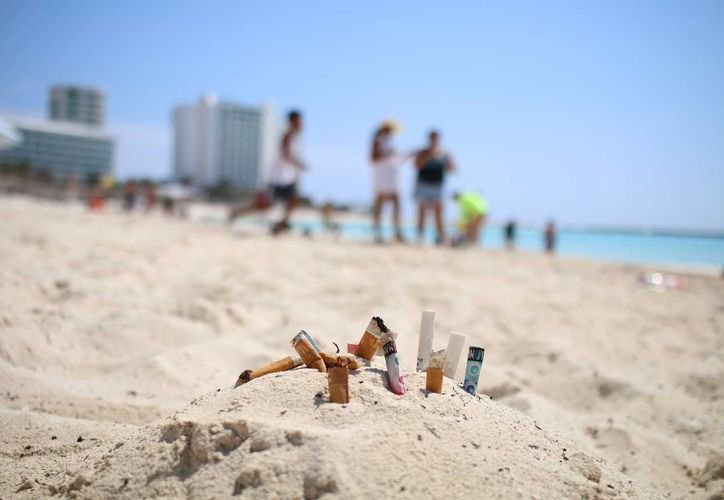
Cancún, Quintana Roo — On World Oceans Day, environmental activists are calling attention to a persistent problem: tourists treating the sea as an ashtray. A single cigarette butt can contaminate up to 15 liters of seawater, according to experts.
During the most recent beach cleanup organized by the Festival of the Oceans 2026, volunteers collected half a kilogram of cigarette butts in just 20 to 30 meters of beach. Had those butts reached the water, they would have caused significant pollution.
Miguel Canseco, spokesperson for the Festival of the Oceans, expressed outrage at how many tourists use the ocean as a “giant ashtray.” Cigarette filters are made of cellulose acetate, a type of plastic that takes 10 to 25 years to degrade, releasing over 7,000 toxic chemicals including nicotine, arsenic, and lead into the environment.
“This is a cultural issue where we Mexicans, and especially Cancún residents, need to make a leap in awareness,” Canseco said.
The cleanup in Puerto Morelos collected 72 kilograms of waste, with a focus on microplastics and cigarette butts. Canseco emphasized that Quintana Roo residents must act as guardians of this natural heritage for future generations.
In Cancún, smoking or consuming any tobacco or nicotine products on public beaches is prohibited. Fines range from 103 to 10,000 pesos, and in some cases up to 20,000 pesos. Authorities can also impose administrative arrest of up to 36 hours for those caught smoking on public beaches.
More Environment
- Activists File Complaints Over Heavy Machinery on Cancún’s Playa Delfines Dune
- Semarnat Denies Permit for Beach Restoration Project in Puerto Morelos
- Cancún Hoteliers Push to Reactivate Beach Recovery Trust
- Experts Warn of Climate Crisis in Mexican Caribbean, Urge Urgent Action
- Scientists Say Sargassum Must Be Stopped in the Atlantic, Not on Cancún’s Beaches
More Quintana Roo
- Quintana Roo Human Rights Commission Closes 930 Complaints With Only 13 Recommendations
- Quintana Roo Grants Tax Breaks to Mototaxi Operators
- Quintana Roo Exports Plunge 75.1% in Second Quarter, Ranking Last Nationally
- Quintana Roo Builders Pin 2026 Hopes on Public Works
- Hells Angels Arrest in Cancún: Mexico’s Cartel Link?