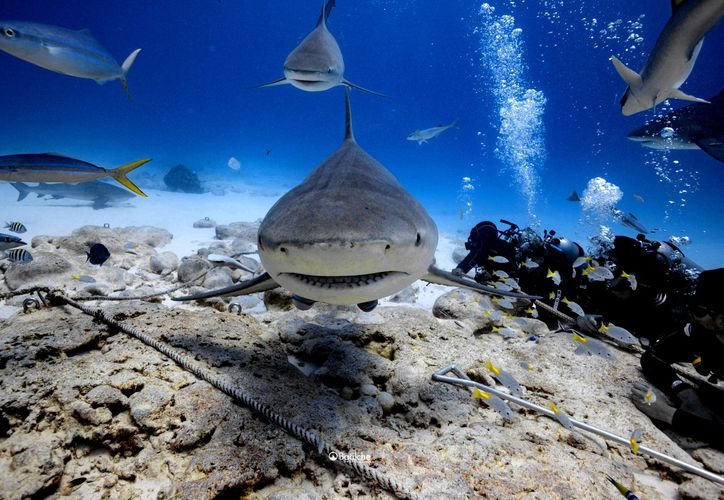
Playa del Carmen, Quintana Roo — Bull shark (Carcharhinus leucas) populations in the Mexican Caribbean remain stable, according to three years of monitoring by the marine conservation organization MarAlliance.
Recent surveys by scientists and local community members in Playa del Carmen have identified a catalog of 43 individual sharks in the area. Preliminary assessments also show a highly positive indicator: an increase in the number of juvenile sharks recorded, ensuring a healthy generational turnover for this emblematic species in the region.
Biologist Cecilia Gutiérrez Navarro, MarAlliance project officer, explained that this favorable population health is a direct result of coordinated efforts in communities like Playa del Carmen. The specialized diving sector, working closely with local fishermen and authorities from all three levels of government — particularly the National Commission of Natural Protected Areas (Conanp) — has consolidated a successful management scheme with good practices in tourism and conservation activities.
To obtain these data and understand the species’ dynamics, the research team combines cutting-edge methodologies in the northern and central parts of the state, with future expansions planned for areas such as Banco Chinchorro Biosphere Reserve.
This monitoring is part of a broader project to strengthen a baseline for marine megafauna in the state, allowing long-term evaluation of whether populations increase or remain stable, and thus bolster public policies and management plans in Natural Protected Areas.
Gutiérrez noted that despite public perception of more frequent or coastal sightings, bull sharks have always inhabited these waters and play a crucial role as top predators in maintaining the balance of the marine ecosystem.
She urged the community and visitors to learn about codes of conduct and respect for the species, reminding that humans are guests in the sharks’ natural habitat.
To involve the public, the organization announced the upcoming launch of a citizen science digital app. Divers, fishermen, and sea users will be able to report their sightings, democratizing scientific knowledge and turning the community into an active part of bull shark protection in Quintana Roo.
More Environment
- Activists File Complaints Over Heavy Machinery on Cancún’s Playa Delfines Dune
- Semarnat Denies Permit for Beach Restoration Project in Puerto Morelos
- Cancún Hoteliers Push to Reactivate Beach Recovery Trust
- Experts Warn of Climate Crisis in Mexican Caribbean, Urge Urgent Action
- Scientists Say Sargassum Must Be Stopped in the Atlantic, Not on Cancún’s Beaches
More Quintana Roo
- Quintana Roo Human Rights Commission Closes 930 Complaints With Only 13 Recommendations
- Quintana Roo Grants Tax Breaks to Mototaxi Operators
- Quintana Roo Exports Plunge 75.1% in Second Quarter, Ranking Last Nationally
- Quintana Roo Builders Pin 2026 Hopes on Public Works
- Hells Angels Arrest in Cancún: Mexico’s Cartel Link?