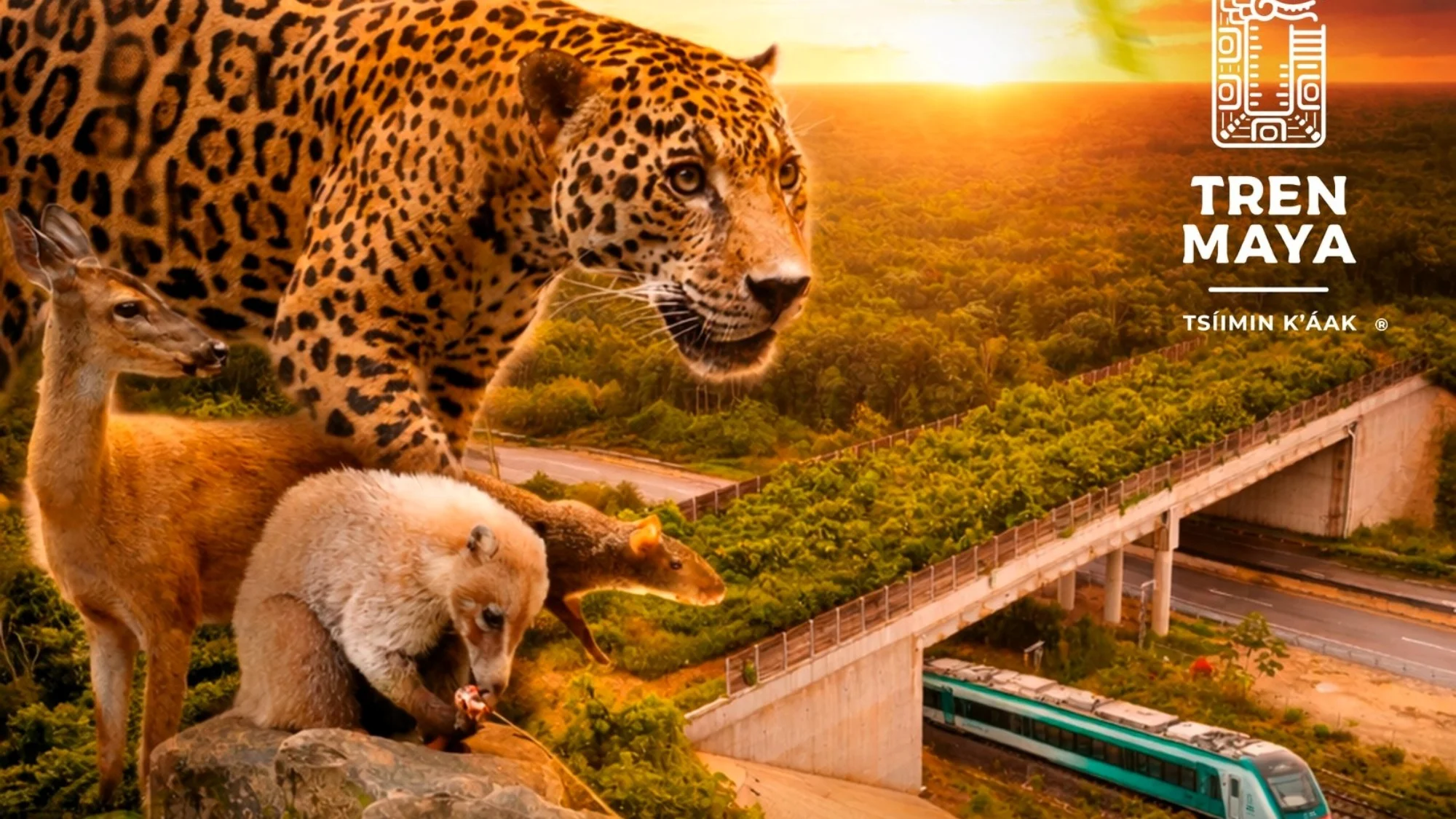
Yucatan Peninsula, Mexico — Wildlife crossings built along the Maya Train route are emerging as a crucial measure to protect biodiversity in southeastern Mexico, allowing various species to safely cross without disrupting their natural habitat amid railway infrastructure development.
Experts agree these structures aim to ensure wildlife permeability along the railway route and other land transportation corridors, maintaining biological corridors and preserving genetic flow between populations to prevent isolation.
Importance of Genetic Flow
Marco Antonio Lazcano Barrero, director of the El Edén Ecological Reserve, said these crossings are fundamental for ensuring connectivity in linear infrastructure projects and emphasized that sufficient crossings are essential in jungle areas where biodiversity requires constant mobility.
The specialist explained that the goal isn’t mass animal crossings but rather allowing individuals to move from one side to another to promote genetic exchange between populations located north and south of the tracks, strengthening their stability.
Monitoring as Central Focus
Javier Carballar, director of the Institute of Biodiversity and Protected Natural Areas of Quintana Roo, noted that the effectiveness of crossings depends on their proper placement, evaluation, and constant monitoring to ensure long-term functionality.
Monitoring occurs through camera traps placed at strategic points where wildlife movement is anticipated, providing photographic and video records that help understand species movement patterns.
Technology for Conservation
Currently, 1,500 wildlife crossings on the Maya Train are being monitored with 1,066 active cameras operating in quarterly periods with at least 20 days of continuous recording, generating statistical information to analyze wildlife behavior in southeastern Mexico.
This data helps identify which species use the crossings and how they adapt to the environment, with small mammals like gray foxes, raccoons, and coatis showing the fastest adaptation due to their opportunistic nature.
Design Adapted to Each Species
The selection of crossing types responds to the characteristics of species present in each zone, including elevated structures that benefit arboreal animals like spider monkeys, which would rarely use lower passages.
Additionally, these crossings feature sound panels and appropriate vegetation, reducing human disturbance and creating conditions that facilitate wildlife use.
Challenges and Benefits
Raúl Padilla, president of Jaguar Wildlife Center, noted that previous infrastructure like Highway 307 caused negative impacts due to lack of mitigation measures, but highlighted that the Maya Train could demonstrate benefits through its elevated viaducts and transverse drainage works.
Monitoring has documented crossings by species including jaguars, pumas, ocelots, and margays, confirming these structures can contribute to conservation if maintained in proper conditions with low human activity.
Continuous Tracking
Analysis of collected information in office settings allows precise tracking of species inhabiting areas adjacent to the project, strengthening environmental protection strategies.
This continuous monitoring directly contributes to wildlife conservation in southeastern Mexico by integrating infrastructure development with measures that consider ecosystem connectivity.
Discover more from Riviera Maya News & Events
Subscribe to get the latest posts sent to your email.