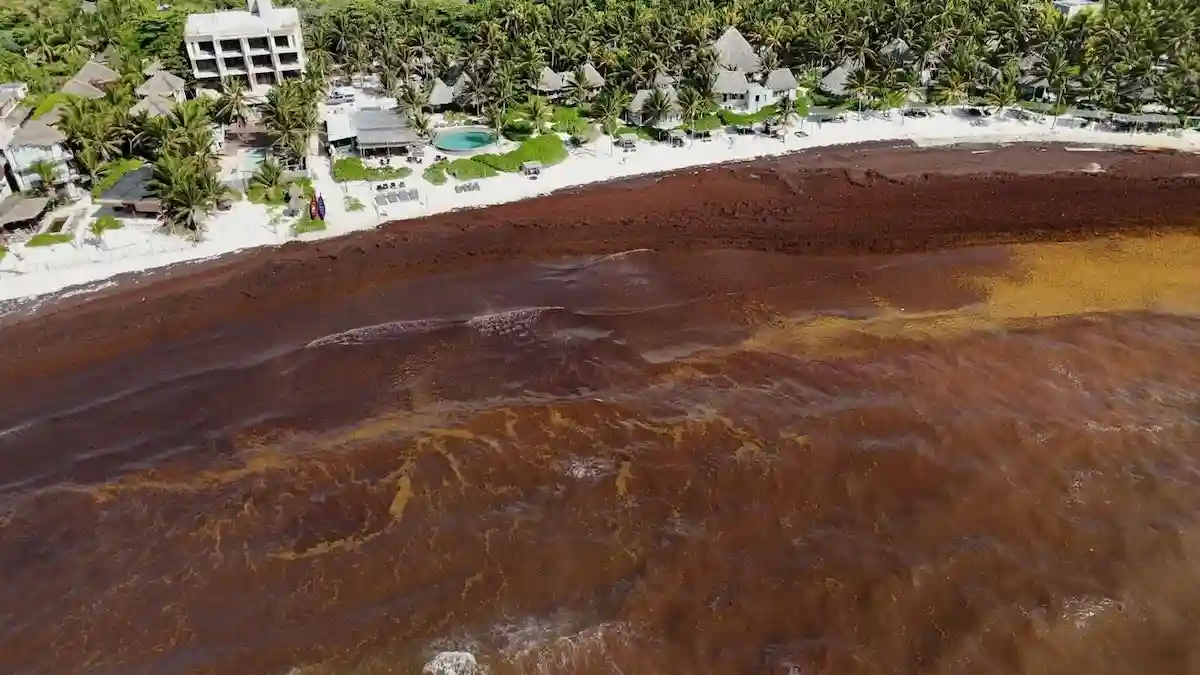
Tulum, Quintana Roo — Hotel operators along Tulum’s coastline are considering limiting operations to periods when sargassum is not present, in an effort to avoid mounting financial losses from increasingly costly beach cleanup efforts, according to the president of the Mexican Caribbean Hotel Council, David Ortiz Mena.
Ortiz Mena said the decision reflects the unsustainable burden of cleanup expenses, especially amid low occupancy rates and an unfavorable exchange rate. He acknowledged that President Claudia Sheinbaum’s decision to involve the federal government directly with a comprehensive plan — including collection of the algae at sea with more sargassum-collecting vessels — marks a turning point in a problem that for years was shouldered almost entirely by the private sector.
The hotel industry remains willing to invest, he said, but considers it essential to share responsibilities to ensure competitiveness, employment, and the preservation of the beaches that distinguish Mexico’s top tourist destination.
Ortiz Mena warned that the problem has worsened considerably: last year, Quintana Roo received five times more sargassum than the worst historical record, and this year the algae began arriving in late January. The season, which previously ended in August or September, now can extend through the end of the year, directly affecting hotel occupancy.
“A hotel can spend up to three times more on removing the algae than it pays for electricity,” he said. “We can clean our beaches, but stopping the seaweed at sea requires the participation of the Mexican state. That is the importance of the comprehensive plan announced by the president.”
The new federal strategy includes reinforcing collection capacity, expanding the role of the Mexican Navy, installing new containment barriers, developing a permanent program with operational and maintenance resources, and creating a working group with authorities, scientists, specialists, and hotel representatives.
Ortiz Mena also stressed the need for a national tourism promotion and crisis management strategy, noting that competing destinations like the Dominican Republic run permanent campaigns to show positive beach images, while in Mexico, photographs of seaweed dominate and hurt the international perception of the Mexican Caribbean.
Although he acknowledged the work of the Quintana Roo Tourism Promotion Council with funds from the lodging tax, he said it is essential for the federal government to revive a national promotion scheme that strengthens the Mexico brand and allows a timely response to such contingencies.
More Business
- Cozumel to Get First Direct Flight From Europe With New Milan Route
- Cancún Airport Tops 400 Daily Flights for First Time Since August
- Quintana Roo Urges Homebuyers to Verify Property Records Before Buying
- Maya Ka’an Named Among National Geographic’s 25 Best Destinations for 2027
- Quintana Roo Eyes ‘Set-Jetting’ Boom as Expedia Report Links Film Exposure to Bookings
More Tulum
- Tulum Guarantees Pay, Benefits Amid Protests
- Cave Divers Push to Revive Jacinto Pat Museum in Tulum to Showcase Caves and Underground Rivers
- Gunmen Fire on Hotel Facade in Tulum’s La Veleta, No Injuries Reported
- Cancún Named World’s Most Active City in World Wellness Weekend 2026
- Tulum Drivers Push to Overhaul Traffic Rules Over Costly Towing