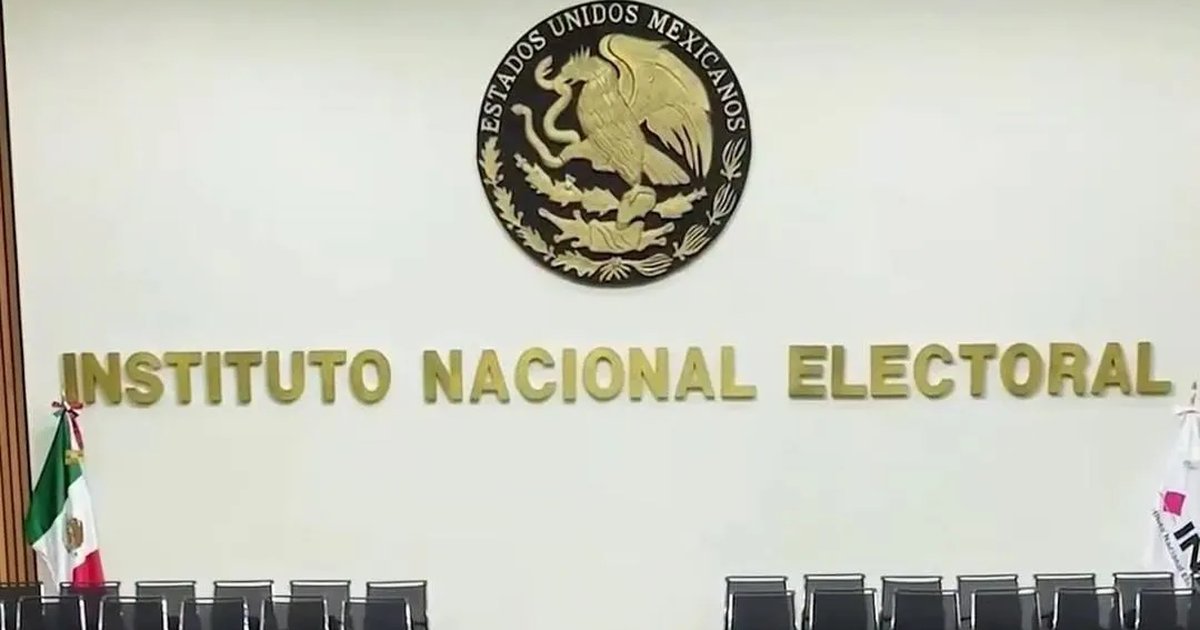
Mexico City — Mexico’s National Electoral Institute (INE) has launched the Candidate Integrity Verification Commission, a body tasked with reviewing the backgrounds of people running in next year’s elections for potential links to organized crime.
The commission’s president, INE councilor Arturo Chávez López, said during its inaugural session that “organized crime has no political ideology. It seeks to infiltrate wherever possible, regardless of party affiliation.” He noted that political rivals increasingly accuse one another of belonging to “narco-parties” or running “narco-governments.”
The commission will draw on information from the Secretariat of Security and Citizen Protection (SSPC), the Secretariat of Finance and Public Credit (SHCP), the Tax Administration Service (SAT), the Federal Prosecutor’s Office (FGR), the National Intelligence Center (CNI), the Financial Intelligence Unit (UIF), and the National Banking and Securities Commission (CNBV).
Chávez said participation in the review process is strictly voluntary for both individuals and political parties. If a review detects “a reasonable risk,” the final decision on whether to keep a candidate in the race will rest solely with the political parties or with independent candidates, he explained. He added that candidates will still be entitled to privacy and the presumption of innocence.
Besides Chávez, the commission includes councilors Uuc-kib Espadas and Norma Irene de la Cruz Magaña, both members of the bloc led by INE President Guadalupe Taddei Zavala.
Chávez said that countering organized crime is crucial to stopping political violence and corruption. He cited the 2024 election process, which he said saw the highest number of victims of “political-criminal violence,” with 659 people and facilities attacked.
It remains to be seen whether the new commission will be effective. Many organizations and citizens have warned for years that criminal groups have infiltrated political parties and their candidates.
More Politics
- Trump Escalates Pressure on Mexico, Demands Action Against Cartel-Allied Officials
- Mexico Files New Complaint Over Migrant Death in ICE Custody
- Puerto Morelos Mayor Denies Detention After Federal Search of Rented Home
- Mexico’s Federal Prosecutor Charges Former Chihuahua Attorney General With Treason Over CIA Role in Drug Lab Raid
- Quintana Roo Health Secretary Flavio Rosado Resigns to Seek Morena’s Isla Mujeres Candidacy