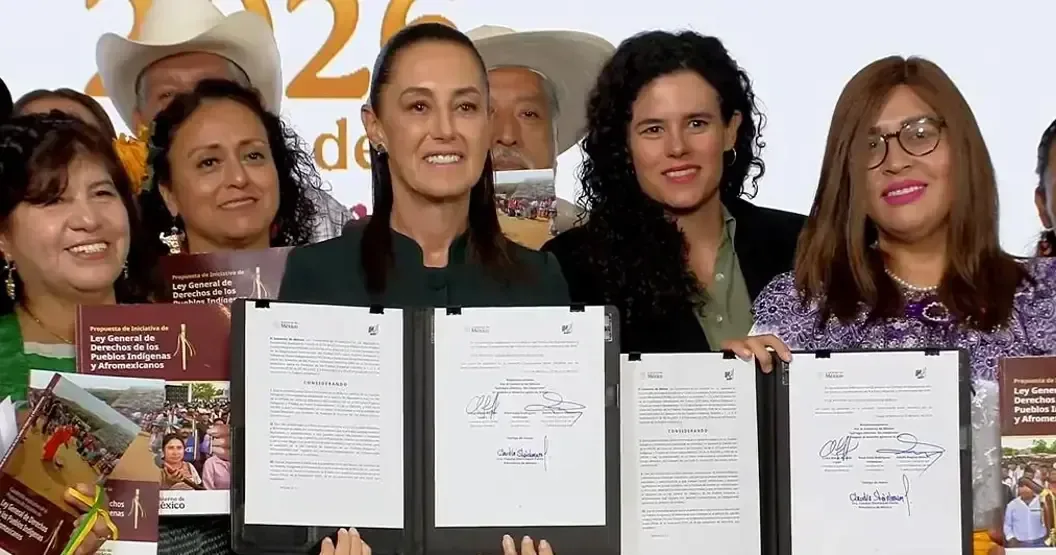
Mexico City — President Claudia Sheinbaum presented the General Law on the Rights of Indigenous and Afro-Mexican Peoples during her morning press conference, but the bill will not go directly to Congress. Instead, it will first undergo a national consultation with indigenous and Afro-Mexican communities, as required by the constitution.
Sheinbaum said the proposal was developed over several months and that the next step is to initiate direct dialogue with communities to incorporate their views into the draft law. Members of the National Council of Indigenous Peoples, who will participate in the consultation prior to legislative debate, attended the announcement.
Key Details
- When: The national consultation begins July 1.
- Who: President Claudia Sheinbaum.
- Where: With 69 indigenous peoples and Afro-Mexican communities.
- Process: The consultation consists of five stages.
- Assemblies: Held in 82 regions and seven cities across the country.
The new legislation aims to align national regulations with the most recent constitutional reform regarding indigenous and Afro-Mexican peoples. The main objective is to establish clearer foundations for recognizing these communities, including them in public decisions, and respecting their community structures.
Legal Counsel Luisa María Alcalde and National Institute of Indigenous Peoples Director Adelfo Regino Montes will coordinate the consultation process. This process will help communities thoroughly understand the initiative before it is formally submitted to Congress.
Consultation Stages
The national consultation is divided into several phases, including issuing a call and disseminating information about the initiative. From July 1 to August 6, information will be provided to communities. The deliberative stage will run from August 7 to September 13, during which communities can offer their observations.
How Opinions Will Be Collected
The deliberative stage is crucial, with 82 regional assemblies and seven working groups in key cities such as Guadalajara and Monterrey. These meetings will allow communities to review the initiative according to their own norms and organizational forms, helping shape the final proposal to be presented to Congress.
Authorities involved in the process emphasize the importance of the consultation to build legislation that reflects the needs and rights of the communities subject to the new regulations.
More Politics
- Isla Mujeres Approves Updated Development Plan With 185 Action Items
- Mexico Seeks Tariff Cuts on Steel and Autos in US Trade Talks
- No Date Set for Supreme Court Ruling in Quintana Roo Border Dispute
- Ex-Playa del Carmen Mayor Lili Campos Joins Mexico City Prosecutor’s Office Amid Quintana Roo Probes
- Peso Weakens to Five-Month Low as Banxico Holds Rates Steady