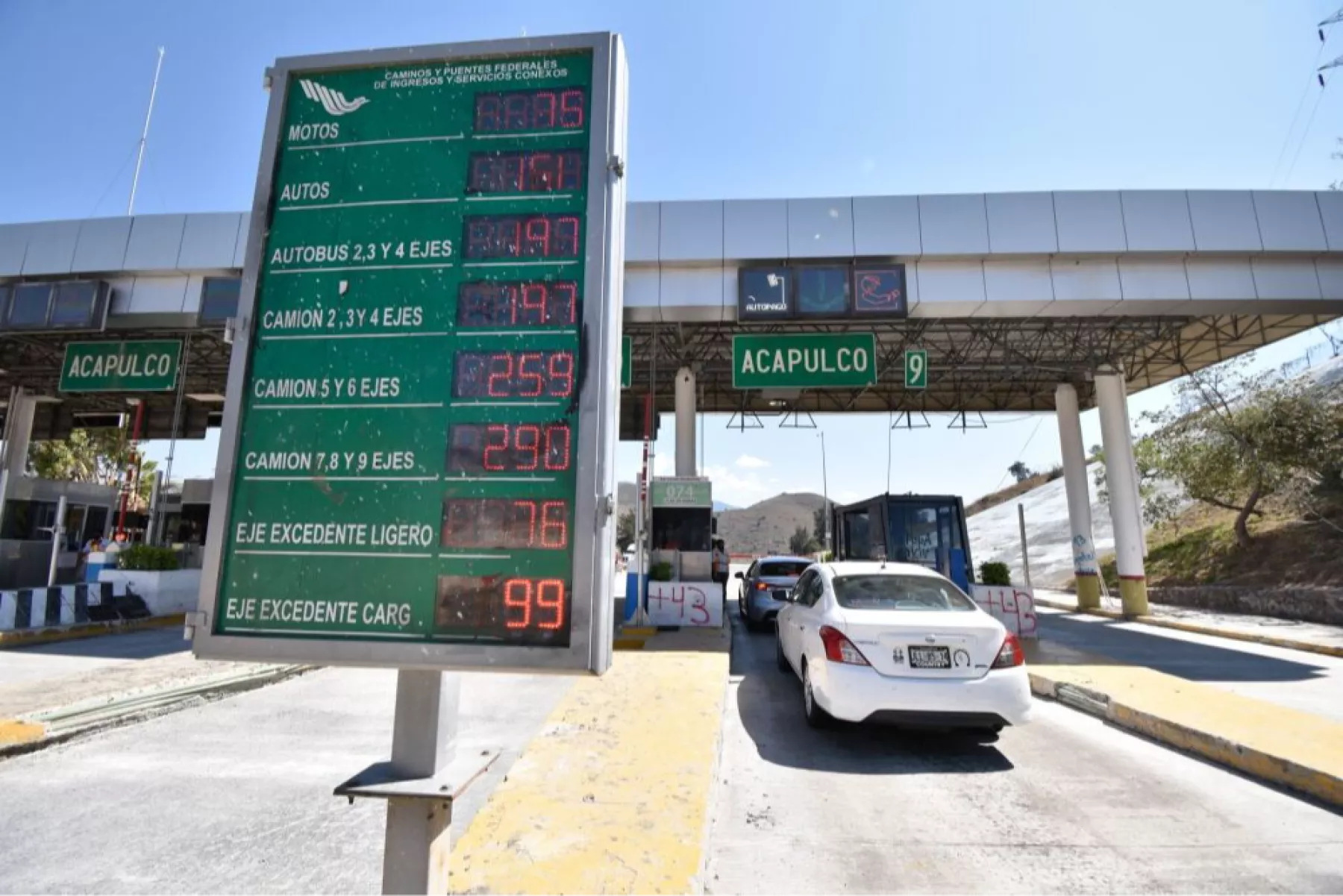
Mexico City — President Claudia Sheinbaum’s 2027 economic package includes a Digital Economy Law that would give the Finance Ministry (SHCP) new powers to designate strategic sectors where payments could be made exclusively through digital means, with gas stations and highway toll booths expected to lead the rollout.
The measure forms part of a broader strategy to reduce Mexico’s reliance on cash and shift a larger share of transactions to electronic channels. Gas stations and toll plazas are among the first activities that could fall under rules barring the use of banknotes.
Fifteen Days to Define the Sectors
Arturo Luna, of Fintech México and vice president of government affairs for Visa México, said that if lawmakers approve the bill, the Finance Ministry would have 15 days to identify the strategic sectors covered by the provision. The industry expects gas stations and toll booths to be among the first named, he added.
“We believe they will start with gas stations and toll booths,” Luna said during an event titled “Mexico in its contactless era toward 2030,” organized by Sistema de Transferencias y Pagos (STP).
The proposal does not immediately prohibit every gas station or toll booth from accepting cash. The change depends first on the bill’s approval and then on the Finance Ministry’s designation of strategic sectors.
Within those sectors, payment would have to be made by digital or electronic means, although the initiative itself allows exceptions when connectivity problems or network disruptions arise. The shift would therefore mean more than swapping bills for cards: the digital payment concept covers cards, electronic transfers and systems such as SPEI, CoDi and DiMo.
Government Offices Would Have to Accept Digital Payments Too
The bill would also require all three levels of government — federal, state and municipal — to offer digital payment options for the procedures and services they provide to the public, so that citizens would not necessarily need cash to pay fees. It would elevate the digital CURP identity code and the Citizen Digital File to “trust mechanisms” for contracting services remotely.
Financial institutions would be required to enable QR code payments at all point-of-sale terminals. Authorities would have a transitional period to set schedules for a gradual migration.
A Push to Broaden the Tax Base
Carlos Valderrama, chief executive of Legal Paradox, said the measures to strengthen digital payments also amount to an expansion of the tax base at a time when the federal government prefers not to present a full fiscal reform — particularly with 2027 shaping up as an election year.
“More than 90% of payments in Mexico are still made in cash, and that means there is no proper traceability of who is generating income for tax purposes, and there is no adequate payment of the taxes generated,” Valderrama said.
He added that an economy that “moves in cash” relies on the good faith of citizens to report whether transactions took place, leaving authorities with limited visibility.
A Complement to Anti-Money-Laundering Rules
The new Digital Economy Law would complement the most recent reform to Mexico’s anti-money-laundering statute and its general provisions, expanding the universe of companies classified as engaging in vulnerable activities. The changes would add 120,000 companies and individuals across 18 vulnerable activities, including real estate, vehicle sales, jewelry and art dealing.
Under measures already implemented by the Finance Ministry, companies in those activities must carry out constant audits. Individuals involved in such work, including brokers, would also fall under the requirements.
More Government
- Playa del Carmen Launches ‘Parquemanía’ to Revive Public Parks
- Playa del Carmen Council Approves New Unit for Older Adults
- Quintana Roo Expands Tourist Police Force With Specialized Training Programs
- CURP Digital vs CURP Biométrica: What Mexico’s New ID Means for Online Bank Accounts
- Playa del Carmen Mayor ‘Very Upset’ With Parking Meter Operator Playaparq