
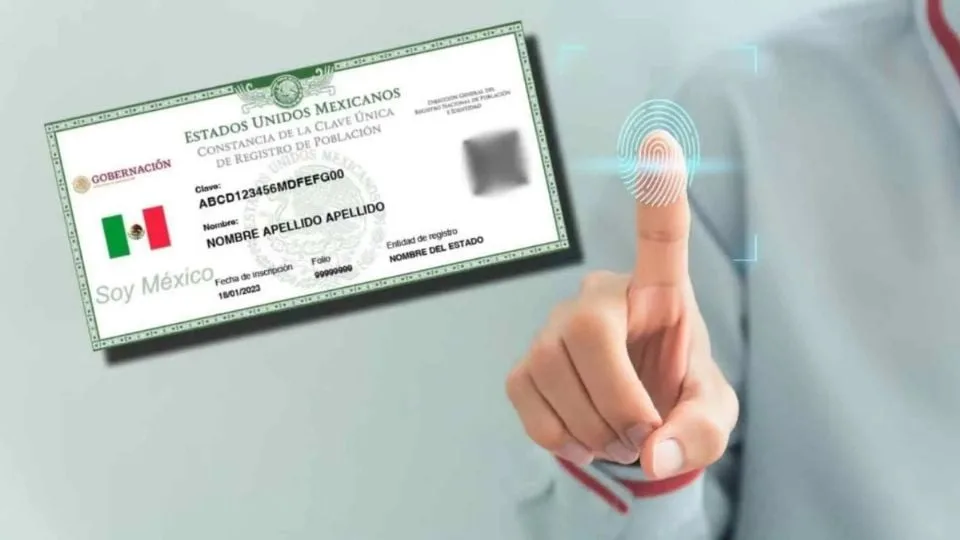
Mexico City — Mexico’s CURP Digital and CURP Biométrica are not two separate forms of identification, officials say, but a single document whose digital version serves as an electronic record backed by the holder’s biometric data. The only real difference between citizens is how current each person’s record is.
Unlike the traditional format overseen by the National Population Registry (Renapo), the CURP Biométrica is administered by the Digital Transformation and Telecommunications Agency. Although the legal framework states that registering biometric data is voluntary, in practice it is set to become an indispensable requirement for a range of procedures.
What the Document Contains
The updated CURP incorporates the holder’s full name, date of birth, sex or gender, place of birth, nationality, alphanumeric key, fingerprints and a photograph.
Officials say integrating biometric data is meant to establish a trusted mechanism for verifying identity remotely, a process expected to extend from dealings with public institutions such as the Mexican Social Security Institute (IMSS) to the remote contracting of financial services.
Opening a Bank Account Online
Under a proposed Digital Economy Law for Digital and Electronic Payments, banks and financial institutions would be able to authenticate users’ identities without requiring them to visit a physical branch.
Pairing With the Digital Citizen File
To support that verification process, financial institutions would be able to connect with the Expediente Digital Ciudadano, or Digital Citizen File. Officials describe it not as a new form of identification but as a technological infrastructure designed to let existing documents — tax, identity and health records, among others — interoperate across government agencies.
More Government
- Playa del Carmen Mayor ‘Very Upset’ With Parking Meter Operator Playaparq
- Yucatán Congress Approves Donating 56 Hectares to Tren Maya, Drawing Objections
- Cancún’s Ruta Mar Beach Shuttle to Suspend Service Until Mid-December
- Tulum Airport Receives US Deportation Flights Every Friday
- Sheinbaum Bill Would End Cash Payments at Gas Stations and Toll Booths