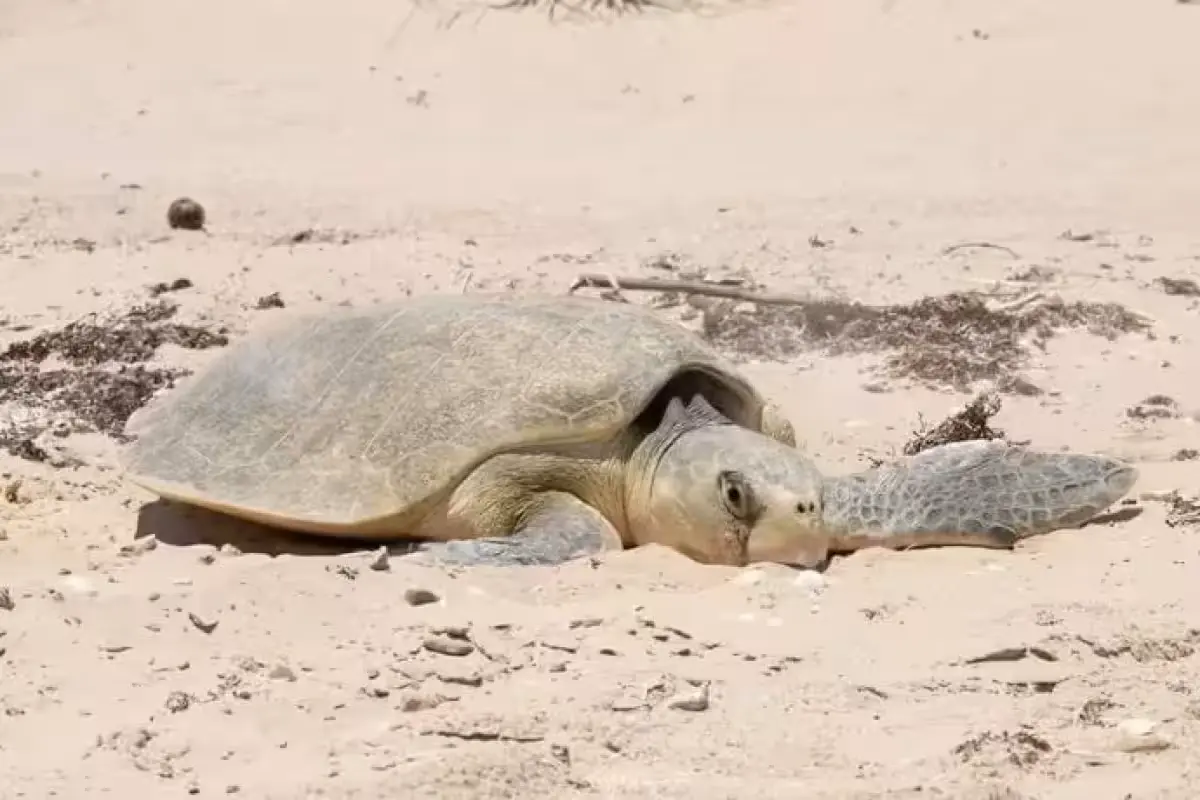
Cozumel, Quintana Roo — The discovery of a sea turtle nest on a beach in southern Cozumel where a tourism development is planned has sparked renewed calls to protect coastal ecosystems and factor protected species into environmental impact assessments.
The nest was found near Playa Mia, where Royal Caribbean plans to build a beach club on more than 17 hectares (42 acres). Environmental activist Lupita Martín Cab said the nesting confirms the site remains part of the current reproductive season for sea turtles, underscoring the need for ongoing monitoring.
Sea turtles are protected under Mexican standard NOM-059-SEMARNAT-2010, and Cozumel’s coasts are primarily used by loggerhead and green turtles for nesting, Martín noted.
“The presence of a nest shows this beach is still part of the sea turtles’ reproductive cycle. This information must be included in any environmental analysis before developing a project of this magnitude,” she said.
The discovery mirrors a similar situation in Mahahual, where 17 nests were found within the footprint of the Perfect Day Mexico project, reigniting debate over wildlife conservation versus tourism expansion.
Ricardo Peralta, head of the Punta Sur Turtle Camp, said each season his team monitors nesting beaches to protect nests and gather scientific data to strengthen conservation strategies. “Vigilance and respect for spawning areas are essential for the reproductive success of these species,” he said.
Julieta Andrade, a Cozumel resident, said tourism development and conservation must go hand in hand. “It’s important that any project guarantees the protection of the natural resources that make Cozumel special,” she said.
As of press time, environmental authorities had not issued a specific statement on the nest. Specialists agree that data collected during nesting season is critical for biodiversity monitoring and for evaluating proposed projects in ecologically sensitive coastal areas.
More Environment
- Playa del Carmen to Review Legal Status of Chen Zubul Property
- Quintana Roo Braces for Four Days of Heavy Rain and Flooding
- Sheinbaum Allocates 2 Billion Pesos to Fight Sargassum in Quintana Roo
- Five Ejidos Seek Alliance to Protect Chichankanab Lagoon in José María Morelos
- Maya Frog and Toad Shell Pendants May Reveal Ancient Trade Routes
More Cozumel
- Playa del Carmen Hosts Second National Firefighters Congress With 750-Plus Participants
- Cozumel Freezes New Street Vendor Permits as Review Committee Stalls
- FPMC Opens Txepo’s Art + Architecture Dreamscape in Cozumel
- Winjet Drops 9 p.m. Cozumel Ferry, Narrowing Options for Late Travelers
- Cozumel Bird Festival Records 70 Species Across Island Sites