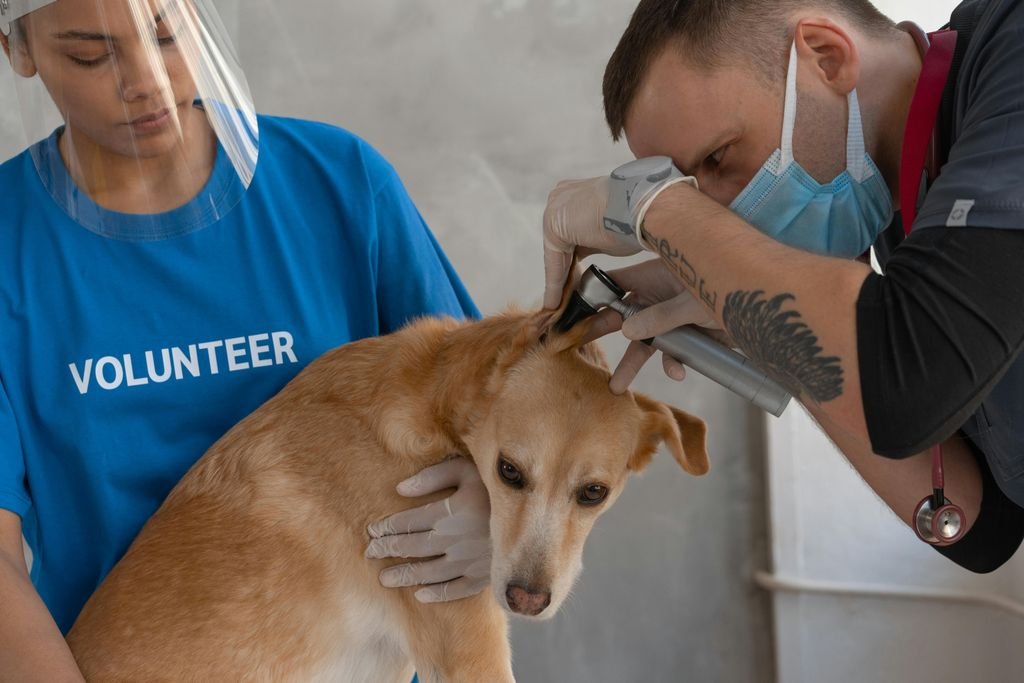
Cancún, Quintana Roo — The spread of the New World screwworm (Cochliomyia hominivorax) has escalated from a livestock threat to a public health and tourism challenge in southeastern Mexico, particularly affecting the growing number of travelers bringing pets to the region.
The parasite’s larvae feed on living tissue and can infest any warm-blooded animal, including dogs, cats, and humans. Infestation occurs when the fly lays eggs in wounds, mucous membranes, or even tick bites. Within 12 to 24 hours, larvae begin consuming live tissue, deepening wounds and risking severe infection, tissue loss, or death if untreated. The condition is not contagious between hosts but depends on direct contact with the fly.
In July 2026, health authorities in Zacatecas confirmed two human cases of myiasis, adding to previous cases from Oaxaca, Hidalgo, and Puebla. Officials stress these are not community transmissions but underscore the need for enhanced medical surveillance.
The problem is acute in Quintana Roo, Yucatán, Campeche, Tabasco, and Chiapas — states combining livestock activity, rural areas, abundant wildlife, favorable climate for the fly, and heavy tourist traffic. Cities like Cancún, Playa del Carmen, Tulum, Mérida, Campeche, Cozumel, and Chetumal have seen a surge in pet-friendly hotels, restaurants, and flights, leading to constant movement of dogs and cats through airports, seaports, and highways.
This flow poses a challenge: ensuring animal health without creating cumbersome procedures for visitors.
Dogs are the second most affected species
Official data from Mexico’s National Service for Health, Safety, and Agri-Food Quality (Senasica) recorded 16,489 cumulative screwworm cases from November 2024 to February 2026. Of these, 11,491 were in cattle and 2,554 in dogs, making canines the second most affected species, ahead of pigs, horses, sheep, goats, and cats. Chiapas, Yucatán, Oaxaca, Veracruz, and Campeche reported the highest numbers of canine cases.
By February 2026, Yucatán had 1,713 cases, Quintana Roo 476 (mainly in Othón P. Blanco and Bacalar), Campeche 768, and Tabasco 1,137. By March 30, Yucatán’s total rose to 1,726 cases across 100 municipalities, including Mérida, Tizimín, Buctzotz, Panabá, Tekax, Ticul, San Felipe, and Tzucacab.
A dog with an open wound, recent surgery, skin infection, or tick bite could become a host if exposed to the fly. Warning signs include enlarging wounds, bleeding, foul odor, visible larvae, restlessness, pain, loss of appetite, and decreased activity.
Extraordinary inspections for pets
In June, after cases were confirmed in Texas and New Mexico, Mexico and the U.S. agreed to strengthen sanitary inspections for companion dogs at entry points. Authorities are also evaluating additional measures to certify pets’ health status, which could extend to other companion animals.
In the southeast, these measures would apply not only to international flights but also to domestic airports, ports, cruise terminals, marinas, highways, interstate checkpoints, and border crossings with Belize and Guatemala. The challenge is to implement inspections that identify wounds, larvae, or signs of myiasis without causing long lines or disrupting the visitor experience.
This would require specialized modules, sufficient veterinary staff, inspection lanes for passengers with animals, digital forms, advance communication by airlines and hotels, and clear protocols distinguishing healthy pets from suspected or confirmed cases. The goal is not to stop pet tourism but to prevent injured animals from transporting larvae between regions.
Pet-friendly establishments would also need to reinforce internal measures, inspect lodging areas and gardens, train staff to recognize suspicious lesions, and maintain contact with veterinary clinics and health authorities.
No quick fix: sterile insect technique
Eradication relies on the Sterile Insect Technique (SIT), which involves mass-producing sterile male flies and releasing them over infested areas. Female flies typically mate only once; mating with a sterile male produces no offspring, gradually breaking the reproductive cycle. However, the process requires constant production, aerial releases over long periods, trap monitoring, wound treatment, and strict animal movement controls.
For years, the only mass-production plant for North America was in Pacora, Panama, jointly funded by the U.S. and Panama, producing about 100 million sterile flies per week. In June 2026, a rehabilitated plant in Metapa, Chiapas, began operations after a $21 million investment from the U.S. Department of Agriculture (USDA). It is ramping up to 100 million flies per week. A dispersal facility in Tuxtla Gutiérrez can release up to 100 million flies per week in southern Mexico, though some pupae are still flown in from Panama.
The USDA has stated its priority is protecting U.S. territory, and sterile fly dispersal zones are adjusted based on scientific models to prevent northward spread. Cases in Texas in June triggered quarantines, movement controls, and immediate releases of millions of sterile flies along the border, straining available capacity.
The concern for southeastern states is that if resources are again concentrated on the U.S. border, the Yucatan Peninsula may remain exposed to constant fly circulation for longer.
Previous eradication took nearly two decades
Mexico and the U.S. began formal cooperation on screwworm eradication on August 28, 1972, creating the Mexico-American Commission for the Eradication of Screwworm (COMEXA). The goal was to eliminate the pest from the northern border to the Isthmus of Tehuantepec and eventually the Yucatan Peninsula using SIT.
A plant in Chiapa de Corzo, Chiapas, built in the 1970s, produced up to 500 million sterile flies per week. By 1981, the commission employed over 2,000 workers. After a decade of work in the region, Yucatán, Campeche, Quintana Roo, and Tabasco were declared screwworm-free on February 25, 1991. Chiapas followed in September 2003, making all of Mexico free and shifting the continental barrier to Panama’s Darien Gap.
From COMEXA’s creation in 1972 to the peninsula’s declaration in 1991, the process took nearly 19 years, even with stable binational cooperation, sufficient resources, and dedicated infrastructure. The joint program cost about $750 million. Senasica studies estimate a reinfestation could cost hundreds of millions of dollars in treatments, animal mortality, surveillance, trade disruptions, and losses in meat, milk, and hide production.
COMEXA ended operations on September 26, 2012, and was officially dissolved on May 21, 2013. Epidemiological surveillance then fell primarily to Senasica, while continental sterile fly production concentrated in Panama.
Yucatán intensifies trapping
As part of regional measures, Yucatán is running a second phase of a Myiasis Suppression Pilot Plan with 625 traps in municipalities including Mérida, Progreso, Kanasín, Conkal, Hunucmá, Tixkokob, Tixpéhual, Umán, and Chicxulub Pueblo. During the first phase (January to March), 6,396 larval samples were processed, 91 positive, using 411 traps in municipalities like Tizimín, Buctzotz, Panabá, Río Lagartos, San Felipe, Sucilá, Espita, Calotmul, and Temozón.
These actions show that control cannot rely solely on sterile fly releases. Ongoing epidemiological surveillance, inspections, lab diagnostics, free treatment, prevention campaigns, and participation from pet owners, producers, veterinarians, and tourism service providers are essential.
Travelers planning to bring dogs or cats should check the animal’s skin daily, treat any wounds before travel, avoid exposure to flies, keep resting areas clean, and consult a veterinarian immediately if larvae are found.
Senasica has a hotline at 800 751 2100 and WhatsApp at 55 3996 4462 for reporting suspected cases. In Yucatán, the State Committee for Livestock Promotion and Protection accepts reports by call or message at 999 297 0981, with free attention within 24 hours.
Southeastern Mexico faces an emergency requiring patience, resources, and coordination. The objective is not to stop tourists with pets but to build a fast, reliable inspection system that protects animals, local wildlife, people, livestock, and the regional tourism economy.
More Community
- Playa del Carmen Taps HR Directors to Boost Local Hiring
- Moderna COVID-19 Vaccine to Be Offered to Children in Cancún
- Hospital O’Horán Performs First Robotic Appendix Surgery; Patient Treated Free of Charge
- Greenpeace Finds Contamination at 17 Yucatán Wells and Cenotes as Maya Communities Demand Action
- Caribbean Poker Tour Closes 2026 Season in Sint Maarten With $125,000 Main Event